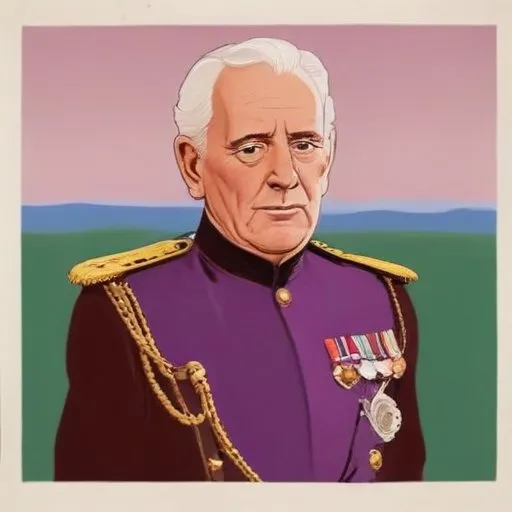
John Griffin, 4th Baron Howard de Walden: A Life of Military Distinction and Aristocratic Heritage
A Legendary Military Career
John Griffin, 4th Baron Howard de Walden, is renowned for his illustrious military career, which spanned over three decades and witnessed some of the most significant battles of the 18th century. As a British Army officer, politician, and peer, Griffin commanded respect and admiration from his contemporaries, earning a reputation as a brave and capable leader on the battlefield.
Early Life and Aristocratic Heritage
Born John Griffin Whitwell on March 13, 1719, Griffin was the son of William Whitwell and Anne Griffin, sister and sole heiress of Edward Griffin, 3rd Baron Griffin of Braybrooke. This aristocratic lineage was further bolstered by his grandmother, James Howard, 3rd Earl of Suffolk and 3rd Baron Howard de Walden.
Rise Through the Ranks
Griffin's military career began in 1739, when he was commissioned as an ensign in the 3rd Regiment of Foot Guards and lieutenant in the Army. He served with the Pragmatic Army in the Low Countries and Germany during the War of the Austrian Succession, where he demonstrated exceptional bravery and tactical prowess. In March 1744, Griffin was promoted to captain in his regiment and lieutenant colonel in the Army.
A Name Change and a New Persona
In 1749, Griffin's aunt, Elizabeth, Countess of Portsmouth, agreed to leave him her interest in Audley End House on the condition that he change his surname to Griffin. Griffin obliged, and by Act of Parliament, he became John Griffin Griffin. This name change marked a significant turning point in his life, as he went on to become a prominent figure in British politics and society.
Parliamentary Career and Military Command
Griffin's political career took off in November 1749, when he became a Member of Parliament for Andover. He continued to rise through the military ranks, becoming colonel on May 29, 1756, and first major of his regiment on May 9, 1758. In September 1759, Griffin was promoted to major general, and in October of the same year, he became colonel of the 50th Regiment of Foot.
Battlefield Triumphs and Defeats
Griffin's military prowess was tested in several battles during the Seven Years' War. In July 1760, he commanded a brigade at the Battle of Corbach, where the allied army was forced to withdraw following the arrival of French reinforcements. Despite this setback, Griffin went on to command a brigade at the Battle of Warburg, demonstrating his unwavering dedication to his country.
Legacy and Later Life
Griffin's military career was marked by numerous triumphs and setbacks, but his legacy extends far beyond the battlefield. He played a significant role in shaping British politics and society, and his aristocratic heritage continues to influence the nation to this day. Griffin passed away on May 25, 1797, leaving behind a rich legacy that continues to inspire generations.
Key Milestones and Achievements
- Commissioned as an ensign in the 3rd Regiment of Foot Guards and lieutenant in the Army (1739)
- Promoted to captain in his regiment and lieutenant colonel in the Army (March 1744)
- Changed his surname to Griffin by Act of Parliament (1749)
- Became a Member of Parliament for Andover (November 1749)
- Promoted to colonel on May 29, 1756
- Became first major of his regiment on May 9, 1758
- Promoted to major general on September 12, 1759
- Became colonel of the 50th Regiment of Foot in October 1759
- Commanded a brigade at the Battle of Corbach and the Battle of Warburg (1760)
Through his remarkable life, John Griffin, 4th Baron Howard de Walden, left an indelible mark on British history, cementing his place as one of the most distinguished military leaders and aristocrats of his time.
FAQ
What was John Griffins role in the English military?
John Griffin, 4th Baron Howard de Walden, played a significant role in the English military, serving as a field marshal and politician.
What was Griffins relationship with the royal family?
Griffin had close ties to the royal family, serving as a courtier and advisor to King George I and King George II.
How did Griffin contribute to the development of the British army?
Griffin contributed to the development of the British army by implementing reforms and modernizing its tactics and training.
What was Griffins role in politics?
Griffin played a significant role in politics, serving as a member of Parliament and holding various government positions, including Lord Lieutenant of Essex.
How is Griffin remembered in English history?
Griffin is remembered in English history as a skilled military leader and politician who played a key role in shaping the British army and government.