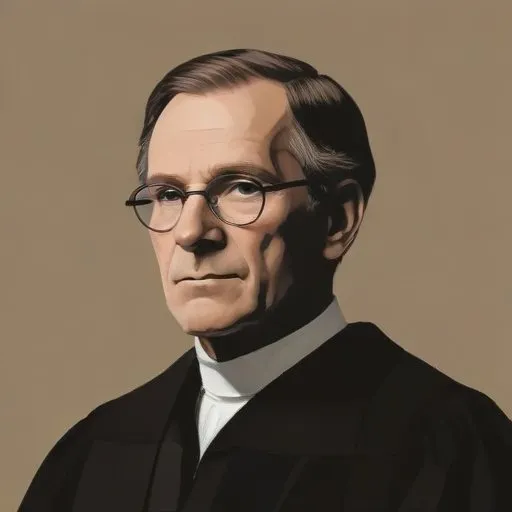
John Henry Wigmore

John Henry Wigmore

John Henry Wigmore was born on March 4th, 1863

Full Name: John Henry Wigmore
Place of Birth: San Francisco, California
Nationality: American
Profession: Academic, Jurist
Known For: Evidence law
Education: Harvard University
Teaching: Northwestern University Pritzker School of Law
Books: Wigmore on Evidence

A pioneer in the field of evidence law, he wrote a seminal treatise that remains a cornerstone of American legal education, shaping the way lawyers and judges approach evidence in court.

Written by: Victor Malone Victor Malone

John Henry Wigmore: The Pioneer of Evidence Law

A Legacy of Scholarship and Influence

John Henry Wigmore is revered as one of the most influential legal scholars of the 20th century, renowned for his groundbreaking work in the law of evidence and his commitment to academia. His magnum opus, Treatise on the Anglo-American System of Evidence in Trials at Common Law, commonly referred to as Wigmore on Evidence, has become the definitive authority on evidence law, shaping the course of legal education and practice.

Early Life and Education

Wigmore was born on March 4, 1863, in San Francisco, California, to John and Harriet Joyner Wigmore. He was the second-oldest of thirteen children. After completing his undergraduate studies at Harvard University, Wigmore earned his LLB from Harvard Law School in 1887.

Academic Pursuits and Career Highlights

Wigmore's academic career spanned over four decades, during which he taught law at Keio University in Tokyo (1889-1892) and later became the first full-time dean of Northwestern Law School (1901-1929). He was a prolific writer, publishing numerous articles and books on evidence law, including his seminal work, Wigmore on Evidence. Wigmore's scholarship was instrumental in shaping the American system of evidence, and his graphical analysis method, known as the Wigmore chart, remains a valuable tool in legal education.

Influence and Impact on Modern Society

Wigmore's contributions to evidence law have had a profound impact on modern society. His treatise has been cited in numerous court decisions, influencing the development of legal precedent. Furthermore, his commitment to academic freedom and tenure led to his presidency of the American Association of University Professors.

Personal Life and Milestones

Wigmore married Emma Hunt Vogl in 1889, and the couple traveled to Tokyo shortly after their wedding. Wigmore's decision to pursue an academic career rather than taking over the family business led to a rift with his parents.

Philosophical Contributions and Beliefs

Wigmore's scholarship was characterized by his commitment to the principles of evidence and his advocacy for the importance of fair and unbiased legal procedures. His work reflects a deep understanding of the Anglo-American system of justice and a desire to promote the integrity of the legal system.

Legacy and Historical Context

John Henry Wigmore's legacy extends beyond his academic achievements. His influence can be seen in the development of evidence law, the promotion of academic freedom, and the advancement of legal education. As a pioneering legal scholar, Wigmore's work continues to shape the legal landscape, inspiring generations of lawyers, judges, and scholars.

Quotes and Memorable Sayings

Awards and Honors

Wigmore was awarded an honorary LL.D. from the University of Chicago in 1924, recognizing his outstanding contributions to the field of law.

Visual Timeline and Milestones

1863 John Henry Wigmore born in San Francisco, California
1883 Wigmore earns AB degree from Harvard University
1887 Wigmore earns LLB degree from Harvard Law School
1889 Wigmore marries Emma Hunt Vogl and begins teaching at Keio University in Tokyo
1901 Wigmore becomes the first full-time dean of Northwestern Law School
1904 Publication of Treatise on the Anglo-American System of Evidence in Trials at Common Law
1924 Wigmore awarded honorary LL.D. from the University of Chicago
1943 John Henry Wigmore passes away
Timeline
1863
Born in San Francisco, California
John Henry Wigmore was born on March 4, 1863, in San Francisco, California. He would go on to become a renowned American academic and jurist.
1884
Earns Bachelors Degree from Harvard
Wigmore earned his Bachelors degree from Harvard University, marking the beginning of his academic career.
1893
Earns LL.B. from Harvard Law School
Wigmore earned his LL.B. from Harvard Law School, solidifying his expertise in law.
1901
Publishes A Treatise on the System of Evidence
Wigmore published A Treatise on the System of Evidence, a seminal work that introduced the concept of the Wigmores Charts.
1943
Passes Away
John Henry Wigmore passed away on December 20, 1943, leaving behind a legacy as an academic and jurist.
John Henry Wigmore

John Henry Wigmore Quiz

What is John Henry Wigmore's significant contribution to the field of evidence law?

Score: 0/5
FAQ
What was John Henry Wigmores area of expertise in law?
John Henry Wigmore was an expert in the field of evidence law and was known for his treatise on the subject, which is still widely used today.
What was John Henry Wigmores role in the development of the Japanese legal system?
John Henry Wigmore played a significant role in the development of the Japanese legal system, serving as an advisor to the Japanese government and helping to establish the countrys first law school.
What honors did John Henry Wigmore receive for his work?
John Henry Wigmore received several honors for his work, including honorary degrees from universities around the world and membership in the Order of the Rising Sun.
What is John Henry Wigmores legacy in the legal community?
John Henry Wigmores legacy in the legal community is one of innovation and dedication to the advancement of justice. His work continues to influence legal education and practice today.
What was John Henry Wigmores approach to teaching law?
John Henry Wigmores approach to teaching law was highly regarded, and he was known for his ability to make complex concepts accessible to his students.

Related People:

Louis Brandeis

Born in 1856

A pioneering lawyer and jurist who championed individual rights and freedoms, shaping the course of American law and democracy through landmark Supreme Court decisions.

Harlan F. Stone

Born in 1872

The 12th Chief Justice of the United States, a prominent lawyer and jurist, is most known for his significant contributions to shaping the Supreme Court's decisions and upholding the Constitution. He played a crucial role in establishing the Court's liberal wing during the New Deal era.

Felix Frankfurter

Born in 1882

A renowned Supreme Court Justice and Harvard Law professor who played a significant role in shaping American law and policy, particularly in the areas of civil liberties and judicial restraint.

Hugo Black

Born in 1886

A U.S. Supreme Court Justice who served for 34 years, known for his strong support of individual liberties and First Amendment rights.

William O. Douglas

Born in 1898

A Supreme Court Justice who championed individual rights and environmental protection, leaving a lasting impact on American law and conservation.

Thurgood Marshall

Born in 1908

A trailblazing lawyer and civil rights champion who broke racial barriers in the US justice system, serving as the first African American on the Supreme Court. He fought tirelessly for equality and justice, leaving a lasting impact on American history.

Earl Warren

Born in 1891

The 14th Chief Justice of the United States, a jurist and politician who led the Supreme Court through a transformative era of civil rights and social change, issuing landmark rulings like Brown v. Board of Education.

Warren E. Burger

Born in 1907

The 15th Chief Justice of the United States, leading the Supreme Court from 1969 to 1986, known for his conservative stance and landmark decisions on abortion and capital punishment.