


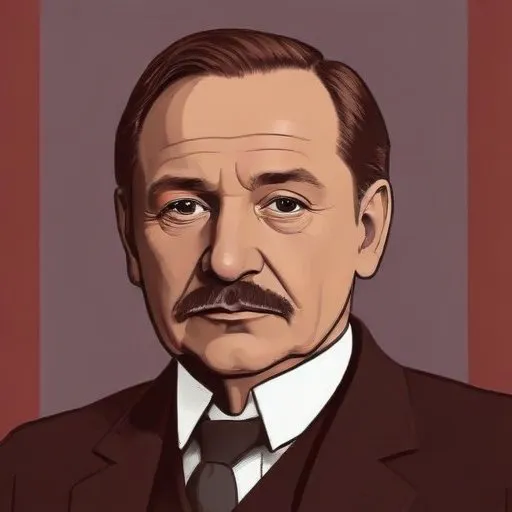
Pioneering space research, he played a crucial role in establishing the Canadian space program and was a key figure in the development of the Alouette 1 satellite.
John Herbert Chapman, a renowned Canadian space researcher, is widely recognized for his groundbreaking contributions to the development of Canada's space program, particularly with the launch of the country's first satellite, Alouette. This pioneering achievement marked a significant milestone in Canadian space exploration, cementing Chapman's legacy as a trailblazer in the field.
Born on August 28, 1921, in London, Ontario, Chapman grew up with a fascination for science and technology. He pursued his passion, earning a Bachelor of Science degree from The University of Western Ontario in 1948. Chapman furthered his education, obtaining a Master of Science degree and a Ph.D. in physics from McGill University in Montreal, Quebec.
Chapman began his career with the Defence Research Board (DRB), where he worked on radio propagation and ionosphere research. In 1951, he joined the Defence Research Telecommunications Establishment (DRTE), now known as the Communications Research Centre (CRC), as the section leader of the ionospheric propagation unit. At DRTE, Chapman directed several projects, including the development of the Alouette satellite, which was launched in 1962.
As chairman of a government study group, Chapman compiled his findings and recommendations for the future of Canada's space program in a comprehensive report, known as the Chapman Report. Published in 1967, this influential document emphasized the need for Canada to redirect its space program to achieve greater efficiency and effectiveness. The Chapman Report remains a seminal work, shaping the country's approach to space exploration and informing the development of the Canadian Space Agency.
Chapman's outstanding contributions to aerospace technology were recognized with several prestigious awards, including the Royal Society of Canada's award in 1966 and the Engineering medal from the Association of Professional Engineers of Ontario.
John Herbert Chapman's groundbreaking work in space research and exploration has left an indelible mark on Canada's scientific community. His innovative spirit, dedication, and vision have inspired generations of scientists, engineers, and researchers, solidifying his place as a pioneer in Canadian space exploration.
Through his remarkable achievements and contributions, John Herbert Chapman has secured his place as a trailblazer in Canadian space exploration, inspiring future generations to continue pushing the boundaries of human knowledge and innovation.
Born in 1918
Developed neutron spectroscopy, a technique used to study the behavior of atoms and molecules, earning him the Nobel Prize in Physics in 1994.
Born in 1924
Developed the charge-coupled device (CCD), a semiconductor technology used in digital cameras and other imaging devices, earning a Nobel Prize in Physics in 2009.
94 Years Old
A Nobel Prize-winning biochemist and geneticist who pioneered site-directed mutagenesis, a technique to introduce specific mutations into DNA, revolutionizing genetic research and biotechnology.
Born in 1826
A Confederate general who fought in the American Civil War and later became a historian, writing about his experiences and the war's history. He also served as a politician in Louisiana.
