


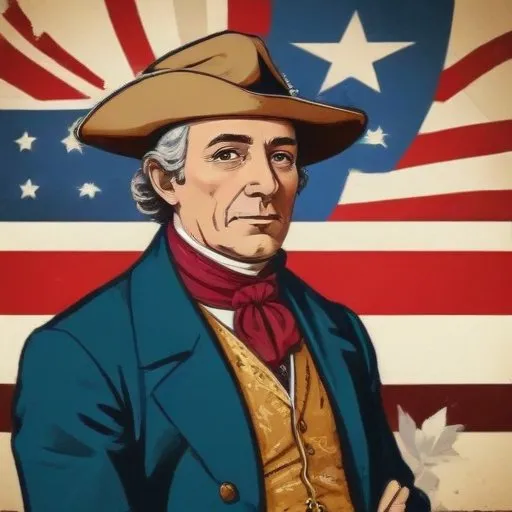
A colonial American merchant and politician who played a significant role in the development of early American currency and trade, issuing the first paper money in the American colonies. He also served as a treasurer and magistrate in Massachusetts.
John Hull is remembered as a multifaceted figure of 17th-century Massachusetts - a skilled silversmith, shrewd merchant, and influential politician, who left an indelible mark on the colony's economy, politics, and society.
Born on December 18, 1624, in Market Harborough, Leicestershire, England, John Hull was the son of blacksmith Robert Hull and Elizabeth Storer. He immigrated to the Massachusetts Bay Colony with his family in 1635, where he received an education at the Boston Latin School and later apprenticed as a smith for seven years.
Hull's extraordinary skills as a silversmith earned him recognition, and in the mid-17th century, he became the moneyer responsible for issuing the colony's pine tree shillings. This role not only showcased his mastery of metallurgy but also granted him significant influence over the colony's economy.
As a successful merchant, Hull engaged in various trading ventures, including the lucrative but morally contentious practice of slave trading. His participation in this activity has sparked controversy, with some historians criticizing his involvement in the transatlantic slave trade.
Hull's entrepreneurial spirit and political acumen led to his involvement in various ventures, including the founding of the Old South Church and his support for Harvard College. His contributions to the college earned him recognition as an early benefactor.
On May 11, 1647, Hull married Judith Quincy, daughter of Judith Pares and Edmund Quincy. The couple had five children, although only one, Hannah, survived to adulthood. Their family life was marked by tragedy, with multiple infant mortalities.
John Hull's multifaceted legacy has had a lasting impact on the history of Massachusetts. His contributions to the colony's economy, politics, and society have cemented his place as a significant figure of the 17th century. While his involvement in the slave trade has been criticized, his entrepreneurial spirit, political acumen, and cultural contributions have earned him recognition as a pioneering figure in American history.
Though there are no recorded quotes from John Hull, his remarkable life and achievements serve as a testament to his industrious nature and adaptability in the face of adversity.
John Hull's life and achievements are set against the backdrop of 17th-century Massachusetts, a period marked by colonization, economic growth, and cultural development. His contributions to the colony's economy, politics, and society have had a lasting impact, with his legacy continuing to inspire and educate generations of Americans.
Born in 1588
A 17th-century English lawyer and politician who played a key role in establishing the Massachusetts Bay Colony and shaping its early government and laws. He's known for his "City upon a Hill" sermon, which emphasized the colony's mission to create a model Christian community.
Born in 1616
Governor of the Massachusetts Bay Colony from 1673 to 1679, known for his role in King Philip's War and his efforts to negotiate with Native American tribes.
Born in 1603
A colonial magistrate who served as a governor of the Massachusetts Bay Colony, known for his fair and diplomatic leadership during a tumultuous period in American history.
Born in 1647
Governor of the Province of Massachusetts Bay during a tumultuous period, known for his role in the Salem witch trials and later becoming a prominent figure in the American colonial government.
Born in 1651
The first American-born governor of the Province of Massachusetts Bay, who led a successful expedition to recover treasure from a sunken Spanish ship and played a key role in the Salem witch trials.
