


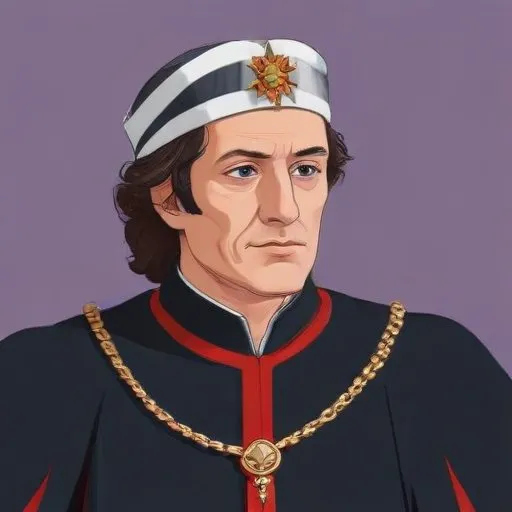
A 13th-century nobleman who ruled Hainaut, a region in modern-day Belgium, and was a key player in the Crusades and European politics. He's also known for his cultural achievements, including promoting literature and architecture.
John I, Count of Hainaut, is renowned for his unyielding determination and strategic prowess in securing his rightful inheritance as the count of Hainaut. Born in 1218, John's life was marked by a series of challenges and power struggles that ultimately cemented his position as a prominent figure in medieval history.
John was the eldest son of Margaret II of Flanders and Bouchard IV of Avesnes. However, his parents' marriage was papally dissolved, rendering John's legitimacy questionable. This uncertainty sparked a series of events that would shape John's life and destiny.
In 1244, Margaret inherited Flanders and Hainaut, designating her son by her second husband, William III of Dampierre, as her heir. This decision sparked a two-year war between John and William, known as the War of the Succession of Flanders and Hainaut. Louis IX of France ultimately intervened, granting Hainaut to John and Flanders to William in 1246.
Despite the arbitration, Margaret refused to cede Hainaut to John, leading to further conflict. In 1251, William of Flanders was assassinated, and John was implicated in the crime. The following year, John defeated Margaret's forces at the Battle of Walcheren, and Guy, Margaret's son, was imprisoned. John's brother-in-law, William II, Count of Holland, eventually convinced the German King to grant Hainaut to John as an imperial fief.
In 1246, John married Adelaide of Holland, with whom he had several children, including John II, Count of Hainaut. John's perseverance and strategic alliances ultimately secured his position as count of Hainaut, a title he held until his death on Christmas Eve in 1257.
John I, Count of Hainaut, left an indelible mark on medieval history, demonstrating the importance of determination, strategic thinking, and strong alliances in securing one's rightful place in the world. His legacy continues to inspire and educate, offering valuable lessons for generations to come.
Born in 1218
A 13th-century nobleman who ruled Hainaut, a region in modern-day Belgium, and was a key player in the Crusades and European politics. He's also known for his cultural achievements, including promoting literature and architecture.
Born in 1403
Duke of Brabant who ruled from 1415 to 1427 and was a member of the House of Valois-Burgundy, known for his attempts to centralize power and strengthen his duchy's economy.
Born in 1052
King of France from 1060 to 1108, known for his military campaigns and conflicts with the Church, particularly his excommunication by Pope Urban II.
Born in 1330
Ruler of Flanders from 1346 to 1384, known for his military campaigns and territorial expansions, particularly the acquisition of the County of Artois.
