


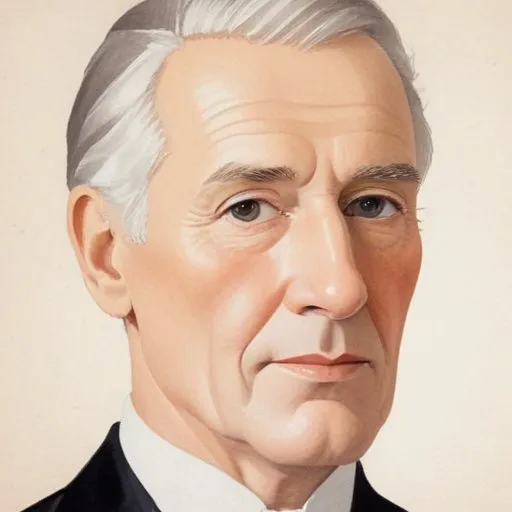
Co-founder of The Bodley Head, a renowned publishing house that introduced works of prominent authors like Oscar Wilde and Yeats, shaping literary history. Known for innovative publishing ventures and literary discoveries.
John Lane, born on March 14, 1854, was a British publisher who dared to challenge the traditional boundaries of literature. As the co-founder of The Bodley Head, Lane introduced the world to audacious and controversial texts that showcased his commitment to publishing works that sparked conversation and debate.
Lane's journey began in West Putford, Devon, where he was born into a farming family. After moving to London in his teens, he worked as a clerk at the Railway Clearing House, where he acquired knowledge as an autodidact. This self-taught learning experience laid the foundation for his future endeavors in the book trade.
In 1887, Lane co-founded The Bodley Head with Charles Elkin Mathews, initially as a bookshop dealing in antiquarian books. However, their ambition soon extended to publishing, and by 1894, they began to release their own books. After Mathews left the partnership, Lane continued to publish under the name of The Bodley Head and his own name, solidifying his reputation as a trailblazing publisher.
Lane's publishing house became synonymous with provocative and avant-garde works. The Yellow Book, a periodical published between 1894 and 1897, featured essays, poetry, and fiction that pushed the boundaries of Victorian morality. His Keynotes Series, launched in 1894, included novels like Grant Allen's The Woman Who Did (1895) and Victoria Cross's The Woman Who Didn't (1895), which sparked heated debates about gender roles and relationships.
Lane's willingness to take risks and challenge social norms earned him the respect of authors who shared his passion for innovation. H.G. Wells, a close friend and collaborator, praised Lane's bravery in publishing his novel The New Machiavelli (1911), which told the story of an affair between Wells and Amber Reeves.
In his personal life, Lane found love with Annie Philippine King, a widow and accomplished author in her own right. They married on August 13, 1898, and Lane published Annie's works, including the novel Kitwyk (1903). The couple's partnership was built on a foundation of mutual respect and shared passion for literature.
John Lane's nephews, Allen, Richard, and John Lane, went on to found Penguin Books, cementing the family's legacy in the world of publishing. Lane's own legacy extends far beyond his publishing house, as he helped shape the literary landscape of his time by providing a platform for daring and innovative writers.
On February 2, 1925, Lane passed away at his London home, leaving behind a body of work that continues to inspire and provoke readers to this day. His ashes were interred at St Nectan's Church in Stoke, near Hartland, Devon, a testament to his enduring connection to the land of his birth.
"A publisher is not a vendor of books, but a guardian of the integrity of the written word." - John Lane
John Lane's impact on modern society is evident in the continued relevance of the authors and works he published. His commitment to freedom of expression and his willingness to challenge social norms have inspired generations of writers, publishers, and readers. As we navigate the complexities of our digital age, Lane's legacy serves as a powerful reminder of the importance of preserving our literary heritage and promoting innovative thinking.
Born in 1882
A pioneering author of modernist literature, known for experimental novels and essays that explored the human experience, blurring the lines between reality and fiction.
Born in 1879
This celebrated author crafted novels and plays that probed the human condition, exploring themes of social class, morality, and personal relationships, with a distinctive wit and insight. Their works continue to captivate audiences with their nuanced portrayals of English society during the early 20th century.
Born in 1885
A pioneering writer of the early 20th century, known for exploring themes of human nature, relationships, and the clash between individual desire and societal expectations through novels like "Sons and Lovers" and "Lady Chatterley's Lover".
Born in 1894
Author of dystopian classics like Brave New World, exploring the consequences of technological advancements on humanity. Known for prophetic warnings about government control and manipulation.
Born in 1872
A renowned thinker who made significant contributions to mathematics, philosophy, and social commentary, known for his influential writings on logic, ethics, and politics. He's a prominent figure in shaping modern intellectual thought.
Born in 1885
A pioneering modernist poet and critic who transformed 20th-century literature with innovative styles and provocative ideas, shaping the course of modern poetry.
Born in 1888
A renowned poet, playwright, and critic who reshaped modern poetry with works like "The Waste Land" and "Old Possum's Book of Practical Cats", influencing literature and art with their unique style.
Born in 1882
A pioneering modernist writer, known for experimental novels and short stories that explore the human experience, particularly in Dublin, Ireland. His works are celebrated for their complex, lyrical prose and innovative narrative structures.
