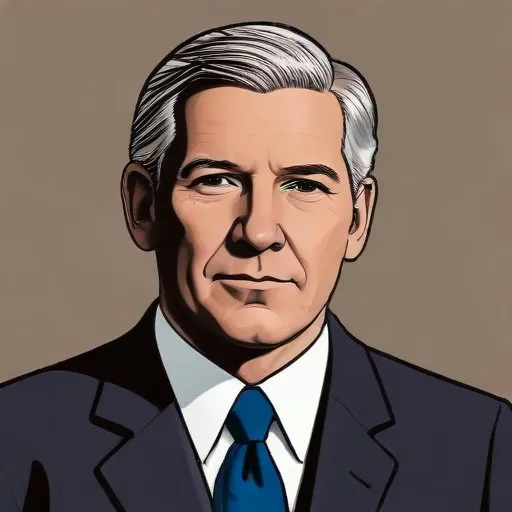
John Lansing Jr.: The Enigmatic Founding Father
A Life of Politics and Mystery
John Lansing Jr. was a prominent figure in American history, known for his pivotal role as a Founding Father of the United States, as well as his intriguing disappearance in 1829. With a career spanning law, politics, and government, Lansing's life was a testament to his dedication to shaping the young American nation.
Early Life and Education
Born on January 30, 1754, in Albany, New York, John Lansing Jr. was the son of Gerrit Jacob Lansing and Jannetje Jane Waters Lansing. He received his education in law and went on to become a successful attorney, laying the foundation for his future in politics.
A Career in Politics
Lansing's political career began in 1781, when he was elected to the New York State Assembly, a position he held until 1784. He served again in 1786 and 1789, during which he was also the Speaker of the Assembly. In 1785, he was a member of the Congress of the Confederation and later served as the mayor of Albany from 1786 to 1790.
The Constitutional Convention and Beyond
In 1787, Lansing was a delegate to the federal Constitutional Convention, where he withdrew in July due to his opposition to the proposed United States Constitution, citing concerns about state and individual rights. He later participated in the New York ratification convention in June 1788, although he was unable to prevent the Constitution's approval.
Judicial Career and Later Life
Lansing's judicial career began in 1790, when he was appointed a justice of the New York Supreme Court, a position he held until 1798. He later served as the chief justice from 1798 to 1801 and then as Chancellor of New York from 1801 to 1814. In his later years, Lansing was a regent of the University of the State of New York from 1817 until his disappearance in 1829.
The Mysterious Disappearance
On December 12, 1829, John Lansing Jr. vanished after leaving his New York City hotel room to mail a letter. Despite an extensive search, no trace of him was ever found, leaving behind a legacy of mystery and intrigue.
Legacy and Impact
John Lansing Jr.'s contributions to American history are undeniable. As a Founding Father, he played a significant role in shaping the young nation's government and politics. His dedication to the principles of individual and state rights has inspired generations of Americans. While his disappearance remains a mystery, Lansing's legacy continues to fascinate and inspire, cementing his place as one of the most enigmatic figures in American history.
- Notable Positions: Member of the New York State Assembly, Speaker of the Assembly, Member of the Congress of the Confederation, Mayor of Albany, Delegate to the federal Constitutional Convention, Justice of the New York Supreme Court, Chief Justice, Chancellor of New York, Regent of the University of the State of New York
- Key Dates: January 30, 1754 (born), 1781-1784 (New York State Assembly), 1785 (Congress of the Confederation), 1786-1790 (Mayor of Albany), 1787 (Constitutional Convention), 1788 (New York ratification convention), 1790-1798 (Justice of the New York Supreme Court), 1798-1801 (Chief Justice), 1801-1814 (Chancellor of New York), 1817-1829 (Regent of the University of the State of New York), December 12, 1829 (disappeared)
FAQ
What was John Lansing Jr.s role in the American Revolution?
John Lansing Jr. played a significant role in the American Revolution as a lawyer and politician, serving as a delegate to the Continental Congress from 1784 to 1789. He was a strong advocate for states rights and limited federal power.
What were John Lansing Jr.s views on the United States Constitution?
John Lansing Jr. was a vocal critic of the United States Constitution, arguing that it gave too much power to the federal government and threatened states sovereignty. He was one of the few delegates who refused to sign the document.
What was John Lansing Jr.s relationship with Alexander Hamilton?
John Lansing Jr. had a contentious relationship with Alexander Hamilton, often clashing with him over issues of federal power and states rights. Despite their differences, both men were influential figures in early American politics.
What was John Lansing Jr.s contribution to the development of the New York State government?
John Lansing Jr. played a key role in the development of the New York State government, serving as a member of the states first constitutional convention and helping to draft the states first constitution.
What was John Lansing Jr.s later life and legacy?
After his political career, John Lansing Jr. returned to his law practice and lived a quiet life. Despite his opposition to the Constitution, he is remembered as an important figure in early American politics, and his legacy continues to be studied by historians today.