


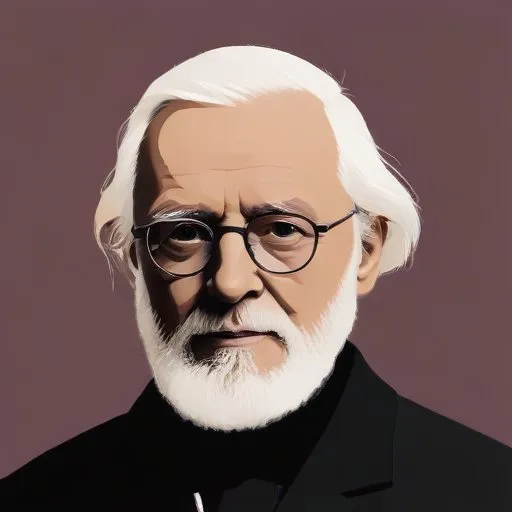
A British pianist and composer, renowned for his innovative and eclectic style, blending classical and jazz elements. His works are characterized by complex rhythms and harmonies.
British composer and pianist John McCabe was renowned for his extraordinary versatility, having created works that spanned a multitude of genres, from symphonies and ballets to solo piano pieces. With a career that traversed over five decades, McCabe's compositions continue to inspire and delight audiences with their unique blend of technical brilliance and emotional depth.
Born on April 21, 1939, in Huyton, Liverpool, McCabe's early life was marked by tragedy when he suffered severe burns in an accident, leading to eight years of home schooling. During this period, music played a vital role in his life, with his mother, an amateur violinist, nurturing his love for the art form.
By the tender age of 11, McCabe had already composed an impressive 13 symphonies, although he later suppressed them, believing they did not meet his own high standards. This early start laid the foundation for a lifetime of creative output, with McCabe going on to study composition with esteemed British composers Humphrey Procter-Gregg and Thomas Pitfield.
McCabe's professional life was marked by numerous milestones, including his appointment as director of the London College of Music from 1983 to 1990. His compositions, characterized by their lyricism and technical complexity, earned him widespread acclaim, with critic Guy Rickards hailing him as "one of Britain's finest composers" of the past half-century.
In 1974, McCabe married Monica Smith, a former head of the Sittingbourne Music Society. Despite a brave battle with cancer, McCabe continued to compose until his passing on February 13, 2015. His legacy, however, lives on through his remarkable body of work, which continues to inspire and influence generations of musicians.
In recognition of his outstanding contributions to the world of music, McCabe was awarded the prestigious John R. B. Taylor Award by the Royal Philharmonic Society in 1984.
John McCabe's life and work serve as a testament to the power of music to transcend adversity and inspire beauty. His compositions continue to captivate audiences with their technical brilliance, emotional depth, and unwavering passion.
Born in 1905
A British composer, conductor, and educator, renowned for his symphonies and film scores, including the iconic music for the 1950s and 1960s Hammer horror films.
Born in 1921
A renowned composer of symphonies, concertos, and film scores, including the iconic "Bridge on the River Kwai" theme, blending classical and popular music styles.
Born in 1876
A British composer of symphonies and operas, known for his unconventional and innovative style, which blended elements of Romanticism and modernism. His music is characterized by its complexity and grandeur.
Born in 1687
A Scottish mathematician and academic who made significant contributions to the field of geometry, particularly in the restoration of ancient Greek mathematician Euclid's works, and is known for his precise and detailed commentaries.
Born in 1883
A celebrated composer and poet, he crafted symphonies, concertos, and tone poems that showcased his mastery of orchestration and poetic flair. His works evoke a sense of mysticism and Celtic mythology.
Born in 1902
A renowned composer of orchestral and choral works, particularly famous for his iconic score for Laurence Olivier's 1944 film "Henry V" and his ceremonial music for British coronations.
