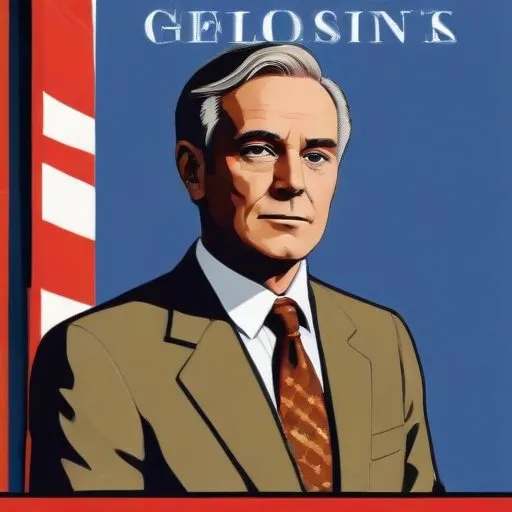
John S. Wold: The Trailblazing Geologist and Politician
John S. Wold, a figure of great distinction, is renowned for being the first professional geologist to serve in the United States Congress. This remarkable individual's multifaceted career spanned from the oil fields of Wyoming to the hallowed halls of Washington D.C., leaving an indelible mark on the world of politics, philanthropy, and geology.
A Life of Service
Born on August 31, 1916, in East Orange, New Jersey, Wold's early life was shaped by his father, Peter Irving Wold, a renowned physicist and chairman of the department of physics at Union College. This academic pedigree would serve Wold well, as he went on to graduate from Union College in 1938 and Cornell University in 1939 with degrees in geology.
During World War II, Wold served as a consulting physicist and gunnery officer for the U.S. Navy, demonstrating his commitment to serving his country.
From Geology to Politics
In 1949, Wold moved to Wyoming, where he worked for an oil company before founding his own company, Wold Oil Properties, Inc., in 1950. This marked the beginning of a successful career in the oil industry.
However, Wold's passion for public service soon led him to enter politics. He won a seat to the Wyoming House of Representatives in 1956 and served as the state's Republican chairman from 1960 to 1964.
A Congressional Career
In 1968, Wold narrowly defeated incumbent Congressman
William Henry Harrison in the Republican primary, going on to win a decisive general election victory. This marked the beginning of his term in the United States House of Representatives, which lasted from 1969 to 1971.
Although his congressional career was short-lived, Wold's unique blend of geological expertise and political acumen made him a valuable asset to the Republican party.
Philanthropic Legacy
Wold's generosity was evident in his $20 million donation to his alma mater, Union College, in 2002. This donation, the largest single contribution in the university's history, cemented his legacy as a devoted philanthropist.
The American Heritage Center at the University of Wyoming also recognized Wold's contributions, naming him as one of its esteemed honorees.
Personal Milestones
- Wold married his wife, Helen, in 1941, with whom he had three children.
- He served as a World War II veteran, demonstrating his commitment to serving his country.
- Wold was an avid outdoorsman, with a deep love for hunting and fishing.
Legacy and Impact
John S. Wold's remarkable life serves as a testament to the power of hard work, dedication, and a commitment to serving others. As a trailblazing geologist and politician, he paved the way for future generations of scientists and public servants.
His philanthropic efforts continue to inspire and support institutions of higher learning, ensuring that his legacy endures for generations to come.
FAQ
What is John S. Wolds legacy in geology?
John S. Wold is a renowned geologist and politician, known for his work on the geology of Wyoming and his service as a US Representative from Wyoming.
How did John S. Wolds geological research influence our understanding of the Earth?
John S. Wolds geological research, which focused on the geology of Wyoming, influenced our understanding of the Earth by providing new insights into the formation of the Rocky Mountains and the geology of the American West.
What are some of John S. Wolds most notable geological achievements?
Some of John S. Wolds most notable geological achievements include his work on the geology of the Rocky Mountains and his discovery of several important mineral deposits in Wyoming.
Did John S. Wold hold any notable political offices?
Yes, John S. Wold held several notable political offices, including serving as a US Representative from Wyoming and as a member of the Wyoming State Senate.
What awards and recognition did John S. Wold receive for his contributions to geology and politics?
John S. Wold received many awards and accolades for his contributions to geology and politics, including the Wyoming Geological Associations Distinguished Service Award and the American Geosciences Institutes William B. Heroy Jr. Award for Distinguished Service to the Geosciences.