


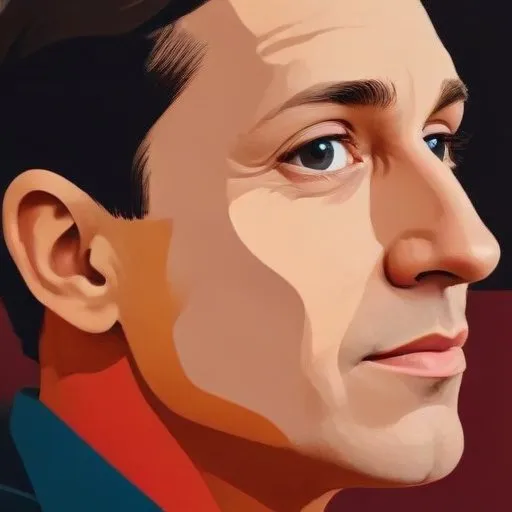
A pioneering Regionalist painter, capturing the essence of rural America through vibrant, expressive works that often explored social justice themes.
John Steuart Curry is renowned for his vivid paintings that captured the essence of rural life in his home state, Kansas, during the early 20th century. Alongside Thomas Hart Benton and Grant Wood, Curry formed the triumvirate of American Regionalism, a movement that sought to highlight the unique characteristics of regional American culture.
Born on November 14, 1897, on a farm in Dunavant, Kansas, Curry's rural upbringing deeply influenced his artistic style and subject matter. His early life was marked by a strong connection to the land and the people who worked it, themes that would later dominate his art.
Curry's paintings were characterized by bold brushstrokes, vibrant colors, and a dynamic sense of movement. His use of energetic forms and bold composition created a sense of tension and drama, often conveying emotions such as fear, despair, and excitement. His control over brushstrokes and color palette enabled him to evoke a powerful emotional response from the viewer.
Curry's most famous work, Tragic Prelude, was commissioned for the Kansas State Capitol building. The mural depicted the tumultuous period of "Bleeding Kansas," featuring abolitionist John Brown. Although controversial, the work demonstrated Curry's ability to tackle complex historical themes. He also created Kansas Pastoral, a mural showcasing the state's rural landscape.
The reaction to Curry's murals was mixed, with many Kansans feeling that they did not portray the state in a positive light. The Kansas Legislature passed a measure to prevent the murals from being hung in the Capitol building, leading Curry to leave Topeka in disgust. Despite this, his work continues to be celebrated as a testament to American Regionalism.
Curry's work continues to inspire artists, historians, and cultural enthusiasts alike. His depiction of rural Kansas life has contributed significantly to the state's cultural heritage, and his artistic style has influenced generations of artists. Today, Curry's paintings are celebrated as important artifacts of American Regionalism, offering a unique window into the country's complex cultural landscape.
John Steuart Curry's artistic legacy is deeply intertwined with the cultural and historical context of rural Kansas during the early 20th century. His work serves as a powerful reminder of the region's complex history, from the tumultuous period of "Bleeding Kansas" to the everyday struggles and triumphs of rural life. As a painter, Curry not only documented the world around him but also contributed to the rich tapestry of American cultural heritage.
Born in 1889
A renowned Regionalist painter and educator, known for his vibrant, detailed depictions of everyday American life and his influential teaching style.
Born in 1891
Creator of iconic American Regionalist paintings, including the enigmatic "American Gothic," which has become a cultural symbol of rural America.
Born in 1924
Designed iconic buildings in Birmingham, including the Central Library, blending modernist and brutalist styles. His work transformed the city's landscape and continues to inspire architects today.
Born in 1880
Pioneering abstract artist and educator who explored expressive forms and colors, creating a unique American modernist style. Known for his innovative and emotive works that bridged representation and abstraction.
Born in 1892
A pioneering American modernist, blending cubism and abstract expressionism to create vibrant, jazz-inspired paintings that explored the intersection of art and everyday life.
Born in 1877
A pioneering figure in American Modernism, creating vibrant, symbolic paintings that explored the relationship between nature and human experience. Known for his bold, expressive works that blended abstraction and representation.
Born in 1893
A visionary American painter who captured the essence of the natural world through vibrant, expressive watercolors, often blending realism with fantasy.
Born in 1882
A pioneering realist artist capturing the essence of modern American life through poignant, cinematic scenes of urban isolation and melancholy, evoking a sense of nostalgia and quiet contemplation.
