


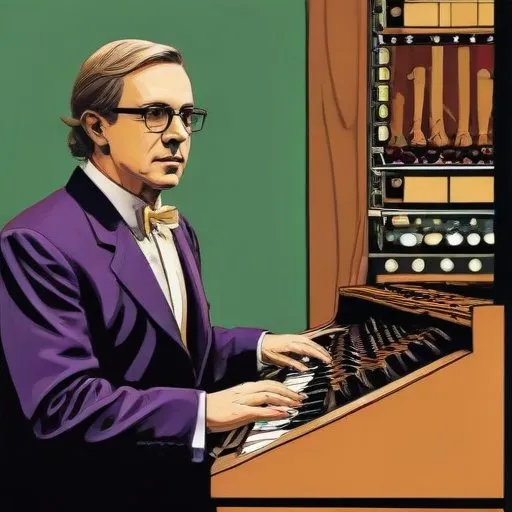
Noted for his contributions to the English Baroque style, this organist and composer created intricate and expressive works for the organ, leaving a lasting impact on the genre.
John Weldon, a renowned English composer, left an indelible mark on the world of Baroque music with his innovative and eclectic style, blending Italianate and French influences with a dash of Purcellian flair. Although often overshadowed by his contemporaries, Weldon's contributions to the realm of music are a testament to his unique artistry and dedication to his craft.
Born on January 19, 1676, in Chichester, England, Weldon was educated at Eton College, where he honed his musical skills as a chorister. He later received musical instruction from the illustrious Henry Purcell, a experience that would shape his musical identity and inspire his future compositions.
By 1694, Weldon had secured the position of organist at New College in Oxford, where he became a prominent figure in the city's thriving musical scene. His compositions for masques and his exceptional organist skills earned him widespread recognition and acclaim.
In 1701, Weldon participated in a prestigious competition to set Congreve's libretto The Judgement of Paris to music. Despite being the newcomer among a group of established composers, including Daniel Purcell, John Eccles, and Godfrey Finger, Weldon's setting was chosen as the winner. This triumph cemented his reputation as a rising star in the musical world.
In the same year, Weldon was appointed a Gentleman of the Chapel Royal, a distinction that further solidified his position in the British musical establishment. This appointment marked the beginning of a new chapter in his career, as he continued to write music for the theatre and the Chapel Royal.
Weldon's compositions demonstrate a unique blend of Purcell's influence, Italianate sensibilities, and French styles, which were gaining popularity during his time. His music for The Tempest, previously attributed to Purcell, is a testament to his innovative spirit and mastery of the Baroque style. Weldon's contributions to the world of music have left an enduring legacy, inspiring generations of composers and music enthusiasts alike.
John Weldon's music and legacy have had a profound impact on the development of Western classical music. His innovative style and compositions continue to inspire and influence contemporary musicians, composers, and scholars. Weldon's contributions to the world of music serve as a testament to the power of creativity and artistic expression.
Born in 1685
A renowned Baroque composer and organist, famous for creating majestic orchestral suites, operas, and oratorios, including the iconic "Messiah" masterpiece.
Born in 1659
A renowned Baroque composer, known for his iconic opera "Dido and Aeneas" and contributions to English classical music.
85 Years Old
Founded the Academy of Ancient Music, a renowned ensemble dedicated to performing Baroque music on period instruments, and was a leading figure in the historically informed performance movement.
71 Years Old
Leading the Berlin Philharmonic and other top ensembles, this renowned maestro is celebrated for his vibrant, expressive performances of classical masterworks. He's particularly acclaimed for his interpretations of Mahler and Bruckner.
Born in 1924
A renowned violinist and conductor, leading the Academy of St. Martin in the Fields, he recorded numerous classical albums and scored music for films like "Amadeus".
Born in 1852
A renowned Irish composer, conductor, and educator who made significant contributions to the development of classical music, particularly in the UK and Ireland, and is remembered for his iconic choral works and operas.
