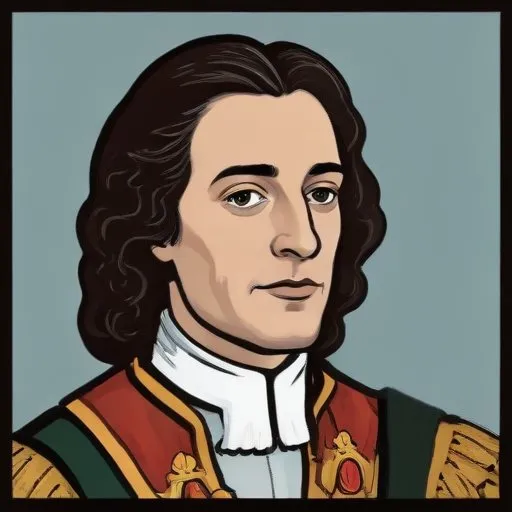
John Wilmot, 2nd Earl of Rochester: The Scandalous Poet of the Restoration Era
A Life of Debauchery and Literary Brilliance
John Wilmot, 2nd Earl of Rochester, was a 17th-century English poet and courtier who embodied the spirit of the Restoration era with his scandalous lifestyle and biting satire. Known for his witty verses and provocative behavior, Rochester became a legendary figure in the court of King Charles II, earning both admiration and scorn from his contemporaries.
Early Life and Education
Born on April 1, 1647, at Ditchley House in Oxfordshire, Rochester was the son of Henry, Viscount Wilmot, and Anne St. John. His father's military service to Charles II during the Commonwealth earned him the title of Earl of Rochester in 1652. Rochester's mother, a strong-willed Puritan, instilled in him a sense of morality that would later be tested by his libertine ways.
Rochester's education began with private tutoring at the age of seven, followed by attendance at the grammar school in Burford. In 1658, his father's death led to his inheritance of the title of Earl of Rochester. Two years later, he was admitted as a Fellow commoner to Wadham College, Oxford.
Literary Career and Major Works
Rochester's poetry was marked by its scathing satire, biting wit, and unapologetic candor. His most famous work,
A Satyr Against Reason and Mankind, is a testament to his mastery of the genre. Other notable works include
Valentinian, a erotic comedy, and
An Allusion to Horace, a poem that showcases his skill in imitating classical styles.
A Life of Libertinism and Scandal
Rochester's personal life was as notorious as his poetry. He was known for his numerous affairs, drunken escapades, and acts of vandalism. His antics often landed him in trouble, including a stint in the Tower of London for his involvement in a duel.
Influence on Modern Society
Rochester's legacy extends beyond his poetry to his impact on modern society. His libertine philosophy, though controversial, paved the way for later literary movements such as Romanticism and Modernism. His poetry also influenced notable writers like
Graham Greene and Ezra Pound.
Quotes and Memorable Sayings
- "Before I got married I had six theories about bringing up children; now I have six children and no theories."
- "I'm debauched, but I'm not depraved."
Historical Context and Legacy
Rochester's life and work are a product of the Restoration era, a time of great social and cultural change. His poetry reflects the tensions between the old Puritan values and the new libertine ethos of the era. Today, Rochester is recognized as one of the most important poets of the 17th century, and his work continues to be studied and admired by scholars and literature enthusiasts alike.
Personal Milestones and Key Life Events
- 1647: Born on April 1st at Ditchley House in Oxfordshire
- 1652: Father, Henry, Viscount Wilmot, is created Earl of Rochester
- 1658: Father's death; inherits the title of Earl of Rochester
- 1660: Admitted to Wadham College, Oxford
- 1680: Dies on July 26th at the age of 33 due to complications from a sexually transmitted infection
Trivia and Fun Facts
- Rochester was known for his exceptional swordsmanship and was often called upon to settle disputes.
- He was a member of the notorious "Merry Gang" of courtiers, known for their outrageous behavior.
- Rochester's poetry was often circulated in manuscript form, as many of his works were deemed too explicit for publication.
A Lasting Legacy
John Wilmot, 2nd Earl of Rochester, was a poet, a courtier, and a rebel. His life was a testament to the excesses and contradictions of the Restoration era, and his poetry continues to fascinate and inspire readers to this day. Though his life was marked by controversy and scandal, Rochester's legacy remains a powerful reminder of the enduring power of literature to challenge, provoke, and delight.
FAQ
Who was John Wilmot, 2nd Earl of Rochester?
John Wilmot was an English poet, courtier, and libertine who lived in the 17th century.
What were the literary contributions of John Wilmot?
Wilmot was a prominent poet of the Restoration period, known for his satirical and erotic verse, which mocked the morality and politics of his time.
What was the role of John Wilmot in the court of King Charles II?
Wilmot was a favorite of King Charles II and served as a courtier, using his wit and poetry to influence the king and his court.
What were the notable works of John Wilmot?
Wilmots notable works include his poem A Satyr Against Reason and Mankind and his play Valentinian.
How did John Wilmots poetry influence later writers?
Wilmots poetry influenced later writers, including Alexander Pope and Jonathan Swift, who borrowed from his satirical style.