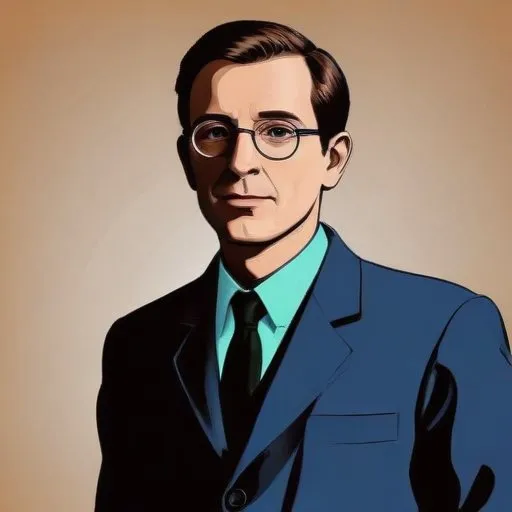
Unraveling the Contributions of John Zachary Young: The Zoologist and Neurophysiologist
A Pioneer in the realm of Biology
John Zachary Young, fondly known as JZ or JZY, was an English zoologist and neurophysiologist who left an indelible mark on the 20th century. He was renowned for his groundbreaking work in the fields of zoology and neurophysiology, earning him the title of one of the most influential biologists of his time.
Early Life and Education
Born on March 18, 1907, Young attended Marlborough College and later pursued a degree in zoology at Magdalen College, Oxford, graduating with first-class honors in 1928. His academic prowess laid the foundation for a remarkable career that would span several decades.
A Career Marked by Excellence
Young's illustrious career was adorned with numerous achievements, including his election as a Fellow of the Royal Society in 1945. He served as Professor of Anatomy at University College London from 1945 to 1974, and later became a Professor Emeritus, introducing a degree program in Human Sciences in 1975.
Awards and Honors
Young's contributions to science were recognized with several prestigious awards, including the Linnean Medal for Zoology from the Linnean Society of London in 1973. He was also elected to the American Academy of Arts and Sciences in 1957 and the American Philosophical Society in 1973. In 1974, he received an honorary Doctor of Science degree from the University of Bath.
International Recognition
Young's work extended beyond the borders of the UK, with a long-standing association with the Stazione Zoologica in Naples, where he spent several summers conducting experiments. In 1991, the city of Naples awarded him honorary citizenship, and the President of the Stazione Zoologica presented him with its Gold Medal. That same year, he was invited to deliver an anniversary lecture by the Italian Society of Experimental Biology, a testament to his enduring legacy.
Influence and Legacy
Young's work had a profound impact on the scientific community, shaping the course of zoology and neurophysiology. His reverence for his great-great-grandfather's brother, Richard, and the English scientist and Egyptologist
Thomas Young, M.D., F.R.S., underscores his connection to a legacy of scientific inquiry. As a founding member of the World Cultural Council, established in 1981, Young continued to contribute to the global scientific discourse.
Personal Connections
Young's personal relationships also played a significant role in his life, including his friendship with Moshe Feldenkrais, a renowned Israeli physicist and founder of the Feldenkrais method. This association highlights the interdisciplinary nature of Young's scholarly pursuits.
A Lasting Impact
John Zachary Young's life and work serve as a testament to his unwavering dedication to the pursuit of scientific knowledge. His contributions to zoology, neurophysiology, and the broader scientific community continue to inspire future generations of scholars and researchers.
FAQ
What was John Zachary Youngs area of expertise?
John Zachary Young was an English zoologist and neurophysiologist who made significant contributions to our understanding of the nervous system and the behavior of animals.
What was John Zachary Youngs most famous discovery?
John Zachary Youngs most famous discovery is probably his identification of the squids giant axon, which enabled him to study the electrical properties of neurons in unprecedented detail.
How did John Zachary Youngs work influence modern neuroscience?
John Zachary Youngs work had a profound influence on modern neuroscience, as he introduced new methods and techniques for studying the nervous system and its functions.
What was John Zachary Youngs approach to science?
John Zachary Youngs approach to science was characterized by a commitment to curiosity, experimentation, and a willingness to challenge established theories and ideas.
How did John Zachary Youngs life influence his work?
John Zachary Youngs life, which was marked by a love of nature and a passion for discovery, deeply influenced his work, as he often drew on his experiences to inform his research and theories.