


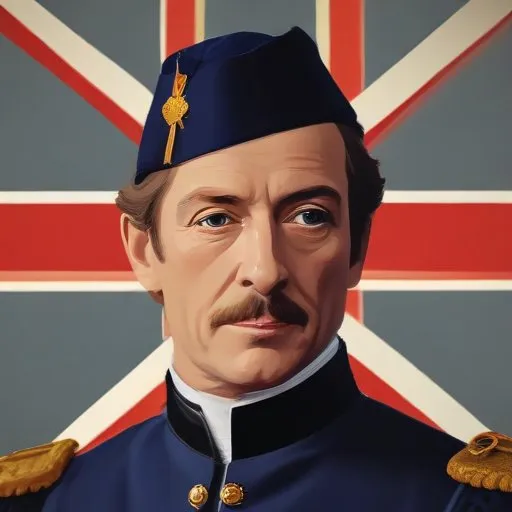
A prominent nobleman and military leader who served as Lord Great Chamberlain of England, known for his role in the Wars of the Roses and his influence on the English monarchy.
John de Vere, 13th Earl of Oxford, is renowned for his bravery and strategic prowess as one of the principal Lancastrian commanders during the English Wars of the Roses. He led King Henry VII's army to victory at the Battle of Bosworth Field and again at the Battle of Stoke Field, earning him a reputation as a skilled military leader.
Born on September 8, 1442, John de Vere was the second son of John de Vere, 12th Earl of Oxford, and Elizabeth Howard. His family was steeped in nobility, with his mother being a first cousin of John Howard, 1st Duke of Norfolk.
Following the execution of his father and brother in 1462 for plotting against King Edward IV, John de Vere was granted license to enter his father's lands and eventually succeeded as the 13th Earl of Oxford. He was created a Knight of the Bath in 1465 and officiated at the coronation of Elizabeth Woodville, the king's wife.
John de Vere, 13th Earl of Oxford, is remembered as a skilled military commander and a key figure in the Lancastrian cause during the English Wars of the Roses. His bravery and strategic prowess continue to inspire historians and military enthusiasts alike.
While de Vere was an accomplished military leader, his contemporaries, such as the Earl of Warwick and King Edward IV, also played significant roles in shaping the course of English history during this tumultuous period.
John de Vere, 13th Earl of Oxford, leaves behind a legacy of military prowess and loyalty to the Lancastrian cause, earning him a place in the annals of English history.
Born in 1408
A prominent nobleman and Lancastrian leader during the Wars of the Roses, he played a crucial role in the Battle of Barnet and was a key figure in the struggle for the English throne.
Born in 1408
A prominent nobleman and Lancastrian leader during the Wars of the Roses, he played a crucial role in the Battle of Barnet and was a key figure in the struggle for the English throne.
Born in 1565
A charismatic military leader and politician who played a crucial role in Irish politics and led a rebellion against Queen Elizabeth I, ultimately meeting a tragic end.
Born in 1532
A powerful and charming favorite of Queen Elizabeth I, known for his influence on English politics and suspected involvement in the mysterious death of his wife.
Born in 1521
A brilliant academic and politician who served as Lord High Treasurer, playing a crucial role in shaping England's economy and politics during the Elizabethan era. He's most known for his wise counsel and strategic thinking that helped stabilize the English monarchy.
Born in 1533
The Virgin Queen, a powerful and beloved monarch, ruled England during a golden age of culture, literature, and exploration, establishing the Church of England and defeating the Spanish Armada.
Born in 1550
A prominent figure in Queen Elizabeth I's court, known for his poetry, patronage of the arts, and rumored authorship of Shakespeare's plays. He held significant influence over the literary and artistic movements of his time.
Born in 1573
A prominent English politician and Lord Lieutenant of Hampshire, known for his patronage of William Shakespeare and his suspected inspiration for the Bard's Sonnets. He played a significant role in shaping English literature and politics during the Elizabethan era.
