


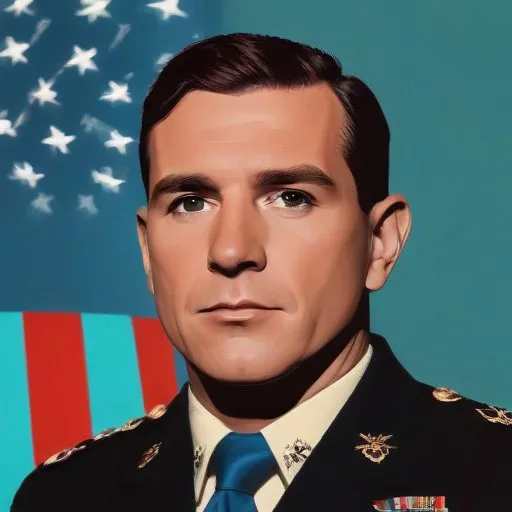
A Medal of Honor recipient and commander of the US Forces in the Philippines during World War II, known for his bravery and leadership during the Battle of Bataan and Corregidor. He was a symbol of resistance against the Japanese occupation.
In the crucible of World War II, Jonathan Mayhew Wainwright IV emerged as a beacon of courage and leadership, earning the distinction of commanding the Allied forces in the Philippines during the Japanese invasion. For his unwavering resolve and bravery, Wainwright was awarded the Medal of Honor, the highest military honor in the United States.
Born on August 23, 1883, at Fort Walla Walla, Washington, Wainwright came from a family with a rich military heritage. His father, a U.S. Army officer, had fought in the Spanish-American War, and his grandfather, Lieutenant Jonathan Mayhew Wainwright II, had made the ultimate sacrifice in the Battle of Galveston during the Civil War. This legacy of service inspired Wainwright to pursue a military career, which he did with distinction.
As the Japanese invaded the Philippines in 1941, Wainwright, then a major general, found himself at the forefront of the battle to defend the islands. With limited resources and outnumbered by the enemy, Wainwright's leadership and tactical prowess inspired his troops to fight against overwhelming odds.
In May 1942, with his forces weary and depleted, Wainwright made the difficult decision to surrender, ensuring the safety of his troops and minimizing further casualties. This act of courage and sacrifice earned him the respect and admiration of his soldiers and the nation.
Wainwright's bravery was matched only by his resilience as a prisoner of war. Held captive by the Japanese for three years, he endured malnutrition, mistreatment, and unspeakable conditions, yet remained steadfast in his refusal to surrender his dignity.
In August 1945, Wainwright was liberated by the Red Army in Manchukuo, and on September 5, 1945, he was promoted to four-star general, a testament to his unwavering dedication to his country and his troops.
Jonathan M. Wainwright's legacy extends far beyond his military achievements. He is remembered as a symbol of courage, leadership, and sacrifice, inspiring generations of soldiers and civilians alike.
Wainwright's story serves as a beacon of hope and inspiration, reminding us that even in the darkest of times, courage, honor, and sacrifice can triumph over adversity.
Born in 1880
A highly decorated war hero and master strategist who led troops to victory in World War I and II, and later became a prominent figure in the occupation of Japan.
Born in 1880
A highly decorated military leader and statesman who played a crucial role in shaping post-WWII foreign policy and was awarded the Nobel Peace Prize for his efforts. He's most known for authoring the Marshall Plan, a massive economic aid program that helped rebuild war-torn Europe.
Born in 1890
Led the Allied forces to victory in World War II and later served as President, maintaining peace and prosperity during the Cold War era. He's known for his strategic leadership and diplomatic skills.
Born in 1893
Led the US Army in World War II and became the last five-star general, playing a crucial role in shaping post-war American military strategy. He's also known for his humble and unassuming leadership style.
Born in 1885
Led the U.S. Pacific Fleet to victory in World War II, playing a crucial role in defeating Japan and ending the war. He was a highly respected and decorated naval leader.
Born in 1886
Led the United States Army Air Forces during World War II, playing a crucial role in the Allied victory, and later became the first General of the Air Force. He's also known as the "Father of the US Air Force".
Born in 1885
A renowned military leader who played a crucial role in World War II, particularly in the Allied victory in Europe, known for his bold tactics and unapologetic style.
