


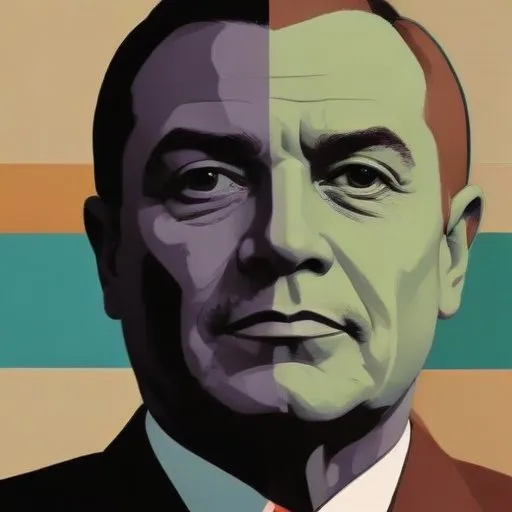
A 19th-century Brazilian politician who played a key role in the country's abolition of slavery and was a prominent figure in the Empire of Brazil's parliament. He advocated for social and economic reforms, particularly for the rights of African Brazilians.
Imagine a Brazil without its rich coffee culture, where mornings begin without the aroma of freshly brewed coffee wafting through the air. It's a scenario that would have become a reality if not for the pioneering efforts of Joo Maurcio Vanderlei, Baron of Cotejipe, a Brazilian aristocrat who single-handedly transformed the nation's coffee industry.
Vanderlei is best known for his groundbreaking work in introducing new coffee cultivation and processing techniques to Brazil, revolutionizing the country's coffee production and turning it into one of the world's largest coffee producers. Born in 1815 in the state of Minas Gerais, Vanderlei belonged to a prominent family of farmers and traders. From a young age, he showed a keen interest in agriculture and innovation, which would later shape his remarkable career.
In the mid-19th century, Brazil's coffee industry was still in its infancy, relying heavily on traditional and labor-intensive methods. Vanderlei recognized the need for modernization and invested heavily in new technologies and machinery. He introduced the use of iron plows, threshing machines, and other equipment, significantly increasing coffee production and quality. His innovative approaches earned him widespread recognition, and he was soon appointed as the Baron of Cotejipe by Emperor Pedro II.
Vanderlei's personal life was marked by simplicity and humility, despite his aristocratic title. He married Maria Angela da Silva in 1843, and the couple had six children together. Vanderlei was known for his strong commitment to social justice and education, often providing support to local schools and community organizations.
Joo Maurcio Vanderlei, Baron of Cotejipe, left an indelible mark on Brazil's coffee industry and economy. His pioneering work paved the way for the country's coffee boom in the late 19th and early 20th centuries. Today, Brazil is the world's largest coffee producer, accounting for approximately 30-40% of global coffee production. Vanderlei's legacy extends beyond Brazil's borders, with his innovative techniques and approaches influencing coffee production worldwide.
In conclusion, the story of Joo Maurcio Vanderlei, Baron of Cotejipe, is a testament to the power of innovation, perseverance, and dedication. His remarkable journey has inspired generations of coffee farmers, entrepreneurs, and enthusiasts, solidifying his place as one of Brazil's most revered coffee pioneers.
Born in 1882
A dominant leader who ruled Brazil from 1930 to 1945 and again from 1951 until his suicide in 1954, known for implementing reforms and promoting nationalism.
Born in 1918
A Brazilian lawyer and politician who served as the 24th President of Brazil, known for his left-wing policies and nationalization of industries, leading to a military coup that ousted him.
Born in 1910
A Brazilian lawyer and politician who served as Prime Minister of Brazil, known for being the first civilian to assume the office after a long period of military rule. He's also famous for dying before taking office, sparking a national crisis.
96 Years Old
Brazil's 33rd President, a skilled engineer and politician, led the country during a period of economic crisis and implemented significant reforms. He's most known for stabilizing the economy and introducing the Real Plan.
95 Years Old
A renowned sociologist and politician who served as President of Brazil from 1995 to 2003, implementing economic reforms and stabilizing the country's economy. He's also a respected academic and writer.
81 Years Old
A Brazilian union leader and politician who served as President of Brazil, known for his efforts to reduce poverty and inequality, and for being a key figure in the country's economic growth.
78 Years Old
Brazil's first female president, a key figure in the country's economic development and a symbol of female empowerment in Latin American politics.
