


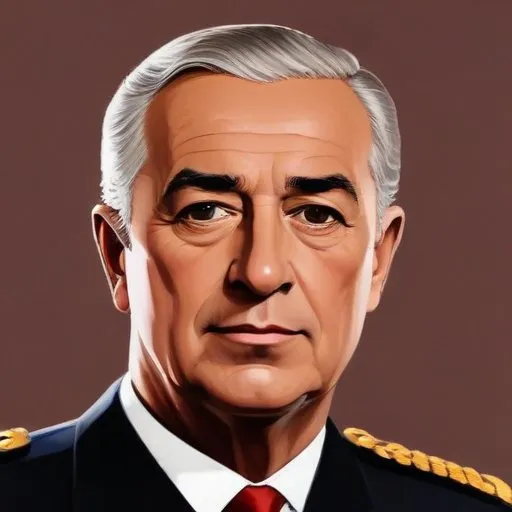
A Portuguese admiral and politician who served as the 9th President of Portugal, known for his brief but significant tenure during a time of political turmoil. He played a key role in shaping the country's future.
Known as the architect of Portugal's 5 October revolution in 1910 and the 28 May coup d'état of 1926, Jos Mendes Cabeadas was a Portuguese Navy officer, Freemason, and republican who left an indelible mark on his country's history.
Mendes Cabeadas' career was defined by his involvement in the revolutionary movements that shaped Portugal's First Republic. In 1910, he played a key role in the revolt on board the ship Adamastor, which paved the way for the Republican Revolution.
However, Mendes Cabeadas soon became disillusioned with the regime he had helped create. In 1926, he led the revolution against the First Republic in Lisbon, which ultimately led to the overthrow of Prime Minister António Maria da Silva and President Bernardino Machado.
Mendes Cabeadas' ascension to power was swift and dramatic. On 31 May 1926, he was named Prime Minister, and just hours later, he assumed the role of President of the Republic after Bernardino Machado's resignation.
However, his time in power was short-lived. On 17 June 1926, he was forced to relinquish his posts as President of the Republic and Prime Minister in favor of Gomes da Costa, marking the end of his brief but tumultuous tenure.
Mendes Cabeadas' moderate tendencies often placed him at odds with more radical elements within the revolutionary movement. Despite this, he remained committed to the ideals of the Republican Revolution and continued to play a role in Portuguese politics throughout his life.
His legacy serves as a testament to the complexities and intrigue of Portuguese politics during the early 20th century, and his contributions to the country's history continue to be felt to this day.
Mendes Cabeadas' contributions to Portuguese history and politics have had a lasting impact on modern society. His role in shaping the country's First Republic and his commitment to the ideals of the Republican Revolution continue to influence Portuguese politics and culture to this day.
As a symbol of resistance and political activism, Mendes Cabeadas' legacy serves as a powerful reminder of the importance of standing up for one's beliefs and fighting for change.
Jos Mendes Cabeadas was a complex and multifaceted figure, driven by a passion for politics and a commitment to the ideals of the Republican Revolution. His legacy serves as a testament to the power of individual action and the importance of standing up for one's beliefs, even in the face of adversity.
As we reflect on Mendes Cabeadas' life and legacy, we are reminded of the enduring impact of his contributions to Portuguese history and politics, and the continued relevance of his ideals in modern society.
Born in 1889
A dictator who ruled Portugal from 1933 to 1968, implementing a corporatist authoritarian regime and maintaining a neutral stance during World War II. He's known for his economic reforms and nationalist policies.
Born in 1924
A Portuguese historian, lawyer, and politician who served as the 17th President of Portugal, known for leading the country's transition from authoritarianism to democracy. He played a key role in Portugal's decolonization and European integration.
76 Years Old
The first Portuguese to lead the United Nations, he's a champion of global cooperation, human rights, and sustainable development. He's a prominent voice on the world stage, advocating for climate action and social justice.
86 Years Old
The 19th President of the Portuguese Republic was a prominent economist and politician who served from 2006 to 2016, known for his economic reforms and leadership during the European sovereign-debt crisis. He is also a published author on economics and politics.
86 Years Old
The 18th President of Portugal, a lawyer and politician, served from 1996 to 2006 and was a key figure in the country's transition to democracy. He's known for his commitment to social justice and human rights.
Born in 1924
A Portuguese historian, lawyer, and politician who served as the 17th President of Portugal, known for leading the country's transition from authoritarianism to democracy. He played a key role in Portugal's decolonization and European integration.
