


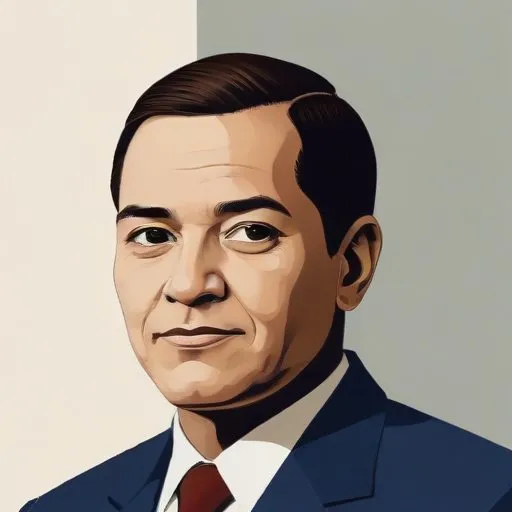
A 19th-century Brazilian statesman who played a crucial role in the country's abolition of slavery and modernization efforts. He's remembered for his diplomatic skills and progressive policies.
José María da Silva Paranhos, better known as the Viscount of Rio Branco, was a Brazilian politician, diplomat, and journalist who left an indelible mark on his country's history. As the longest-serving president of the Council of Ministers, he championed reforms that transformed Brazil's social and economic landscape, cementing his legacy as one of the nation's greatest statesmen.
Born on March 16, 1819, in Salvador, Bahia, Paranhos came from a wealthy family, but his parents' early demise forced him to forge his own path. He attended Brazil's Naval School and later the Military Academy, where he became an instructor. However, it was politics that ultimately became his calling, and he joined the Liberal Party in 1845.
Under the guidance of Aureliano Coutinho, Viscount of Sepetiba, Paranhos quickly rose through the ranks, becoming a member of the provincial house of representatives of Rio de Janeiro province. His talent and dedication soon caught the attention of Emperor Pedro II, who would become a key ally in his future endeavors.
Paranhos' presidency of the Council of Ministers, which spanned from 1871 to 1875, was marked by a series of groundbreaking reforms. The most significant of these was the Law of Free Birth, which granted freedom to children born to slave women. This landmark legislation not only expanded civil rights but also boosted Paranhos' popularity among the Brazilian people.
During his tenure, Brazil experienced a period of unprecedented economic growth, thanks in part to Paranhos' fiscal policies and infrastructure development initiatives. His government's prudent management of the country's finances earned him recognition as a skilled statesman.
However, Paranhos' government was not without its challenges. A prolonged crisis with the Catholic Church arose from the expulsion of Freemasons from its lay brotherhoods, testing the statesman's diplomacy and leadership skills.
After resigning from the Council of Ministers in 1875, Paranhos embarked on a well-deserved vacation in Europe. However, his health began to decline rapidly, and he was diagnosed with oral cancer. Despite his illness, he continued to serve his country, albeit in a reduced capacity, until his passing on November 1, 1880.
Upon his death, Brazil mourned the loss of a great leader. Historians and contemporaries alike hailed Paranhos as one of the nation's most exceptional statesmen, a testament to his tireless dedication to public service and his unwavering commitment to the people of Brazil.
Paranhos' reforms and vision for a more equitable society continue to influence Brazilian politics and social policy to this day. His commitment to education, economic development, and social justice has inspired generations of leaders and citizens alike.
"The greatness of a nation is not measured by its power, but by its justice and the well-being of its people." – José María da Silva Paranhos
Paranhos' remarkable life and accomplishments serve as a testament to the power of dedicated public service and visionary leadership. As Brazil continues to evolve and grow, the legacy of the Viscount of Rio Branco will remain an enduring symbol of the nation's potential for greatness.
Born in 1882
A dominant leader who ruled Brazil from 1930 to 1945 and again from 1951 until his suicide in 1954, known for implementing reforms and promoting nationalism.
Born in 1918
A Brazilian lawyer and politician who served as the 24th President of Brazil, known for his left-wing policies and nationalization of industries, leading to a military coup that ousted him.
Born in 1910
A Brazilian lawyer and politician who served as Prime Minister of Brazil, known for being the first civilian to assume the office after a long period of military rule. He's also famous for dying before taking office, sparking a national crisis.
96 Years Old
Brazil's 33rd President, a skilled engineer and politician, led the country during a period of economic crisis and implemented significant reforms. He's most known for stabilizing the economy and introducing the Real Plan.
95 Years Old
A renowned sociologist and politician who served as President of Brazil from 1995 to 2003, implementing economic reforms and stabilizing the country's economy. He's also a respected academic and writer.
81 Years Old
A Brazilian union leader and politician who served as President of Brazil, known for his efforts to reduce poverty and inequality, and for being a key figure in the country's economic growth.
78 Years Old
Brazil's first female president, a key figure in the country's economic development and a symbol of female empowerment in Latin American politics.
