


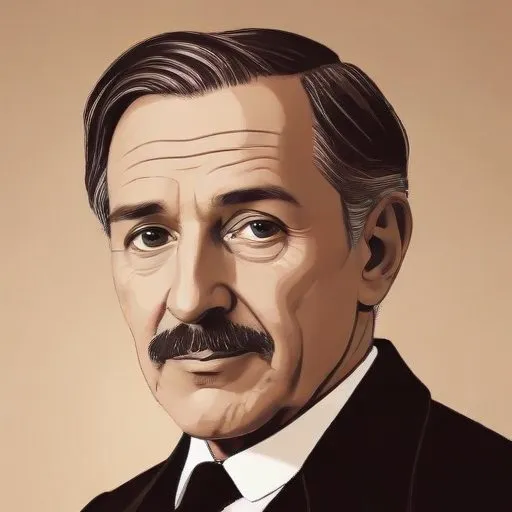
Canadian astrophysicist and astronomer who made significant contributions to our understanding of stellar evolution and the structure of stars, particularly through his work on the Hertzsprung-Russell diagram.
Joseph Algernon Pearce, a Canadian astrophysicist, is renowned for his groundbreaking studies on the structure of the Milky Way and O-type stars. His contributions to the field of astrophysics have left an indelible mark, shaping our understanding of the universe and inspiring future generations of astronomers.
Born on February 7, 1893, in Brantford, Ontario, Pearce's journey began with a strong foundation in science. He enlisted in the Canadian Expeditionary Force in 1915, serving as a Major in France until his injury led him to return to Canada as a training officer. After the war, Pearce pursued higher education, earning a bachelor's and master's degree from the University of Toronto. His academic pursuits continued at the Lick Observatory in California, where he earned his PhD from the University of California, Berkeley in 1930.
Pearce joined the Dominion Astrophysical Observatory in Saanich, British Columbia, and was appointed Assistant Director in 1935. His exceptional work led to his promotion as Director from 1940 to 1951. During this tenure, he made significant contributions to the field, earning him a Fellowship in the Royal Society of Canada. Pearce went on to serve as the society's president from 1949 to 1950, solidifying his reputation as a leading astrophysicist.
In recognition of his outstanding contributions, Pearce was awarded an honorary Doctor of Science degree from the University of British Columbia in 1955. His leadership roles in esteemed organizations, such as the Royal Astronomical Society of Canada and the American Astronomical Society, underscore his stature in the scientific community.
Joseph Algernon Pearce's remarkable journey, marked by unwavering dedication to astrophysics, has inspired generations of scientists. His groundbreaking research and leadership have left an indelible mark on the field, ensuring his legacy continues to illuminate the vast expanse of the universe.
Born in 1885
Measured the galaxy's size and mapped the Milky Way's structure, revolutionizing our understanding of the universe.
Born in 1882
A pioneer in astrophysics, he formulated the Eddington limit, a crucial concept in understanding stars, and was a key figure in popularizing Einstein's theory of relativity. His work bridged the gap between theory and observation in astronomy.
Born in 1915
A renowned astronomer and science fiction author who proposed the steady state theory of the universe and coined the term "Big Bang", making significant contributions to our understanding of the cosmos.
Born in 1910
A renowned scientist who pioneered our understanding of black holes and the behavior of stars, earning a Nobel Prize in Physics in 1983.
Born in 1889
Discovered galaxies beyond our own Milky Way, revolutionizing our understanding of the universe's scale and expansion. Pioneered observational cosmology, providing evidence for the Big Bang theory.
Born in 1900
Pioneering astronomer who discovered that stars are primarily composed of hydrogen and helium, revolutionizing our understanding of the universe. Her groundbreaking work paved the way for future generations of astronomers.
Born in 1863
Pioneering astronomer who classified over 350,000 stars and developed a system of stellar classification still used today. Her work paved the way for future astronomers to better understand the universe.
Born in 1857
A pioneering female astronomer who cataloged thousands of stars, discovered 59 gaseous nebulae, and developed a system for classifying stars based on their spectra. Her work laid the foundation for modern astrophysics.
