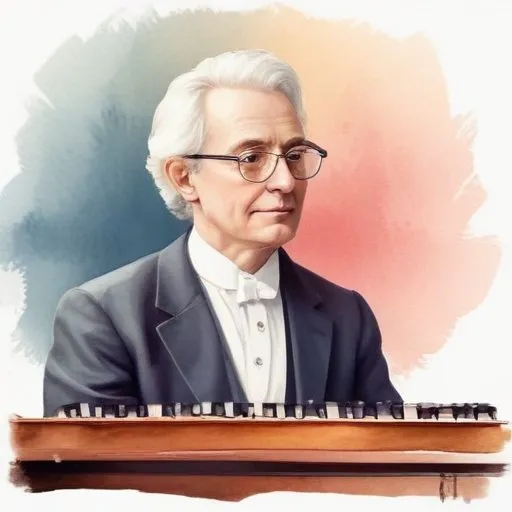
Joseph Graetz: The Maestro of Munich
A Legacy of Harmony and Instruction
Joseph Graetz, a renowned German composer, organist, and music educator, left an indelible mark on the world of music. Born on December 2, 1760, in Vohburg on the Danube, Graetz's life was a symphony of creativity, passion, and dedication to his craft.
A Melodic Upbringing
Graetz's musical journey began at Rohr Abbey, near Abensberg, Bavaria, where he received his initial training. He later attended school in Ingolstadt, further honing his skills. The young musician's talent and potential were soon recognized, earning him a spot as a pupil of the esteemed
Michael Haydn in Salzburg. For a brief period, Graetz also studied under Ferdinando Bertoni in Venice, soaking up the rich musical heritage of Italy.
A Life of Composition and Education
Musical Milestones
In 1788, Graetz settled in Munich, where he flourished as a composer and music teacher. Two of his notable stage works, the operetta
and the opera , premiered in 1790, showcasing his mastery of the craft.
Shaping the Next Generation
Graetz's impact on the music world extended beyond his own compositions. He taught and mentored a talented group of students, including Caspar Ett, Josef Alois Ladurner, Peter Josef von Lindpaintner, Eduard Rottmanner, and Jakob Zeugheer. These pupils went on to become accomplished musicians in their own right, ensuring Graetz's legacy continued to resonate through the ages.
A Life of Devotion and Passion
Graetz's devotion to music was matched only by his passion for teaching. He spent his life sharing his knowledge and inspiring future generations, leaving behind a rich cultural heritage. On July 17, 1826, the maestro's life came full circle, as he passed away in Munich, the city that had been his home and creative sanctuary for nearly four decades.
Historical Context and Legacy
Joseph Graetz's life and work are a testament to the power of music to transcend time and borders. His contributions to the world of classical music remain significant, with his operas and compositions continuing to delight audiences today. As a teacher, he shaped the musical landscape of his era, influencing a new generation of composers and musicians. Graetz's legacy is a reminder of the impact one person can have on the world, and the enduring beauty of music to inspire and uplift.
Trivia and Fun Facts
- Graetz was born in the same year as the famous German composer, Ludwig van Beethoven.
- He was a prolific composer, writing numerous operas, symphonies, and chamber music pieces.
- Graetz's students went on to become prominent figures in the German music scene, ensuring his legacy continued to flourish long after his passing.
FAQ
What was Joseph Graetzs contribution to the field of music?
Joseph Graetz was a German organist, composer, and educator who made significant contributions to the field of music, including composing numerous works for organ and choir.
How did Joseph Graetzs teaching impact the development of music education?
Joseph Graetzs teaching had a significant impact on the development of music education, as he helped to establish several music schools and trained many prominent musicians.
What was Joseph Graetzs relationship with the Lutheran Church?
Joseph Graetz had a close relationship with the Lutheran Church, which he served as an organist and composer, and which played a significant role in his musical development.
How did Joseph Graetzs compositions reflect his religious beliefs?
Joseph Graetzs compositions reflected his deep religious beliefs, as he often incorporated Lutheran hymns and chorales into his works, and used music as a way to express his faith.
What is Joseph Graetzs legacy in the history of music?
Joseph Graetzs legacy in the history of music is one of dedication to his craft, a commitment to education and the development of new talent, and a body of work that continues to inspire and uplift audiences today.