


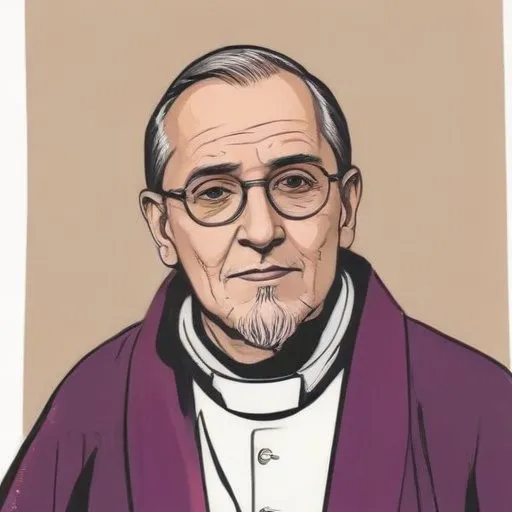
A 17th-century Anglican bishop and mystic who wrote influential devotional literature, exploring the inner life and spiritual growth. His works remain a significant part of Christian mystical tradition.
Known as the "English Seneca" for his pure, plain, and full writing style, Joseph Hall was a renowned English bishop, satirist, and moralist of the 17th century. His contemporaries revered him as a devotional writer and a high-profile controversialist, making a significant impact on the literary and religious landscape of his time.
Hall's writings were characterized by their biting satire, moralistic tone, and eloquent style. He penned numerous works, including Virgidemiarum, a collection of satires that critiqued the social ills of his time. His other notable works include Mundus Alter et Idem, a utopian novel, and Character of Virtues and Vices, a moral treatise.
As a bishop, Hall navigated the complexities of church politics, often taking a middle way between extremes. He engaged in heated debates, earning him a reputation as a skilled controversialist. His involvement in the controversies surrounding the early 1640s solidified his position as a prominent figure in the English Church.
Joseph Hall was born on July 1, 1574, at Bristow Park, Ashby-de-la-Zouch. He was educated at Ashby Grammar School and later attended Emmanuel College, Cambridge, where he earned his B.A., M.A., B.D., and D.D. degrees. His uncle, Edmund Sleigh, partly sponsored his education.
Hall's work had a profound impact on the literary and religious landscape of the 17th century. His satires and moral treatises influenced many, including prominent figures such as John Donne and George Herbert. His legacy extends to the modern era, with scholars continuing to study and appreciate his contributions to English literature.
"He that hath no evil in his heart, hath no devil in his company." - Joseph Hall
Hall's works continue to inspire and educate readers to this day, offering a glimpse into the complexities of the human condition and the need for moral reflection.
Born in 1924
Prolific author of macabre and suspenseful novels, often blending elements of horror, mystery, and dark humor, with works adapted into successful films and TV shows.
Born in 1573
A 17th-century poet and cleric who penned powerful, metaphysical sonnets that explored themes of love, death, and spirituality. His works are celebrated for their complex, intricate language and profound insights into the human experience.
Born in 1593
A metaphysical poet and Anglican priest, he crafted intricate, symbolic, and introspective verse that explored the human condition and spirituality. His poetry is revered for its lyricism, depth, and emotional resonance.
Born in 1591
A 17th-century poet and Anglican priest, he's celebrated for his lyrical and sensual verses, particularly in his collection "Hesperides", which explores themes of love, nature, and mortality.
Born in 1608
Wrote epic poems, including "Paradise Lost", that explored themes of morality, free will, and the human condition.
