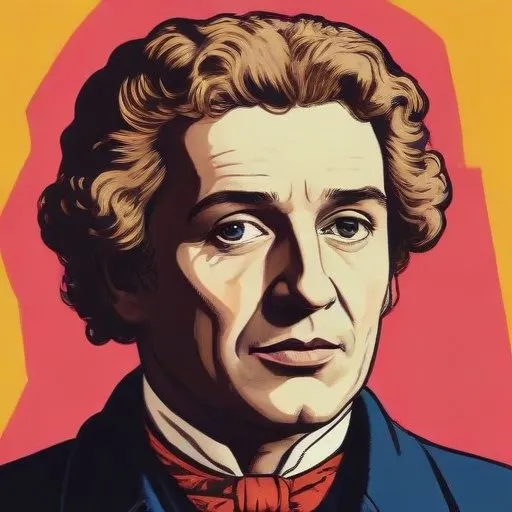
Robert Herrick: The 17th Century Poet Who Celebrated Life's Fleeting Moments
A Poet of Ephemeral Beauty
Robert Herrick, a 17th century English lyric poet and Anglican cleric, is best known for his iconic poem "To the Virgins, to Make Much of Time," which begins with the immortal lines "Gather ye rosebuds while ye may, / Old Time is still a-flying." This carpe diem poem, along with his other works, has cemented Herrick's place as a master of capturing life's fleeting moments.
Early Life and Education
Born in Cheapside, London, in 1591, Herrick was the seventh child and fourth son of Julia Stone and Nicholas Herrick, a prosperous goldsmith. His uncle, Robert Herrick or Heyrick, a Member of Parliament, owned the land where Greyfriars Abbey stood, which was dissolved by Henry VIII in the mid-16th century. Herrick's father died in 1592, when Robert was just a year old, under mysterious circumstances – whether it was suicide or an accident remains unclear. Despite this early tragedy, Herrick went on to receive his education at The Merchant Taylors School, where he was influenced by his uncles, before becoming apprenticed to his uncle Sir William Herrick, a goldsmith and jeweller to the king. He later attended St Johns College, Cambridge, and Trinity Hall, graduating in 1617.
A Poet and a Cleric
Herrick's love for poetry led him to become a member of the Sons of Ben, a group centred on an admiration for the works of
Ben Jonson, to whom he wrote at least five poems. In 1623, Herrick was ordained into the Church of England and became the vicar of Dean Prior in Devonshire in 1629. However, his peaceful life as a cleric was disrupted during the English Civil War, when he was ejected from his vicarage in 1647 for refusing the Solemn League and Covenant. This tumultuous period led Herrick to return to London, where he relied on the charity of his friends and family, and began preparing his lyric poems for publication.
Hesperides: A Collection of Poems
In 1648, Herrick published his most famous work,
Hesperides, a collection of over 1,200 poems that showcased his mastery of lyric poetry. This monumental work includes "To the Virgins, to Make Much of Time," as well as other poems that celebrate the beauty of nature, the passage of time, and the human experience.
Influence and Legacy
Herrick's poetry has had a profound influence on literature and culture. His emphasis on carpe diem, the idea of seizing the day, has inspired countless writers and artists to focus on the present moment. His poetry has also been a source of comfort and inspiration for many, offering a unique perspective on the fleeting nature of life.
Personal Life and Milestones
- 1591: Born in Cheapside, London
- 1592: Father Nicholas Herrick dies under mysterious circumstances
- 1607: Becomes apprenticed to his uncle Sir William Herrick
- 1617: Graduates from Trinity Hall, Cambridge
- 1623: Ordained into the Church of England
- 1629: Becomes the vicar of Dean Prior in Devonshire
- 1647: Ejected from his vicarage for refusing the Solemn League and Covenant
- 1648: Publishes Hesperides, a collection of poems
- 1674: Dies and is buried in Dean Prior, Devonshire
Quotes and Memorable Sayings
- "Gather ye rosebuds while ye may, / Old Time is still a-flying."
- "The higher the hills, the lower the vales."
- "Thus times do shift; each thing his turn doth hold; / New things succeed, as former things grow old."
Through his poetry, Robert Herrick reminds us to cherish life's fleeting moments and to appreciate the beauty that surrounds us. His legacy continues to inspire and delight readers to this day.
FAQ
What was Robert Herricks contribution to English literature?
Robert Herrick was a prominent English poet and cleric, known for his collection of poems, Hesperides, which celebrated love, nature, and the beauty of the human form.
What was Robert Herricks role in the English Church?
Robert Herrick served as a cleric in the English Church, holding various positions, including Vicar of Dean Prior in Devon.
How did Robert Herricks poetry reflect his views on life?
Robert Herricks poetry reflected his joyful and sensual appreciation of life, love, and nature, often using classical allusions and metaphors.
What were Robert Herricks most famous poems?
Robert Herricks most famous poems include Upon Julias Clothes and To Daffodils, which showcase his mastery of language and form.
What is Robert Herricks legacy?
Robert Herricks legacy is that of a celebrated poet and cleric, whose work continues to delight and inspire readers with its beauty, wit, and sensuality.