


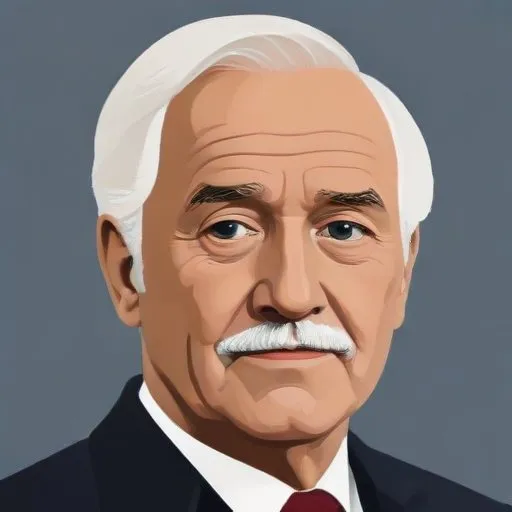
A pioneering journalist and politician who fought for freedom of the press and led Nova Scotia to self-government, leaving a lasting legacy in Canadian history.
Joseph Howe, a Nova Scotian journalist, politician, public servant, and poet, is renowned for his unwavering commitment to the freedom of the press and his pivotal role in shaping Nova Scotia's history. Born on December 13, 1804, Howe's remarkable career spanned multiple decades, leaving an indelible mark on the province and the nation.
Howe's father, John Howe, a loyalist, instilled in him a deep love for Great Britain and its Empire. This loyalty would later influence Howe's perspective on politics and governance. At the tender age of 23, the self-taught but widely read Howe purchased the Novascotian, transforming it into a popular and influential newspaper.
In 1835, Howe's fearless reporting style landed him in hot water, as he was charged with seditious libel for publishing a letter that attacked Halifax politicians and police for embezzling public funds. In a landmark case, Howe addressed the jury for over six hours, citing numerous examples of civic corruption. His impassioned plea ultimately led to his acquittal, cementing his reputation as a champion of a free press.
Howe's conviction and dedication to his craft propelled him into the world of politics. In 1836, he was elected to the Nova Scotia House of Assembly as a liberal reformer, marking the beginning of a long and eventful public career. His tireless efforts contributed significantly to Nova Scotia becoming the first British colony to achieve responsible government in 1848.
From 1860 to 1863, Howe served as the premier of Nova Scotia, further solidifying his reputation as a skilled leader. During this period, he worked tirelessly to promote the interests of his province, even leading the fight against Canadian Confederation from 1866 to 1868.
In 1869, Howe joined the federal cabinet of John A. Macdonald, playing a crucial role in bringing Manitoba into the union. His commitment to public service continued until his appointment as the third Lieutenant Governor of Nova Scotia in 1873, a position he held until his untimely passing on June 1, 1873.
Joseph Howe's remarkable life serves as a testament to the power of conviction, dedication, and commitment to one's craft. His legacy continues to inspire generations, ensuring that his name remains etched in the annals of Canadian history.
Born in 1815
The first Prime Minister of Canada, a key figure in the country's formation and development, known for shaping its early years and creating a unified nation.
Born in 1818
A Scottish-Canadian journalist and politician who served as the 10th Premier of West Canada, known for his leadership during a period of significant growth and development in the region. He was a strong advocate for education and infrastructure development.
Born in 1841
The 7th Prime Minister of Canada, a champion of national unity and French-English relations, who navigated the country through significant industrial and economic growth. He's also known for his role in shaping Canada's autonomy from Britain.
Born in 1882
The 12th Prime Minister of Canada, a strong leader who played a crucial role in shaping the country's post-war economy and foreign policy, and is credited with establishing universal hospital insurance and old-age pensions.
Born in 1895
The 13th Prime Minister of Canada, a champion of individual rights and freedoms, introduced the Canadian Bill of Rights, a precursor to the Charter of Rights and Freedoms. He's also known for his anti-apartheid stance and leadership during the Suez Crisis.
Born in 1897
A Canadian leader who served as Prime Minister and won the Nobel Peace Prize for resolving the Suez Canal Crisis, known for his diplomatic efforts and peacekeeping initiatives.
Born in 1919
The charismatic leader who championed Canadian unity and implemented progressive policies, known for his iconic style and influential legacy in shaping modern Canada.
