


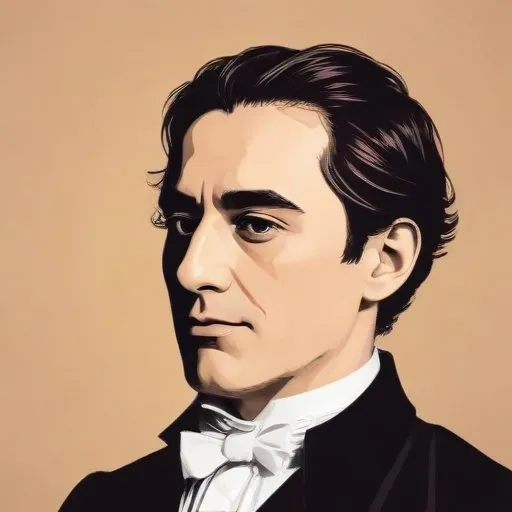
Austrian composer and conductor of waltzes and operettas, known for his significant contributions to the development of the Viennese waltz style. He was a prominent figure in 19th-century Vienna's musical scene.
Joseph Lanner, the renowned Austrian composer and conductor, is best known for revolutionizing the waltz, elevating it from a simple peasant dance to a sophisticated and elegant art form that captivated the hearts of the Viennese high society. His innovative compositions and captivating performances earned him a reputation as one of the most celebrated musicians of his time, rivaling his friend and contemporary, Johann Strauss I.
Born on April 12, 1801, in St. Ulrich, Vienna, Lanner was largely self-taught on the violin. He began his music career by joining a small string orchestra led by Michael Pamer, where he met Johann Strauss I. Ambitious and driven, Lanner soon ventured into the music business himself, partnering with Karl and Johann Drahanek to form a quartet that bore his name.
The success of Lanner's quartet led to its expansion, and by 1824, he was conducting a small string orchestra playing Viennese dance music. His orchestra became a regular feature in Vienna's vibrant carnival scene, known as the Fasching, drawing in crowds with its infectious energy and captivating rhythms. Lanner's innovative compositions and charismatic performances propelled him to fame, solidifying his position as one of the leading musicians of his time.
In 1832, Lanner allowed Johann Strauss I to deputize in a second, smaller orchestra formed to meet the demanding schedule of the Carnival activities. This move sparked a rivalry between the two musicians, with Strauss I seeking to establish himself as a separate entity. Lanner's legacy, however, remained unrivaled, with his compositions continuing to captivate audiences and influence future generations of musicians.
Lanner's personal life was marked by both triumph and tragedy. His son, August Lanner, was a musically gifted prodigy who died at the age of 20, cutting short a promising career. His daughter, Katharina, became a renowned international ballet dancer, settling in London where she became an influential choreographer and teacher.
Lanner's contributions to the world of music extend beyond his compositions and performances. He played a significant role in popularizing the waltz, making it an integral part of Vienna's cultural identity. His music transcended social boundaries, bringing people together and fostering a sense of community and joy.
Lanner's music reflects his deep understanding of the human experience. He believed that music had the power to bring people together, to evoke emotions, and to create a sense of community. His compositions embodied this philosophy, creating a sense of joy, elegance, and sophistication that continues to inspire audiences today.
Lanner's contributions to music were recognized during his lifetime, earning him numerous accolades and honors. He was celebrated as the "Waltz King of Vienna," a testament to his enduring legacy and impact on the world of music.
Lanner's life and work were deeply rooted in the cultural and social context of 19th-century Vienna. His music reflects the city's vibrant energy, its passion for life, and its love of beauty and elegance. As a composer, conductor, and innovator, Lanner left an indelible mark on the world of music, inspiring generations of musicians and ensuring his place in the pantheon of musical legends.
Joseph Lanner's remarkable story serves as a testament to the power of music to bring people together, to transcend social boundaries, and to create a sense of community and joy. His legacy continues to inspire and delight audiences today, solidifying his position as one of the most celebrated and revered musicians of all time.
Born in 1804
Austrian composer and conductor of waltzes, polkas, and other dance music, known for his lively and energetic compositions that helped popularize Viennese dance music.
Born in 1804
Austrian composer and conductor of waltzes, polkas, and other dance music, known for his lively and energetic compositions that helped popularize Viennese dance music.
Born in 1819
Austrian composer and conductor renowned for his operettas, particularly "Light Cavalry" and "Poet and Peasant", which remain popular to this day.
Born in 1835
A member of the famous Strauss family, he was a composer and conductor of light music, particularly waltzes, and led the Strauss Orchestra for over 40 years. He is best known for his operettas and dance music.
Born in 1870
Operetta mastermind behind iconic works like "The Merry Widow", blending Viennese charm with witty humor and lush melodies.
Born in 1870
A renowned composer and conductor of operettas, known for his witty and charming music that blended Viennese elegance with French flair. His works include "The Chocolate Soldier" and "Waltz Dream".
