


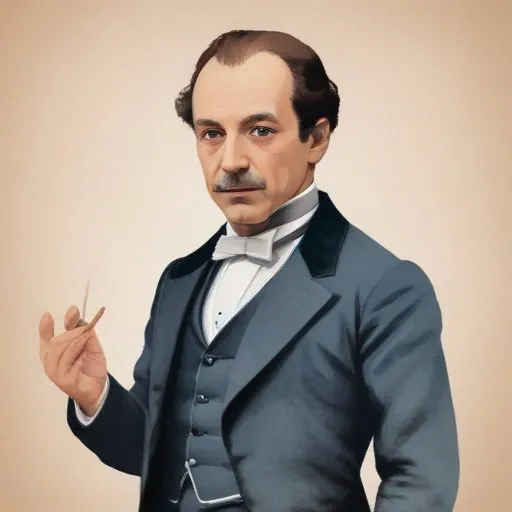
A member of the famous Strauss family, he was a composer and conductor of light music, particularly waltzes, and led the Strauss Orchestra for over 40 years. He is best known for his operettas and dance music.
Eduard Strauss, affectionately known as Edi, was a renowned Austrian composer and conductor who, alongside his brothers Johann Strauss II and Josef Strauss, formed the illustrious Strauss musical dynasty. Born on March 15, 1835, in Vienna, Austria, Eduard was destined to leave his mark on the world of light music, dominating the Viennese music scene with his unique style and captivating compositions.
Eduard was the son of Johann Strauss I and Maria Anna Streim, and his family's musical legacy was undeniable. His brothers, Johann Strauss II and Josef Strauss, were already well-established composers and conductors, making Eduard's entry into the musical world a natural progression. Together, the three brothers created a plethora of waltzes and polkas that enthralled European nobility and dance music enthusiasts alike.
Eduard's musical style was distinct and individual, refusing to emulate the works of his brothers or contemporaries. Instead, he carved out his own niche, revolutionizing the polka genre with his innovative quick polka, known in German as the polkaschnell. This bold move earned him recognition as a talented composer and conductor in his own right.
Eduard's musical career was marked by a bitter rivalry with Karl Michael Ziehrer, a military bandmaster and dance music composer. Ziehrer's orchestra, initially called the "Formerly Eduard Strauss Orchestra," posed a significant threat to Eduard's prominence in Vienna. The rivalry intensified when Ziehrer began performing under the new title, prompting Eduard to take legal action against him for the improper use of his name.
Eduard married Maria Klenkhart on January 8, 1863, and continued to conduct the Strauss Orchestra until its disbandment on February 13, 1901. Despite facing intense competition from his brothers and contemporaries, Eduard remained committed to his craft, leaving behind a legacy of beautiful music that continues to enchant audiences today.
Eduard Strauss's contributions to the world of light music are undeniable. His innovative polkas and waltzes have stood the test of time, influencing generations of composers and musicians. As a member of the Strauss musical dynasty, Eduard played a vital role in shaping the Viennese music scene, leaving behind a rich cultural heritage that continues to inspire and delight audiences worldwide.
Born in 1804
Austrian composer and conductor of waltzes, polkas, and other dance music, known for his lively and energetic compositions that helped popularize Viennese dance music.
Born in 1864
A renowned composer and conductor of the late Romantic era, known for his tone poems and operas that showcased his mastery of orchestration and expressive storytelling.
Born in 1819
Austrian composer and conductor renowned for his operettas, particularly "Light Cavalry" and "Poet and Peasant", which remain popular to this day.
Born in 1819
A 19th-century cellist and composer who created over 100 operas, including the famous "Orpheus in the Underworld," which popularized the can-can dance. He's known for his witty, satirical, and romantic music.
Born in 1870
A renowned composer and conductor of operettas, known for his witty and charming music that blended Viennese elegance with French flair. His works include "The Chocolate Soldier" and "Waltz Dream".
