


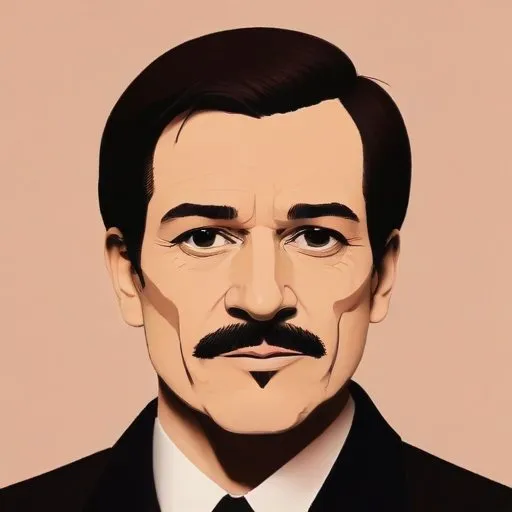
A 19th-century French writer and critic, known for his influential and provocative works that explored the darker aspects of human nature, particularly in his novel "Les Diaboliques".
Known for his dark, provocative, and unapologetically sensual writings, Jules Amde Barbey d'Aurevilly is often referred to as the founder of the Decadent movement in French literature. His works, which often explored themes of morality, religion, and the human condition, left an indelible mark on the literary world, influencing some of the most prominent writers of the time.
Born on November 2, 1808, in Saint-Sauveur-le-Vicomte, Normandy, Barbey d'Aurevilly grew up in a family of noble descent. His early life was marked by a strong Catholic upbringing, which would later influence his writings on morality and faith. His love for literature was sparked by the works of Romantic writers such as Victor Hugo and Charles Baudelaire.
Barbey d'Aurevilly's writing career began in the 1830s, with the publication of his first novel, Inutile Beauté. However, it was his 1838 novel Une vieille maîtresse that brought him critical acclaim and notoriety. The novel's exploration of themes such as eroticism, morality, and the decay of aristocratic values set the tone for his future works.
Les Diaboliques, a collection of six short stories published in 1874, is perhaps Barbey d'Aurevilly's most famous work. The stories, which explore themes of love, death, and the supernatural, are considered some of the most influential in the Decadent movement.
Barbey d'Aurevilly's writings were deeply rooted in his philosophical beliefs, which often centered around the concept of désespoir, or despair. He believed that humanity was inherently flawed and that true freedom could only be achieved through the rejection of societal norms and conventions.
His exploration of the human condition was also influenced by his fascination with the occult and the supernatural. Many of his works feature characters who are drawn to the mysterious and the unknown, reflecting Barbey d'Aurevilly's own interests in the subject.
Barbey d'Aurevilly's works had a significant impact on the literary world, influencing writers such as Oscar Wilde, André Gide, and Jean Cocteau. His exploration of themes such as eroticism, morality, and the human condition paved the way for future generations of writers.
In addition to his literary influence, Barbey d'Aurevilly's philosophy of désespoir has been applied to various aspects of modern society, including psychology and sociology.
In 1846, Barbey d'Aurevilly converted to Catholicism, a decision that would have a significant impact on his writings. He remained a devout Catholic until his death on April 28, 1889.
Throughout his life, Barbey d'Aurevilly was known for his extravagant lifestyle, which often left him in financial straits. Despite this, he continued to write prolifically, leaving behind a legacy of works that continue to influence writers and philosophers to this day.
"The only thing that is not a lie is the lie itself."
"The world is a great canvas, and we are all merely the artists."
Jules Amde Barbey d'Aurevilly's contributions to the Decadent movement and French literature as a whole are undeniable. His exploration of the human condition, morality, and the supernatural continues to influence writers and artists to this day. As a testament to his enduring legacy, his works remain a vital part of literary history, continuing to captivate readers with their dark beauty and unapologetic sensuality.
Born in 1821
A pioneering realist novelist who crafted meticulous, psychologically nuanced portrayals of 19th-century French life, particularly in his iconic novel "Madame Bovary".
Born in 1799
A prolific writer who created a vast array of characters and stories that explored the human condition, particularly in the context of post-Napoleonic France. His works are considered a cornerstone of French literature.
Born in 1821
A 19th-century literary mastermind who crafted exquisite poetry and art criticism, exploring the beauty and darkness of human experience.
Born in 1811
A French Romantic poet and critic who championed the beauty of art for art's sake, and is known for his vivid descriptions of nature and the human experience.
Born in 1810
French Romantic writer who penned passionate and introspective works, including plays, poems, and novels that explored the human experience.
Born in 1808
A French Romantic poet and translator, known for his vivid and dreamlike writings that explored the realms of fantasy and the human psyche. His works often blurred the lines between reality and imagination.
Born in 1844
A leading figure of the French Symbolist movement, known for his sensual and emotive poetry that explored themes of love, beauty, and the human condition.
