


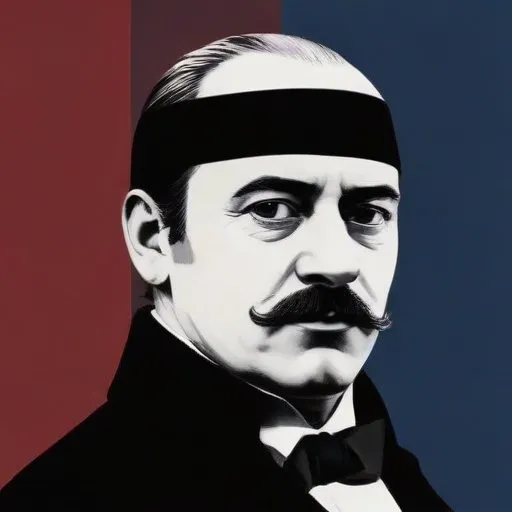
A French diplomat who played a crucial role in negotiating the Treaty of Fez, which established French protectorate over Morocco, and was a key figure in shaping French foreign policy in the early 20th century.
Jules Cambon, a renowned French diplomat, is best known for his instrumental role in securing a friendly détente between France and Germany during his tenure as the French ambassador to Germany from 1907 to 1914. His diplomatic prowess and negotiating skills played a crucial role in shaping the course of international relations, particularly in the tumultuous years leading up to World War I.
Cambon's diplomatic career spanned over four decades, during which he held various prestigious positions, including French ambassador to the United States, Spain, and Germany. His experience in international diplomacy was invaluable, and he played a key role in negotiating several significant treaties and agreements, including the Treaty of Paris in 1898, which marked the end of the Spanish-American War.
Born on April 5, 1845, in France, Cambon came from a family of diplomats. His brother, Paul Cambon, was also a prominent diplomat who served as the French ambassador to the United Kingdom. After completing his law degree, Cambon began his career as a lawyer in 1866 and later served in the Franco-Prussian War. In 1871, he entered the civil service and held various administrative positions, including prefect of the department of Nord and Rhône, before being appointed governor-general of Algeria in 1891.
Cambon's experience in international diplomacy began in 1897 when he was appointed French ambassador to the United States. During his tenure, he played a crucial role in negotiating the preliminaries of peace between Spain and the United States, leading to the Treaty of Paris in 1898. He later served as ambassador to Spain from 1902 to 1907, where he strengthened diplomatic ties between the two countries.
In 1907, Cambon was appointed French ambassador to Germany, a position he held until the outbreak of World War I in 1914. During this period, he worked tirelessly to maintain good relations between France and Germany, despite growing tensions between the two nations. His efforts, however, were ultimately unsuccessful, and Germany declared war on France in August 1914.
Cambon's diplomatic career was marked by his commitment to maintaining peaceful relationships between nations. His efforts to prevent war and promote international cooperation are still recognized today. Despite the challenges he faced, particularly during World War I, Cambon remained dedicated to his role as a diplomat and played a crucial role in shaping the course of international relations.
Today, Jules Cambon is remembered as a skilled diplomat who navigated the complex world of international relations with finesse and dedication. His legacy serves as a testament to the importance of diplomacy in maintaining peaceful relations between nations.
Born in 1851
A French police officer turned politician who served as Prime Minister of France and was awarded the Nobel Peace Prize for his efforts to establish the International Court of Arbitration. He championed international cooperation and peace.
Born in 1862
A French statesman who served as Prime Minister of France and was awarded the Nobel Peace Prize for his efforts to establish the European unity and collective security. He played a key role in shaping the League of Nations and promoting international cooperation.
Born in 1841
A French journalist, physician, and politician who served as Prime Minister of France during World War I, leading the country to victory and playing a key role in shaping the Treaty of Versailles. He's also known for his strong leadership and witty humor.
Born in 1860
A French statesman who served as President of France during a tumultuous period, playing a crucial role in shaping the country's response to World War I. He's also known for his efforts to reform the French economy and stabilize the franc.
Born in 1863
A French mathematician and politician who served as Prime Minister of France, making significant contributions to mathematics, particularly in the field of differential equations. He's also known for his role in shaping France's early 20th-century politics.
