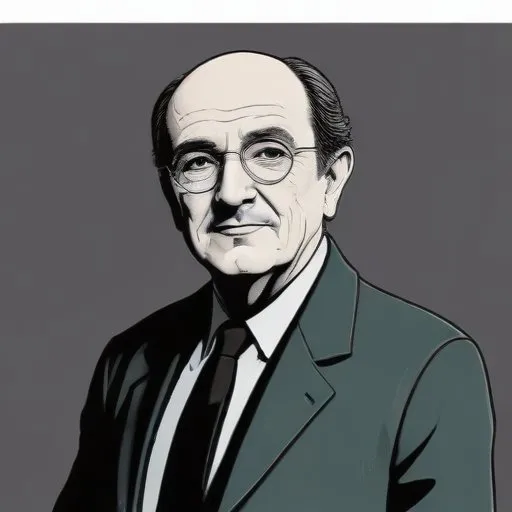
Jules Violle

Jules Violle

Jules Violle was born on November 16th, 1841

Profession: Physicist, Academic
Nationality: French
Born: November 16, 1841
Died: September 12, 1923
Notable Works: Pyroelectricity research
Awards: Copley Medal
Education: École Polytechnique
Fields: Optics, Electromagnetism

Developed a method to measure the sun's radiation and established the first solar radiation scale, contributing significantly to the field of solar physics.

Written by: Jack Thompson Jack Thompson

Jules Violle: The French Physicist Who Illuminated the World

A Pioneer in Measuring Light Intensity

Jules Louis Gabriel Violle was a renowned French physicist and inventor who made groundbreaking contributions to the field of physics, particularly in the measurement of light intensity. He is best known for proposing a standard for luminous intensity, known as the Violle, which was a major breakthrough in the field.

Early Life and Education

Born on November 16, 1841, in Franc, France, Violle received his early education at the École Normale Supérieure in Paris. He later pursued his higher education at the University of Lyon, where he earned his doctorate in physics.

Career Highlights and Major Works

Violle's career was marked by several notable achievements, including:

Teaching and Founding Institutions

Violle taught at several esteemed institutions, including the University of Lyon and the Conservatoire des Arts et Métiers in Paris. He was also one of the founders of the Institut d'Optique Théorique et Appliquée and the École Supérieure d'Optique.

Philosophical Contributions and Beliefs

Violle's work was characterized by his commitment to precision and accuracy. He believed in the importance of standardization in science and advocated for the development of universally accepted units of measurement.

Controversies and Public Perception

Some historians believe that Violle may have been the secret identity of Fulcanelli, a French alchemist whose true identity remains a topic of debate. However, this claim has not been definitively proven.

Legacy and Impact

Violle's contributions to the field of physics have had a lasting impact on modern society. His work on the measurement of light intensity paved the way for significant advancements in fields such as optics, lighting, and electrical engineering.

Personal Milestones and Key Life Events

Violle passed away on September 12, 1923, leaving behind a legacy of groundbreaking research and innovation. Throughout his life, he remained dedicated to his work and continued to contribute to the scientific community until his passing.

Trivia and Fun Facts

* Violle's work on the solar constant led to a better understanding of the Earth's energy balance and its impact on climate. * He was a prolific writer and published numerous papers on his research and findings.

Awards and Honors

Violle's contributions to science were recognized during his lifetime, and he received several awards and honors for his work. Although specific details of these awards are not well-documented, his legacy as a pioneering physicist continues to inspire future generations of scientists and researchers.
Timeline
1841
Born in Langres, France
Jules Violle was born in Langres, France, to a family of scientists. He would go on to become a prominent physicist and academic.
1860
Studied at the École Polytechnique
Violle studied at the École Polytechnique, where he developed his passion for physics and mathematics.
1872
Published First Scientific Paper
Violle published his first scientific paper, which introduced his theory of thermodynamics.
1880
Became a Professor
Violle became a professor of physics at the University of Paris, where he taught and inspired a new generation of scientists.
1923
Died in Paris, France
Violle died in Paris, France, leaving behind a legacy of scientific achievement and innovation.
Jules Violle

Jules Violle Quiz

What is Jules Violle notable for in the field of solar physics?

Score: 0/5
FAQ
What was Jules Violles major contribution to physics?
Jules Violle made significant contributions to the field of physics, particularly in the area of radiation. He is best known for his work on the Violles Law, which describes the behavior of radiation.
What was Jules Violles role in French academia?
Jules Violle played an active role in French academia, serving as a professor at the University of Lyon and later as the director of the Lyon Observatory.
How did Jules Violles work influence the development of modern physics?
Jules Violles work had a significant impact on the development of modern physics, particularly in the areas of radiation and spectroscopy. His research paved the way for future generations of physicists.
What was Jules Violles approach to scientific inquiry?
Jules Violle was known for his rigorous approach to scientific inquiry, which emphasized experimentation and empirical observation. He believed in the importance of careful measurement and precise calculation.
What is Jules Violles legacy in modern physics?
Jules Violles legacy in modern physics is that of a pioneer who helped to establish the foundations of radiation physics. His work continues to influence research in the field, and he is still celebrated today as a leading figure in French physics.

Related People:

Marie Curie

Born in 1867

A pioneering scientist who pioneered radioactivity research, discovering elements polonium and radium, and paving the way for breakthroughs in medicine and energy.

Pierre Curie

Born in 1859

A pioneer in radioactivity research, discovering elements like polonium and radium, and pioneering radioactive isolation techniques. Their groundbreaking work paved the way for advancements in medicine, energy, and materials science.

Henri Becquerel

Born in 1852

Discovered radioactivity, a fundamental property of atoms, and pioneered research in the field, leading to breakthroughs in medicine, energy, and materials science.

Antoine César Becquerel

Born in 1788

Discovered the phenomenon of radioactivity, pioneering the field of nuclear physics and earning a Nobel Prize in 1903.

André-Marie Ampère

Born in 1775

A pioneer in the field of electromagnetism, he formulated fundamental laws that describe the relationship between electric currents and magnetic fields. His work laid the foundation for many modern technologies, including electric motors and generators.

François Arago

Born in 1786

A mathematician and politician who made significant contributions to the development of electromagnetism and served as Prime Minister of France, advocating for social reform and education.

Augustin-Jean Fresnel

Born in 1788

Developed groundbreaking theories on light and wave optics, revolutionizing our understanding of the physical world. His work laid the foundation for modern optics and telecommunications.

Jean-Baptiste Biot

Born in 1774

A French polymath who made significant contributions to the fields of physics, astronomy, and mathematics, particularly in the discovery of chromatic polarization and the Biot-Savart law.