


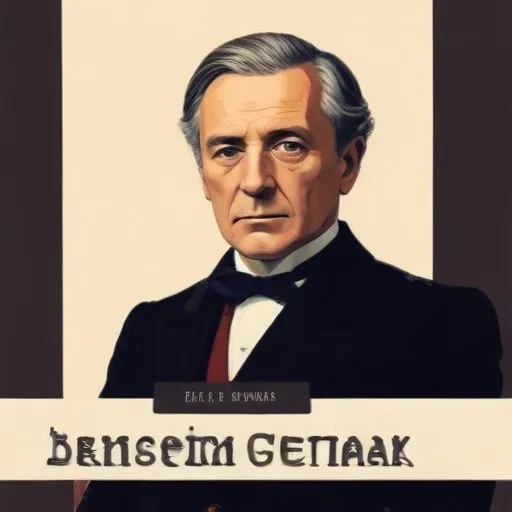
Conductor and composer of operas, oratorios, and symphonies, known for his romantic and expressive style, particularly in his orchestral works. He was a prominent figure in 19th-century British music.
German-born composer and conductor Julius Benedict is renowned for his illustrious career in England, where he spent most of his life crafting operas, oratorios, and orchestral works that continue to enthrall audiences to this day. His name is synonymous with the golden age of opera, and his contributions to the genre are still celebrated by music lovers worldwide.
Born on November 27, 1804, in Stuttgart, Germany, Benedict was the son of a Jewish banker. His early life was steeped in music, and he began learning composition from the esteemed Johann Nepomuk Hummel in Weimar and later from Carl Maria von Weber in Dresden.
In 1823, Weber introduced Benedict to the legendary Ludwig van Beethoven in Vienna, an encounter that would have a profound impact on his life and music. These formative years laid the foundation for Benedict's future success as a composer and conductor.
In 1825, Benedict became the Kapellmeister of the San Carlo theatre in Naples, where he gave piano lessons to the young prodigy Theodor Döhler. During his time in Naples, he premiered his first opera, Giacinta ed Ernesto, in 1827, followed by I Portoghesi in Goa in 1830.
In 1834, Benedict moved to Paris, but it was in London that he truly found his calling. In 1836, he became the conductor of an operatic enterprise at the Lyceum Theatre, where he premiered his opera Un anno ed un giorno. This marked the beginning of his long and fruitful association with London's musical scene.
Some of Benedict's most notable operas include The Gipsy's Warning (1838), The Brides of Venice (1844), and The Crusaders (1846), all of which premiered at the Theatre Royal, Drury Lane. His operas showcased his mastery of the genre, blending drama, melody, and orchestration to create works that captivated audiences.
Benedict's conducting career was equally impressive, with highlights including the premiere of Felix Mendelssohn's Elijah at Exeter Hall in 1848, featuring the renowned soprano Jenny Lind. He also accompanied Lind on her tour of America in 1850, further solidifying his reputation as a master conductor.
Throughout his life, Benedict contributed significantly to the world of opera and oratorio. His compositions showcase his versatility, from grand operas to intimate chamber works. His influence can be seen in the works of later composers, and his music continues to be performed and admired by audiences today.
Benedict's legacy extends beyond his compositions. He played a crucial role in promoting the work of other composers, including Mendelssohn and Weber, and his advocacy helped establish London as a hub for opera and classical music.
Little is known about Benedict's personal life, but it is clear that music was his true passion. He continued to compose and conduct until his later years, when his health began to decline. Benedict passed away on June 5, 1885, leaving behind a rich legacy of music that continues to inspire and delight audiences today.
Born in 1809
A renowned 19th-century musician who masterfully blended classical and romantic styles, creating iconic works like the "Wedding March" and "Elijah" oratorio. His compositions continue to inspire and influence generations of artists.
Born in 1810
A renowned Romantic-era composer and influential music critic, known for his expressive and emotionally charged works, including symphonies, piano music, and art songs.
Born in 1813
A renowned composer of iconic operas like La Traviata and Aida, known for his masterful blending of drama and music. His works continue to captivate audiences worldwide.
Born in 1813
A revolutionary composer who transformed opera with his epic, mythological works, creating a new era of musical storytelling. His iconic operas, such as "Der Ring des Nibelungen," continue to captivate audiences worldwide.
Born in 1833
A renowned pianist and composer, he crafted complex, expressive works that blended traditional and innovative techniques, leaving an indelible mark on classical music.
Born in 1811
A virtuosic pianist and composer who revolutionized classical music with his technically demanding and emotionally expressive works, blending Hungarian folk influences with Romantic-era drama.
Born in 1818
A French Romantic-era composer and educator, renowned for his operas, particularly "Faust," which remains a staple of the operatic repertoire. His music is characterized by lyricism and dramatic flair.
Born in 1803
A French Romantic-era mastermind who composed iconic symphonies, operas, and orchestral works, revolutionizing classical music with his bold, expressive style.
