


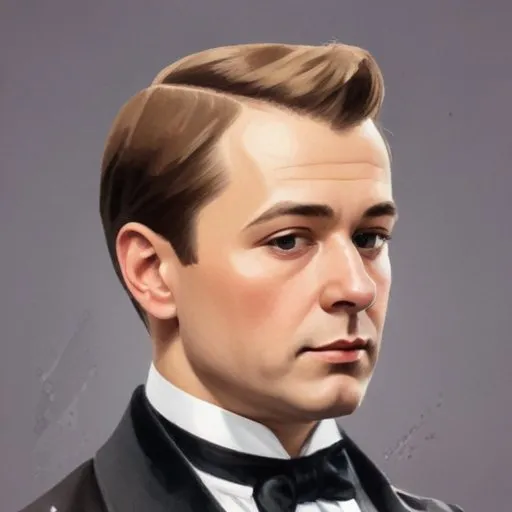
A renowned pianist and composer of the Classical and Romantic eras, known for his virtuosic piano concertos and contributions to the development of the sonata form.
Johann Nepomuk Hummel was a renowned Austrian composer and virtuoso pianist, celebrated for his remarkable contributions to the transition from the Classical to the Romantic musical era. As a pupil of Mozart, Salieri, and Haydn, Hummel's music embodied the essence of his illustrious mentors, while also showcasing his unique artistic voice.
Born on November 14, 1778, in Pressburg, Kingdom of Hungary (now Bratislava, Slovakia), Hummel was an only child named after the Czech patron saint John of Nepomuk. His father, Johannes Hummel, was the director of the Imperial School of Military Music in Vienna, and his mother, Margarethe Sommer Hummel, was a widow who married Hummel's father just four months before his birth.
Hummel's exceptional talent was recognized early, and at the age of eight, he began receiving music lessons from none other than Wolfgang Amadeus Mozart. For two years, Hummel was taught and housed by Mozart, who was impressed by the young prodigy's abilities. This mentorship had a profound impact on Hummel's development as a composer and pianist, laying the foundation for his future success.
In 1790, Hummel's father took him on a European tour, which included a stop in London where he received lessons from Muzio Clementi. The young virtuoso made his concert debut at the Hanover Square Rooms, performing a Mozart piano concerto and a sonata of his own composition. This impressive debut earned him widespread acclaim, and he went on to premiere a piano trio by Haydn at the same venue in 1791.
After returning to Vienna in 1793, Hummel continued his studies with Johann Georg Albrechtsberger, Joseph Haydn, and Antonio Salieri. During this period, he also became friends with Ludwig van Beethoven, who was also studying with Haydn and Albrechtsberger. This friendship would have a lasting impact on Hummel's life and career.
Hummel's compositions are characterized by their lyricism, elegance, and technical brilliance. He wrote numerous works for piano, including sonatas, concertos, and chamber music, as well as operas, masses, and orchestral pieces. His music often blends the Classical and Romantic styles, showcasing his unique ability to balance structure and emotion.
Some of Hummel's most notable works include his Piano Quintet in E-flat major, Op. 87, the Piano Trio in E major, Op. 83, and the Mass in E-flat major, Op. 80. His operas, such as
In 1813, Hummel married the opera singer Elisabeth Röckel, and the couple had two sons together. The following year, they embarked on a tour of Russia and Europe, solidifying Hummel's reputation as a virtuoso pianist and composer.
Throughout his life, Hummel remained dedicated to his craft, continuing to compose and perform until his death on October 17, 1837. His legacy as a composer, pianist, and educator has endured, inspiring generations of musicians and music lovers alike.
In conclusion, Johann Nepomuk Hummel was a towering figure in the world of classical music, whose compositions and performances continue to inspire and delight audiences today. His unique blend of Classical and Romantic styles, combined with his exceptional technical skill, has left an indelible mark on the musical landscape.
Born in 1770
A musical genius who expanded the possibilities of classical music, creating iconic symphonies and piano sonatas that continue to inspire and influence generations of artists.
Born in 1797
A renowned composer of symphonies, operas, and chamber music, particularly famous for his emotional and expressive lieder (art songs) that showcased his mastery of melody and harmony.
Born in 1732
A renowned composer and pianist of the Classical period, known for his symphonies, operas, and chamber music that showcased his innovative and expressive style. He played a significant role in shaping the Classical music era.
Born in 1782
A virtuosic violinist and composer who revolutionized the instrument's technical possibilities, leaving an indelible mark on classical music.
Born in 1678
A virtuosic violinist and prolific composer, he crafted over 400 concertos, including "The Four Seasons," which remains a beloved and iconic masterpiece of classical music.
Born in 1756
A child prodigy and master of classical music, he composed over 600 works, including symphonies, operas, and chamber music, that continue to inspire and influence musicians today.
Born in 1714
A pioneering opera composer who revolutionized the art form with his innovative and expressive works, blending music and drama in a way that captivated audiences.
