


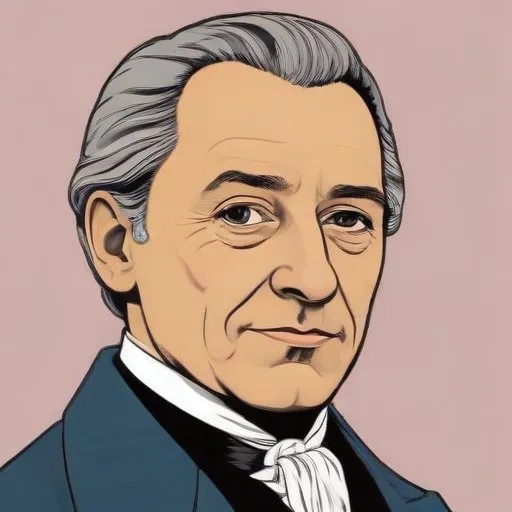
A prominent composer and music theorist of the Classical period, known for his contributions to the development of harmony and counterpoint, and his influence on prominent composers like Beethoven.
Johann Georg Albrechtsberger was an Austrian composer, organist, and music theorist, renowned for his exceptional skill in counterpoint and harmony. As one of the most learned and skilled musicians of his age, he was sought after by some of the greatest composers of the time, including Ludwig van Beethoven, who considered him a mentor.
Born on February 3, 1736, in Klosterneuburg, near Vienna, Albrechtsberger's early life was steeped in music. He studied music at Melk Abbey and philosophy at a Benedictine seminary in Vienna, where he was classmates with Michael Haydn and Franz Joseph Aumann.
Albrechtsberger's talent and dedication earned him a series of prestigious appointments, including organist at Raab in 1755 and Maria Taferl in 1757. In 1772, he was appointed organist to the court of Vienna, and in 1792, he became the Kapellmeister of St. Stephen's Cathedral, a position that cemented his reputation as a master of his craft.
Albrechtsberger's fame as a theorist attracted a large number of pupils, many of whom went on to become eminent musicians. His students included some of the most influential composers of the time, such as:
Beethoven, in particular, credited Albrechtsberger with teaching him the importance of patience, diligence, persistence, and sincerity in his compositional philosophy.
Albrechtsberger's published compositions include preludes, fugues, and sonatas for the piano and organ, as well as string quartets. However, the majority of his works, both vocal and instrumental, remain in manuscript form, housed in the library of the Vienna Gesellschaft.
Despite his passing on March 7, 1809, Albrechtsberger's legacy continues to inspire generations of musicians and composers. His grave, located in St. Marx cemetery, serves as a testament to his enduring impact on the world of music.
Born in 1732
A renowned composer and pianist of the Classical period, known for his symphonies, operas, and chamber music that showcased his innovative and expressive style. He played a significant role in shaping the Classical music era.
Born in 1756
A child prodigy and master of classical music, he composed over 600 works, including symphonies, operas, and chamber music, that continue to inspire and influence musicians today.
Born in 1770
A musical genius who expanded the possibilities of classical music, creating iconic symphonies and piano sonatas that continue to inspire and influence generations of artists.
Born in 1750
A renowned 18th-century composer and conductor, known for his operas and rivalry with Mozart, as depicted in the movie Amadeus.
Born in 1714
A pioneering opera composer who revolutionized the art form with his innovative and expressive works, blending music and drama in a way that captivated audiences.
Born in 1782
A virtuosic violinist and composer who revolutionized the instrument's technical possibilities, leaving an indelible mark on classical music.
Born in 1752
A renowned pianist, composer, and conductor who revolutionized piano music with his technically demanding and expressive compositions, influencing generations of musicians.
Born in 1749
An 18th-century Italian composer and educator, known for his operas and sacred music, particularly his comic operas that showcased his mastery of melody and harmony.
