


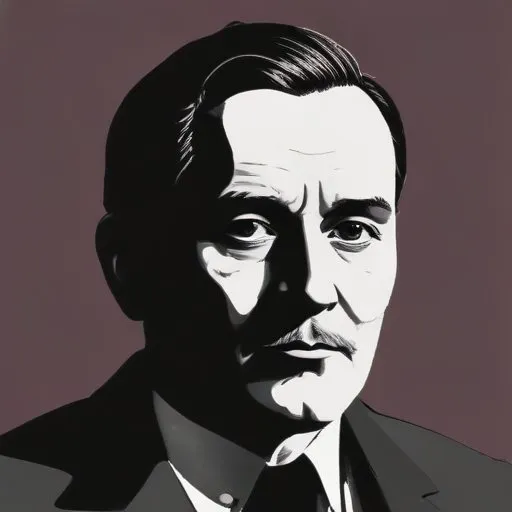
Finnish poet and journalist who wrote influential works that promoted Finnish language and culture, and was a key figure in the country's national romantic movement.
Julius Krohn, a renowned Finnish folk poetry researcher, professor of Finnish literature, poet, hymn writer, translator, and journalist, left an indelible mark on the world of Finnish literature and folklore. Born on April 19, 1835, in Viipuri, Krohn dedicated his life to preserving and promoting Finnish cultural heritage, earning him recognition as one of the most notable researchers of Finnish folk poetry in the 19th century.
Krohn's mother, Julie Dannenberg, was a Baltic German with an impressive command of eight languages and exceptional piano skills. His maternal family had roots in Kiiskil Manor near Vyborg, and his father's side had Ingrian background. This diverse cultural heritage likely influenced Krohn's passion for Finnish language and literature.
Krohn's academic career began as a lecturer on Finnish language at Helsinki University in 1875, eventually becoming a supernumerary professor in 1885. He was an integral part of the Fennoman movement, a group dedicated to promoting Finnish language and culture. Using pseudonyms, Krohn translated many works by Johan Ludvig Runeberg, a renowned Finnish poet, into Finnish. Researchers believe he also wrote the Finnish lyrics for the Finnish national anthem.
Krohn's doctoral thesis, Suomenkielinen runollisuus ruotsinvallan aikana (1862), significantly contributed to the history of Finnish literature. He developed the historic-geographic method, a scientific approach to studying folklore, which involves comparing variant texts to identify the original version and its origin. This method, connected with nationalist understandings of folk culture, remains an essential tool in folklore research.
Krohn's work has had a lasting impact on Finnish cultural identity and language. His efforts to promote Finnish literature and folklore helped establish Finnish as an official language in Finland. His research and translations have inspired generations of Finnish writers, poets, and researchers, solidifying his legacy as a pioneering figure in Finnish cultural heritage.
Krohn passed away on August 28, 1888, leaving behind a rich body of work that continues to influence Finnish literature and culture. His versatile contributions have cemented his place as one of the most important Finnish scholars of the 19th century.
Through his tireless efforts to preserve and promote Finnish cultural heritage, Julius Krohn has earned a permanent place in the annals of Finnish history, inspiring future generations to appreciate and cherish the richness of Finnish literature and folklore.
Born in 1861
Finnish literary pioneer and social commentator, known for his influential novels and essays that explored the country's cultural identity and social issues.
Born in 1844
A pioneering Finnish journalist, playwright, and activist who championed women's rights, social justice, and education, leaving a lasting impact on Finnish literature and society.
Born in 1878
A renowned Finnish poet and journalist, celebrated for his lyrical and expressive works that explored themes of love, nature, and Finnish identity. His poetry is still widely read and studied in Finland today.
Born in 1920
Finnish novelist celebrated for his vivid depictions of war and its human toll, particularly in his masterpiece "Under the North Star" trilogy. His works are considered a cultural touchstone in Finland, offering a poignant exploration of the country's history and identity.
Born in 1878
Finnish-Estonian writer who explored themes of love, nature, and national identity in her novels and poetry, particularly in her 1920s works that showcased her unique blend of Finnish and Estonian cultures.
