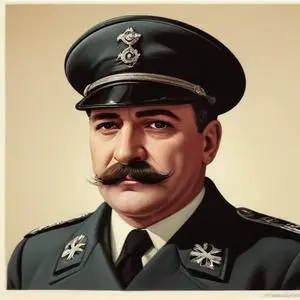
Julius Streicher: The Founder of the Virulently Antisemitic Newspaper Der Stürmer
A Life of Hate and Propaganda
Julius Streicher, a prominent member of the Nazi Party, is notorious for founding and publishing the rabidly antisemitic newspaper Der Stürmer, which became a central element of the Nazi propaganda machine. Through his publication, he incited hatred and violence against Jews, ultimately contributing to the atrocities of the Holocaust.
Early Life and Influences
Born on February 12, 1885, in Fleinhausen, Kingdom of Bavaria, Streicher was the son of a teacher, Friedrich Streicher, and his wife Anna ne Weiss. He was one of nine children, and his early life was marked by a strong sense of discipline and duty. Streicher's early influences included the teachings of Theodor Fritsch, a prominent antisemite, which instilled in him a deep-seated hatred for Jews.
Rise to Prominence
Streicher's life took a drastic turn in 1919, when he became radicalized against Jews. He joined the German Army in 1914 and was awarded the Iron Cross 1st and 2nd Class for his bravery during World War I. Following his demobilization, Streicher returned to Nuremberg and taught elementary school. However, in 1922, he founded Der Stürmer, which quickly gained popularity and notoriety for its vitriolic attacks on Jews.
Der Stürmer: A Vehicle for Hate
Der Stürmer became a central element of the Nazi propaganda machine, spreading Streicher's twisted ideology to millions of Germans. The newspaper's financial success made Streicher a multimillionaire, allowing him to further spread his hateful message. Streicher's propaganda was not limited to written attacks; he also used Der Stürmer to orchestrate violent demonstrations and boycotts against Jewish businesses.
Career Highlights and Major Works
- Founder and publisher of Der Stürmer
- Member of the Reichstag (1933-1945)
- Gauleiter of Franconia (1933-1945)
-
Controversies and Public Perception
Streicher's hateful rhetoric and propaganda were widely condemned by the international community. His newspaper was banned in several countries, and he was accused of inciting violence against Jews. Streicher's extreme views even prompted criticism from within the Nazi Party, with some members viewing him as too radical.
Conviction and Execution
After the war, Streicher was convicted of crimes against humanity during the Nuremberg trials. He was found guilty of continuing his vitriolic antisemitic propaganda despite knowing about the atrocities committed during the Holocaust. Streicher was executed by hanging on October 16, 1946, becoming the first member of the Nazi regime held accountable for inciting genocide.
Legacy
Julius Streicher's legacy is one of hate and intolerance. His propaganda and ideology contributed to the tragic events of the Holocaust, and his conviction served as a warning to those who would incite violence and hatred. Streicher's story serves as a reminder of the dangers of unchecked racism and the importance of promoting tolerance and understanding.
FAQ
What was Julius Streichers role in the Nazi Party?
Julius Streicher was a prominent figure in the Nazi Party, serving as the founder and publisher of the anti-Semitic newspaper Der Stürmer. He was a close ally of Adolf Hitler and played a key role in promoting Nazi ideology and propaganda.
What was the purpose of Der Stürmer?
Der Stürmer was a virulently anti-Semitic newspaper that was used to promote Nazi ideology and hatred towards Jews. The newspaper was instrumental in spreading Nazi propaganda and helped to fuel the flames of hatred that led to the Holocaust.
How did Julius Streichers anti-Semitism influence Nazi policy?
Julius Streichers anti-Semitic rhetoric and ideology had a profound impact on Nazi policy, helping to shape the partys brutal and discriminatory treatment of Jews. His newspaper was used to justify and promote the persecution and extermination of Jews during the Holocaust.
What was Julius Streichers fate after World War II?
After World War II, Julius Streicher was tried and convicted of crimes against humanity at the Nuremberg Trials. He was sentenced to death and executed in 1946 for his role in promoting Nazi ideology and hatred towards Jews.
What was Julius Streichers legacy in the history of anti-Semitism?
Julius Streichers legacy in the history of anti-Semitism is that of a dangerous and influential propagandist who helped to fuel the flames of hatred that led to the Holocaust. His anti-Semitic ideology and rhetoric continue to serve as a warning against the dangers of hate speech and discrimination.