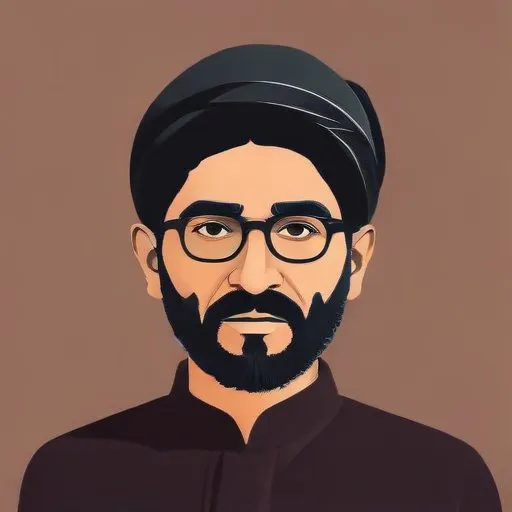
Karim Emami: The Pioneering Translator and Cultural Ambassador
A Life Dedicated to Literary Excellence
Karim Emami, a renowned Iranian translator, editor, lexicographer, and literary critic, left an indelible mark on the literary world. Born in Calcutta, India in 1930, Emami's inclination towards language and literature was evident from a young age, and he went on to become a champion of Persian poetry and literature.
Early Life and Education
Emami's early life was marked by his father's frequent travels, which exposed him to different cultures and languages. He learned his first English words from his father, a tea merchant, and returned to Shiraz, Iran at the age of two. Emami pursued his passion for English literature at the University of Tehran and later at the University of Minnesota.
A Career Spanning Decades
Emami began his journalistic career in the early 1950s as a journalist for the English language Tehran daily, Keyhan International. During the 1960s, he translated contemporary Persian poetry into English, introducing the world to the rich cultural heritage of Iran. In 1967, he became the editor-in-chief at Franklin Books, where he played a pivotal role in publishing quality books and nurturing young writers and editors. Emami's contribution to the literary world continued with the founding of Soroush Press, the publishing arm of National Iranian Radio and Television, and the establishment of the Zamineh bookstore in Tehran, a hub for writers, intellectuals, and book lovers.
Translation and Literary Criticism
Emami's work as a translator and literary critic was instrumental in bridging the cultural divide between East and West. He was a regular contributor to Motarjem, an Iranian quarterly dedicated to translation and translators. Emami's critiques were known for their insight and nuance, offering a unique perspective on Persian literature.
Notable Works
- Paymi dar rh Naari be er va naqqie Sepehri, a collection of three essays by Driu lauri, osayn Maoumi Hamedani, and Karim Emami (1980)
- Akksie sih o sefid, Black and white photography, Karim Emami et al. (1981)
- Panj negh be k, Five ways of looking at the earth, a collection of 63 pictures by five Iranian photographers (1982)
- , How to make animated movies, Karim Emami et al. (2000)
Legacy and Impact
Karim Emami's contributions to Persian literature and culture are immeasurable. Through his tireless efforts, he introduced Iranian literature to the global stage, fostering a deeper understanding and appreciation between cultures. Emami's legacy continues to inspire generations of writers, translators, and literary critics. His passing in 2005, due to leukemia, was met with an outpouring of tributes and condolences from the literary community, a testament to his profound impact on the world of literature.
FAQ
What were Karim Emamis contributions to lexicography?
Karim Emami made significant contributions to lexicography, including the development of dictionaries and lexicons for various languages, including Persian and English.
How did Karim Emamis work impact our understanding of language and culture?
Karim Emamis research on language and culture helped to highlight the complex relationships between language, identity, and power, shedding light on the ways in which language shapes our perceptions of the world.
What were Karim Emamis most notable written works?
Karim Emamis most notable written works include his dictionaries and lexicons, as well as his critical essays on literature and culture, which demonstrated his mastery of multiple languages and cultures.
How did Karim Emamis work influence the development of linguistic theory?
Karim Emamis work on linguistic theory helped to advance our understanding of language as a complex system, subject to multiple influences and constraints.
What was Karim Emamis legacy in the academic community?
Karim Emamis legacy is that of a pioneering scholar who helped to bridge the gap between language, culture, and power, inspiring generations of researchers and students alike.