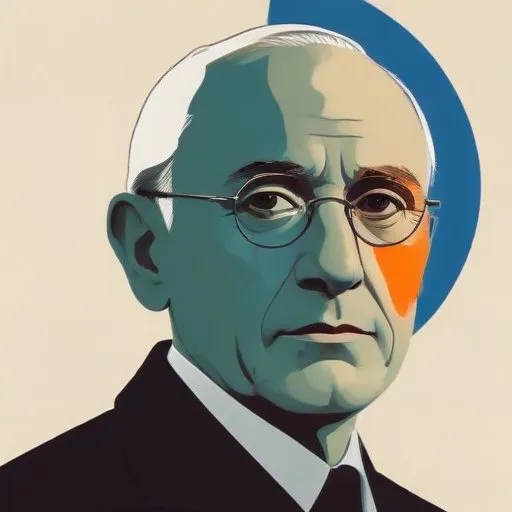
Karl Burman

Karl Burman

Karl Burman was born on May 17th, 1882

Full Name: Karl Friedrich Burman
Place of Birth: Tallinn, Estonia
Profession: Architect and Painter
Notable Work: Tallinn Town Hall
Date of Birth: April 28, 1882
Date of Death: October 20, 1965
Nationality: Estonian
Style: Art Nouveau

Estonian architect and painter known for designing iconic buildings and creating vibrant, expressive artworks that blended modernism with traditional Estonian motifs. His work showcased a unique blend of functionality and aesthetics.

Written by: Michael Rodriguez Michael Rodriguez

Karl Burman: The Estonian Architect and Painter Who Redefined Modern Aesthetics

A Life of Artistic Expression

Karl Burman, a renowned Estonian architect and painter, left an indelible mark on the world of art and design. During his lifetime, he mastered both disciplines, creating works that continue to inspire and influence artists to this day.

The Early Years: A Foundation in Art

Born on May 17, 1882, in Sumy, Russian Empire (now Ukraine), Burman's affinity for art was evident from a young age. His younger brother, Paul Burman, was also an artist, indicating that creativity ran deep in the family. Burman's educational journey began at the Stroganov Art School in Moscow (1900) and continued at the Stieglitz Art School in St. Petersburg (1901-1902). He then pursued architecture at the St. Petersburg Academy of Arts, where he honed his skills between 1902 and 1909.

A Career that Spanned Disciplines

Burman's work as an architect and painter was characterized by a unique blend of modernism and romanticism. His architectural designs often featured clean lines, minimal ornamentation, and an emphasis on functionality. As a painter, he explored a range of styles, from impressionism to expressionism, capturing the beauty of Estonian landscapes and cityscapes.

Legacy and Impact

Burman's contributions to Estonian architecture and art are immeasurable. His work continues to inspire generations of artists, architects, and designers. In 2003, the Museum of Estonian Architecture hosted an exhibition titled "Romantik Burman," celebrating his life and work. This retrospective showcased his architectural designs, paintings, and sketches, providing a comprehensive look at his creative output.

Awards and Honors

Throughout his life, Burman received various accolades for his work. Although specific awards and honors are not well-documented, his contributions to Estonian art and architecture earned him a revered place in the country's cultural heritage.

Personal Life and Relationships

Burman's personal life remains somewhat of an enigma, with limited information available about his relationships and personal struggles. However, it is known that he maintained close ties with his brother Paul, who shared his passion for art.

A Lasting Legacy

Karl Burman's passing on May 10, 1965, in Tallinn, Estonia, marked the end of an era. His work, however, continues to inspire and influence artists, architects, and designers. As we reflect on his life and legacy, we are reminded of the profound impact he had on modern aesthetics.

Karl Burman's life and work serve as a testament to the power of creativity and innovation. His contributions to Estonian art and architecture continue to inspire, educate, and delight audiences to this day.

Timeline
1882
Born in Estonia
Karl Burman was born on November 28, 1882, in Tallinn, Estonia.
1905
Studied Architecture
Burman studied architecture at the Riga Polytechnic Institute in Latvia from 1905 to 1910.
1912
Worked as Architect
Burman worked as an architect in Tallinn, designing several buildings in the Art Nouveau style.
1920
Participated in Estonian War
Burman participated in the Estonian War of Independence against the Soviet Union in 1920.
1965
Died in Estonia
Karl Burman died on May 12, 1965, in Tallinn, Estonia.
Karl Burman

Karl Burman Quiz

Karl Burman's architectural style is characterized by a blend of modernism with what traditional motifs?

Score: 0/5
FAQ
What is Karl Burmans role in Estonian architecture?
Karl Burman was an Estonian architect and painter who played a significant role in shaping Estonian architecture during the early 20th century. He is best known for his work on several notable buildings in Tallinn, including the Estonian National Opera House.
What are Karl Burmans most notable works?
Karl Burmans most notable works include the Estonian National Opera House, the Estonian Drama Theatre, and several other notable buildings in Tallinn. His work is characterized by a blend of Art Nouveau and Neoclassical styles.
Did Karl Burman receive any awards for his work?
Karl Burman received several awards for his work, including the Estonian Cultural Award in 1932. He was also recognized for his contributions to Estonian architecture and culture.
What is Karl Burmans legacy in Estonian architecture?
Karl Burmans legacy in Estonian architecture is that of a pioneering architect who helped shape the countrys architectural style during the early 20th century. His work continues to be widely admired and studied today.
Is Karl Burman a member of any architectural organizations?
Yes, Karl Burman was a member of the Estonian Architects Union and played an active role in promoting the development of Estonian architecture.

Related People:

Konstantin Päts

Born in 1874

Estonia's first president, a key figure in the country's struggle for independence from Russia, served as a unifying force during tumultuous times. He's remembered for his role in shaping Estonia's early years and its path to sovereignty.

Ants Piip

Born in 1884

Estonia's 7th Prime Minister, a lawyer and politician who played a crucial role in shaping the country's early years of independence, known for his diplomatic efforts and national unification.

Juhan Kukk

Born in 1885

Head of State of Estonia during the country's struggle for independence, known for leading the Estonian Provisional Government in 1918-1919.

August Rei

Born in 1886

Estonia's Head of State during World War II, leading the country's government-in-exile and advocating for independence from Soviet occupation. He played a crucial role in preserving Estonia's sovereignty and identity.

Kaarel Eenpalu

Born in 1888

Estonian journalist and politician who served as the 6th Prime Minister of Estonia, known for his leadership during the country's interwar period and his role in shaping the nation's early years of independence.

Jaan Teemant

Born in 1872

Estonia's 7th State Elder, a prominent lawyer and politician, played a crucial role in shaping the country's early 20th-century government and politics. He's most known for his efforts in establishing Estonia's independence and sovereignty.

Otto Strandman

Born in 1875

Estonia's second Prime Minister, a lawyer and politician, played a crucial role in shaping the country's early years, serving as a key figure in its struggle for independence. He's most known for his efforts in establishing Estonia's sovereignty and democratic government.

Konstantin Konik

Born in 1873

Estonian surgeon and politician who served as the 19th Minister of Education, playing a significant role in shaping the country's education system. He was a pioneer in medical education and healthcare reform.