


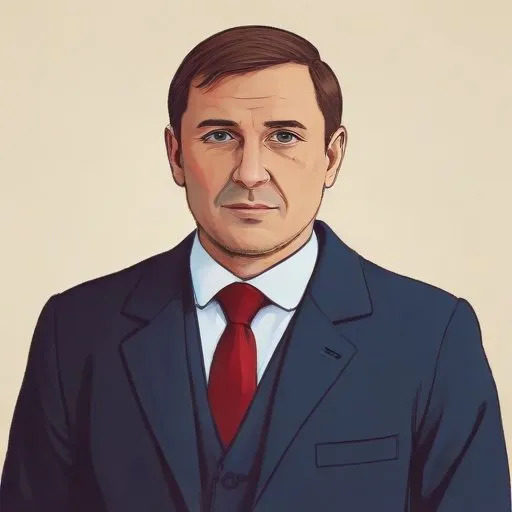
Estonian surgeon and politician who served as the 19th Minister of Education, playing a significant role in shaping the country's education system. He was a pioneer in medical education and healthcare reform.
Konstantin Konik is renowned for his pioneering efforts as a member of the Estonian Salvation Committee and his groundbreaking contributions to the field of medicine. As a surgeon and politician, he left an indelible mark on the history of Estonia, championing the cause of education and language in the early 20th century.
Konstantin Konik was born on 31 December 1873 (O.S. 19 December) to a working-class family in Tartu, Estonia. His father, a carter, instilled in him the value of hard work and perseverance, which would shape his future endeavors.
Konik's academic journey began at the Governorate Gymnasium in Tartu, followed by his graduation from the Faculty of Medicine at the University of Dorpat (now University of Tartu) in 1873. He furthered his education by earning his doctorate degree at the Odessa University in 1903. This academic foundation laid the groundwork for his distinguished career in medicine and politics.
Konik's most notable achievement was delivering the first-ever lecture on medicine in Estonian at the University of Tartu on 8 March 1920. This milestone marked a significant shift in the university's language policy, which had previously been dominated by German and Russian. Konik's efforts paved the way for Estonian to become a prominent language in the academic sphere.
Konstantin Konik's contributions to Estonian society extended beyond his medical and political accomplishments. He was a beacon of hope for the Estonian people, fighting for their right to education and cultural identity. His legacy continues to inspire future generations, solidifying his position as a trailblazer in Estonian history.
Konik's commitment to education, language, and cultural identity was rooted in his belief that a nation's prosperity is deeply tied to its people's access to knowledge and opportunities. He championed the cause of Estonian language and education, recognizing their importance in shaping the country's future.
Konstantin Konik's groundbreaking work in promoting Estonian language and education has had a lasting impact on modern Estonian society. His legacy serves as a testament to the power of dedication and perseverance, inspiring future generations to strive for excellence and fight for their cultural heritage.
97 Years Old
Estonian filmmaker and statesman who served as the country's president from 1992 to 2001, known for his efforts to integrate Estonia into the European Union and NATO. He was also a prolific writer and director, producing several documentaries and feature films.
91 Years Old
A minimalist composer renowned for his sacred, hauntingly beautiful music that often features slow, contemplative harmonies and sparse textures, evoking a sense of spirituality and calm.
72 Years Old
A Swedish-Estonian journalist and politician who served as the 4th President of Estonia, known for his efforts to promote e-government and digitalization in the country. He's a strong advocate for a free and open internet.
70 Years Old
Estonia's first Prime Minister to serve two consecutive terms, he led the country's digital revolution, making Estonia a global leader in e-government and digital innovation.
66 Years Old
Estonian historian and politician who served as Prime Minister of Estonia, leading the country's transition from Soviet rule to independence and implementing free-market reforms. He's known for his role in Estonia's rapid modernization and digitalization.
78 Years Old
The first Estonian to hold a high-ranking position in the European Commission, known for his efforts to modernize and integrate Estonia into the European Union. He played a key role in Estonia's accession to the EU and the eurozone.
83 Years Old
Estonian physician and politician who served as the Minister of Health and Labour from 1999 to 2002, known for his healthcare reforms and contributions to Estonia's EU accession.
