


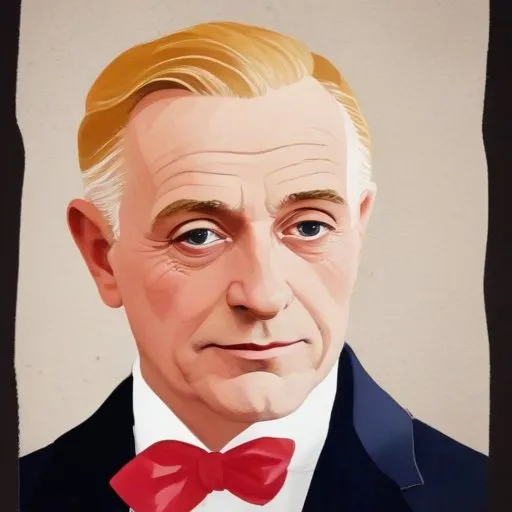
Austrian novelist known for his literary works that explored the lives of Jews in Eastern Europe, particularly in Galicia, offering a unique glimpse into the cultural and social dynamics of the region.
Renowned for his vivid descriptions of the multicultural landscape of Galicia, Podolia, and Bukovina, Austrian novelist Karl Emil Franzos is celebrated for his works that delve into the complexities of identity, cultural exchange, and social transformation. His oeuvre, which spans both reportage and fiction, has earned him a unique place in the literary canon, with many critics coining the term "Franzos country" to describe the region that inspired his writing.
Born on October 25, 1848, in the Podolian region of the Austrian Kingdom of Galicia, Franzos grew up in a Sephardic Jewish family that had fled the Spanish Inquisition to Holland and later settled in Lorraine. His great-grandfather established a factory in East Galicia, part of the Habsburg monarchy since the First Partition of Poland in 1772, and it was here that Franzos developed a deep connection with the land and its diverse populations.
Franzos' writing is characterized by his nuanced understanding of the region's complex cultural dynamics, which he explored in novels such as "The Jews of Barnow" (1871) and "Der Pojaz" (1887). His works often blurred the lines between fiction and reportage, weaving together stories of ordinary people living in the borderlands of the Habsburg and Russian empires. This unique narrative approach earned him widespread acclaim, with notable admirers including British Prime Minister William Gladstone.
Franzos was deeply influenced by the ideals of the German Enlightenment, particularly the works of Immanuel Kant, Gotthold Lessing, and Friedrich Schiller. He saw himself as a German, identified with the cultural and linguistic heritage of the region, yet also acknowledged the complexities of his Jewish identity. This paradox is reflected in his writing, which often explores the tensions between assimilation and cultural preservation.
Franzos' works have had a lasting impact on our understanding of multiculturalism, identity, and the complexities of cultural exchange. His writing has inspired generations of writers, scholars, and thinkers, offering a nuanced perspective on the region's turbulent history and its diverse populations.
Karl Emil Franzos' works have been instrumental in shaping our understanding of the cultural dynamics of the region. His writing has been translated into multiple languages, including English, and has inspired a new generation of scholars, writers, and thinkers. His legacy continues to educate and inspire, offering a unique window into the complexities of identity, cultural exchange, and social transformation.
Born in 1791
Austrian literary giant who wrote influential plays and poems that explored themes of identity, morality, and the human condition, leaving a lasting impact on European literature.
Born in 1790
Austrian actor and playwright who wrote and performed in popular folk plays, often incorporating magic and fantasy elements, and was a key figure in Vienna's theatrical scene. He is particularly known for his humorous and satirical works that poked fun at social issues of his time.
Born in 1801
Austrian actor and playwright who wrote satirical plays that critiqued social issues, known for his witty dialogue and clever characterizations.
Born in 1810
A renowned Romantic-era composer and influential music critic, known for his expressive and emotionally charged works, including symphonies, piano music, and art songs.
Born in 1797
A renowned composer of symphonies, operas, and chamber music, particularly famous for his emotional and expressive lieder (art songs) that showcased his mastery of melody and harmony.
Born in 1770
A musical genius who expanded the possibilities of classical music, creating iconic symphonies and piano sonatas that continue to inspire and influence generations of artists.
Born in 1833
A renowned pianist and composer, he crafted complex, expressive works that blended traditional and innovative techniques, leaving an indelible mark on classical music.
