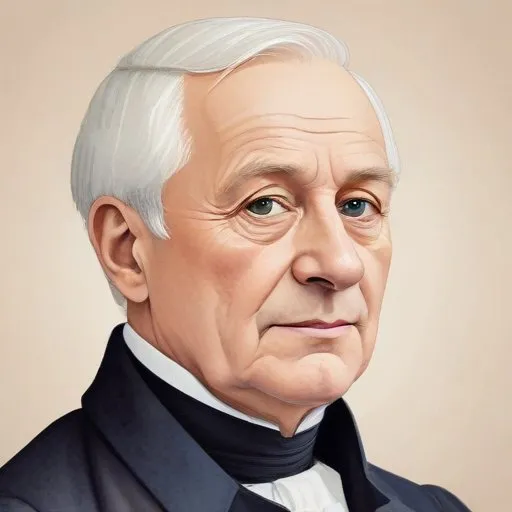
Karl Faber: The Prussian Archivist and Historian Who Brought Martin Luther to Light
The Life and Times of a Pioneer in Archival Science
Karl Peter Andreas Faber, a native of Knigsberg, East Prussia, was a trailblazing archivist and historian who revolutionized the field of archival science in the 19th century. He is best known for making public letters from
Martin Luther to
Albert, Duke of Prussia in 1811, shedding new light on the life and times of the Protestant Reformer.
A Scientific Approach to Archival Studies
Faber, along with Ernst Hennig, was one of the first archivists from Knigsberg to approach the subject in a scientific manner. This pioneering spirit earned him the position of chief archivist of the Prussian State Archive in 1808. Faber's commitment to the scientific method in archival studies paved the way for future generations of archivists and historians.
A Life of Literary Pursuits
Faber was a prolific writer and published several works, including
Taschenbuch für Königsberg in 1829 and
Die Haupt- und Residenzstadt Königsberg in 1841. These works showcased his deep understanding of the city's history and its significance in the region. He also briefly produced a newspaper,
Knigsberger Abendzeitung, in 1831, providing a platform for discussing local issues and events.
Awards and Honors
Faber's contributions to the field of archival science and history were recognized by the philosophy faculty, which awarded him an honorary doctorate in 1837. This prestigious honor was a testament to his dedication and commitment to his craft.
Personal Life and Legacy
Faber was born on August 12, 1773, and passed away on January 19, 1853, in his native city of Knigsberg. Throughout his life, he remained committed to his work, leaving behind a legacy that continues to inspire historians and archivists today.
Trivia and Fun Facts
- Faber attended the University of Knigsberg before becoming the chief archivist of the Prussian State Archive.
- He was one of the first archivists to approach archival studies in a scientific manner.
- Faber's work on Martin Luther's letters provided valuable insights into the life of the Protestant Reformer.
Conclusion
Karl Faber's contributions to the field of archival science and history continue to inspire and educate scholars today. His commitment to the scientific method and his literary pursuits have left a lasting legacy in the world of history and archives. As a pioneer in his field, Faber's work remains a testament to the power of dedication and hard work.
FAQ
What were the main historical contributions of Karl Faber?
Faber made significant contributions to the field of history, particularly in his studies on the medieval and early modern periods in Germany and Europe.
How did Karl Faber approach the study of history?
Faber approached the study of history with a rigorous and nuanced methodology, emphasizing the importance of primary sources and critical analysis.
What was the significance of Karl Fabers work on the history of the Hanseatic League?
Fabers work on the Hanseatic League provided valuable insights into the economic and cultural dynamics of the medieval and early modern periods in Europe.
How did Karl Faber influence the development of German historiography?
Fabers historical writings and teachings influenced the development of German historiography, shaping the approaches and methodologies of later historians.
What is the legacy of Karl Faber in the field of history?
Fabers legacy lies in his contributions to the study of medieval and early modern Europe, his influence on German historiography, and his commitment to rigorous and critical historical scholarship.