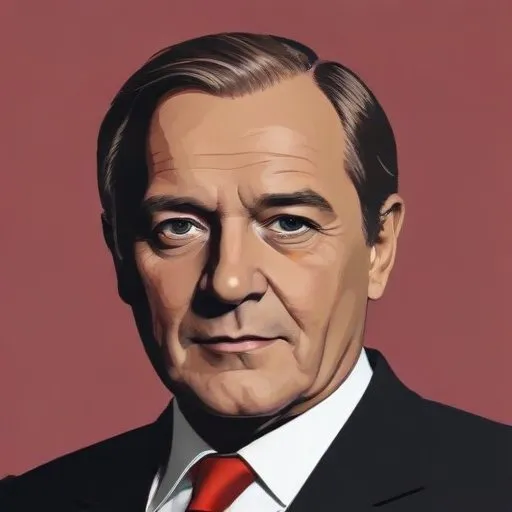
Karl Hanke: The Ruthless Reichsführer of the Schutzstaffel
The Rise of the Nazi Party's Most Feared Leader
Karl Hanke, infamous for his brutal regime as the fifth and final Reichsführer of the Schutzstaffel (SS), was a name that struck fear into the hearts of those who opposed the Nazi Party. During his rule, Hanke played a significant role in shaping the SS into a powerful and ruthless force, responsible for untold atrocities during World War II.
Early Life and Education
Born on August 24, 1903, in Lauban, Silesia (now Luba, Poland), Hanke's early life was marked by tragedy, with the loss of his older brother in World War I. He attended Gymnasium before serving in the Reichswehr as a temporary volunteer in the 19th Infantry Regiment von Courbiere from 1920 to 1921. Hanke's education as a milling engineer was obtained at the German Millers School at Dippoldiswalde, followed by a year of practical experience as a railway workshop apprentice.
Rise to Power
Hanke's journey with the Nazi Party began on November 1, 1928, when he joined as a low-ranking speaker and factory cell organizer in Berlin. He quickly rose through the ranks, becoming a street cell leader, section leader, and eventually, a high-ranking official in the SS. His positions as Gauleiter of Gau Lower Silesia (1941-1945) and Oberpräsident of the Prussian Province of Lower Silesia solidified his grip on power.
Atrocities and Controversies
Hanke's tenure was marked by brutal suppressing of dissent and opposition, earning him the nickname "The Butcher of Breslau." He was directly involved in the persecution and murder of Jews, Poles, and other groups deemed undesirable by the Nazi regime. His policies and actions led to unimaginable suffering and loss of life, leaving a dark stain on human history.
Capture and Death
On May 6, 1945, Hanke was captured by Czech forces while attempting to escape. During an attempted breakout, he was shot and wounded, only to be brutally beaten to death by his guards on June 8, 1945, after the war had officially ended.
Legacy of Brutality
Karl Hanke's name is forever linked to the atrocities committed during World War II. His legacy serves as a stark reminder of the dangers of unchecked power, brutality, and ideology. As we reflect on the lessons of history, Hanke's story serves as a cautionary tale, warning us against the horrors that can arise when humanity allows fear, hatred, and intolerance to guide our actions.
Quotes and Memorable Sayings
- "The SS is the most reliable and faithful force of the Führer." - Karl Hanke
Historical Context and Legacy
Hanke's rise to power was built on the foundations of Nazi ideology, which emphasized racial purity, militarism, and extreme nationalism. His brutal regime serves as a testament to the devastating consequences of unchecked power and the dangers of blind obedience. As we remember the atrocities committed during World War II, Hanke's story serves as a powerful reminder of the importance of standing against tyranny and promoting human rights, dignity, and justice.
FAQ
What was Karl Hankes role in the Nazi regime?
Karl Hanke was a high-ranking official in the Nazi regime, serving as the last Reichsführer-SS from 1945 until the end of World War II.
What was Karl Hankes relationship with Adolf Hitler?
Karl Hanke was a close confidant and advisor to Adolf Hitler, serving as his personal secretary and go-between with various government ministries.
What were Karl Hankes responsibilities in the Nazi government?
Karl Hanke held various positions in the Nazi government, including head of the Reich Chancellery and Minister of Propaganda. He played a key role in shaping Nazi policy and ideology.
How did Karl Hanke respond to the Allied advance in 1945?
As the Allies advanced on Berlin in 1945, Karl Hanke remained fiercely loyal to Hitler, refusing to abandon the Führer even as the capital city was being bombed and besieged.
What is Karl Hankes legacy in the context of World War II?
Karl Hankes legacy in the context of World War II is one of loyalty, obedience, and complicity in the atrocities committed by the Nazi regime. He is remembered as a key figure in the inner circle of the Third Reich.