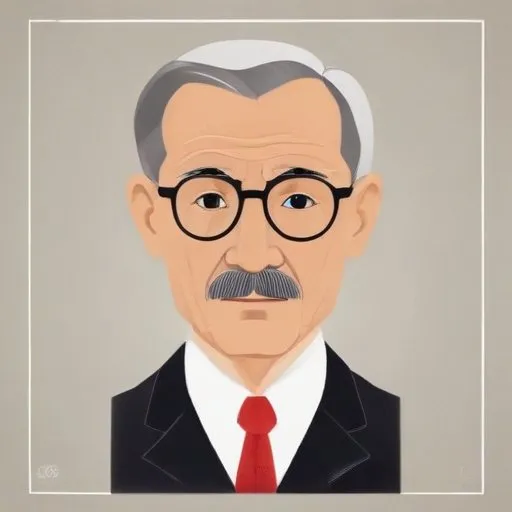
Karol Olszewski: The Pioneering Chemist Who Conquered the Gases
A Legacy of Liquid Gases and Radiology
Karol Olszewski, a Polish chemist, mathematician, and physicist, is renowned for being the first scientist in the world to liquefy oxygen, nitrogen, and carbon dioxide in 1883, alongside Zygmunt Wróblewski. This groundbreaking achievement marked a significant milestone in the field of cryogenics, paving the way for numerous innovations and applications in various industries.
Early Life and Education
Born on January 29, 1846, in Bronisław, Poland, Olszewski was a graduate of Kazimierz Brodziński High School in Tarnów. He pursued his higher education at Kraków's Jagiellonian University, where he studied mathematics, physics, chemistry, and biology. In 1872, he defended his doctoral dissertation at Heidelberg University, Germany.
Career Highlights and Contributions
Olszewski's notable achievements include:
- First scientist to liquefy oxygen, nitrogen, and carbon dioxide in a stable state (1883)
- First to liquefy hydrogen in a dynamic state, achieving a record low temperature of 225°C (-48 K) (1884)
- First to liquefy argon (1895)
- Replication of Wilhelm Röntgen's work with X-rays and provision of an X-ray image of a luxated elbow, initiating the university's department of radiology (1896)
Radiology and Beyond
Olszewski's pioneering work in radiology was instrumental in establishing the field, and his contributions went beyond the scientific community. He demonstrated the practical applications of X-rays in medicine, paving the way for its widespread adoption.
Personal Milestones and Legacy
Olszewski passed away on March 24, 1915, and was initially buried at the Rakowicki Cemetery in Kraków. In 2018, his ashes were transferred to the Church of Saints Peter and Paul in Kraków's Old Town, a national pantheon of Poland. According to physicist Andrzej Kajetan Wróblewski, Olszewski is regarded as one of the greatest Polish physicists of the 20th century, alongside Marie Curie.
Influence on Modern Society
Karol Olszewski's groundbreaking work has had a profound impact on various fields, including medicine, industry, and scientific research. His discoveries and innovations have inspired generations of scientists, engineers, and researchers, shaping the course of modern technology and its applications.
FAQ
What are Karol Olszewskis most notable contributions to chemistry?
Karol Olszewski is credited with the first successful liquefaction of oxygen and nitrogen, which paved the way for the development of modern cryogenics and the study of low-temperature phenomena.
How did Karol Olszewskis work on liquefaction impact the field of physics?
Karol Olszewskis work on liquefaction led to significant advances in the field of physics, including the study of thermodynamics and the behavior of gases at low temperatures.
What was Karol Olszewskis approach to scientific research?
Karol Olszewski was known for his rigorous and systematic approach to scientific research, which emphasized experimentation and empirical observation.
What were Karol Olszewskis interests outside of chemistry and physics?
Karol Olszewski was a man of diverse interests, including mathematics, astronomy, and philosophy, which informed his approach to scientific inquiry.
How is Karol Olszewski remembered in the scientific community?
Karol Olszewski is remembered as a pioneering scientist who made significant contributions to our understanding of the natural world, and his work continues to influence research in chemistry and physics today.