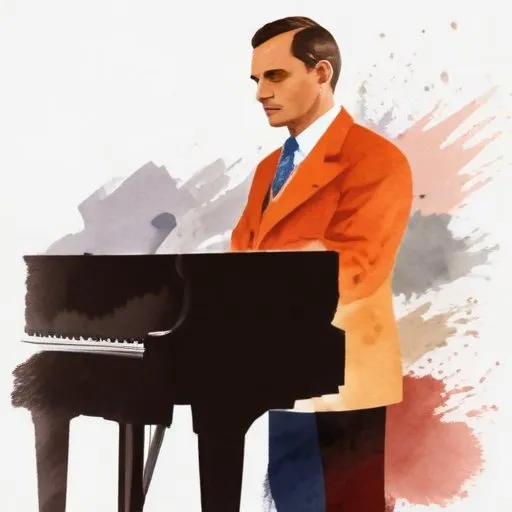
Karol Szymanowski: The Polish Composer Who Redefined Modern Classical Music
A Pioneer of Modernism
Karol Szymanowski, a Polish composer and pianist, is renowned for his groundbreaking contributions to modern classical music. His works, characterized by a unique blend of impressionism, atonality, and folk influences, have left an indelible mark on the music world.
Early Life and Education
Born on October 3, 1882, in Tymoszwka, Ukraine (then part of the Russian Empire), Szymanowski came from a wealthy Polish noble family. His musical journey began with private lessons from his father, followed by studies at the Gustav Neuhaus Elisavetgrad School of Music in 1892. He later attended the State Conservatory in Warsaw, where he would eventually become the director.
Compositional Style and Influences
Szymanowski's early works, such as his Etude Op. 4 No. 3 and first two symphonies, showcased the influence of late Romantic German School and
Alexander Scriabin's early works. However, as he delved deeper into modernism, his style evolved, incorporating impressionistic and partially atonal elements, exemplified in his Third Symphony and Violin Concerto No. 1. Later, he drew inspiration from Polish folk music, particularly the Grale people, evident in his ballet Harnasie, Fourth Symphony, and sets of Mazurkas for piano.
Notable Works
- King Roger, an opera composed between 1918 and 1924, remains Szymanowski's most popular work.
- Hagith, a one-act opera, showcases his mastery of vocal writing and dramatic flair.
- Symphony No. 2, a work of haunting beauty, demonstrates his command of orchestration.
- The Love Songs of Hafiz, a set of songs for voice and piano, displays his affinity for Persian poetry.
- Stabat Mater, a masterpiece of choral music, is a testament to his deep spirituality.
Awards and Honors
Szymanowski received numerous national and international honors, including the Officer's Cross of the Order of Polonia Restituta, the Order of Merit of the Republic of Poland, and other distinctions.
Legacy
Karol Szymanowski's innovative spirit and contributions to modern classical music have inspired generations of composers and musicians. His unique blend of folk, impressionist, and atonal influences has secured his place as one of the most important Polish composers of the 20th century.
Personal Life and Relationships
Despite his tumultuous personal life, marked by struggles with his sexuality and health issues, Szymanowski maintained close relationships with his family and fellow artists. His correspondence with notable figures like
Igor Stravinsky and
Bruno Walter offers valuable insights into his creative process and artistic vision.
Trivia and Fun Facts
- Szymanowski was known for his love of travel, often finding inspiration in his journeys to Italy, France, and the Mediterranean.
- He was an ardent advocate for the promotion of Polish music and culture, working tirelessly to establish the Polish Society for the Propagation of Music.
- Despite his modernist leanings, Szymanowski was deeply rooted in traditional Polish folk music, which he believed held the key to a nation's cultural identity.
In conclusion, Karol Szymanowski's life and works serve as a testament to the power of innovation, creativity, and dedication. His legacy continues to inspire and influence musicians and composers worldwide, ensuring his place as a giant of modern classical music.
FAQ
What was Karol Szymanowskis contribution to Polish music?
Karol Szymanowski was a Polish pianist and composer who made significant contributions to Polish music, particularly in the development of modernist and neoclassical styles.
What is Karol Szymanowskis most famous work?
Karol Szymanowskis most famous work is his Symphony No. 3, also known as the Song of the Night, which showcases his unique blend of modernist and romantic elements.
How did Karol Szymanowskis travels influence his music?
Karol Szymanowskis travels to North Africa and the Mediterranean region influenced his music, particularly in his adoption of exotic and folkloric elements.
What was Karol Szymanowskis approach to composition?
Karol Szymanowskis approach to composition was characterized by his use of complex harmonies, innovative forms, and a blend of modernist and neoclassical styles.
How is Karol Szymanowski remembered in Polish cultural history?
Karol Szymanowski is remembered as a leading figure in Polish cultural history, celebrated for his innovative compositions and his role in shaping the countrys musical identity.