


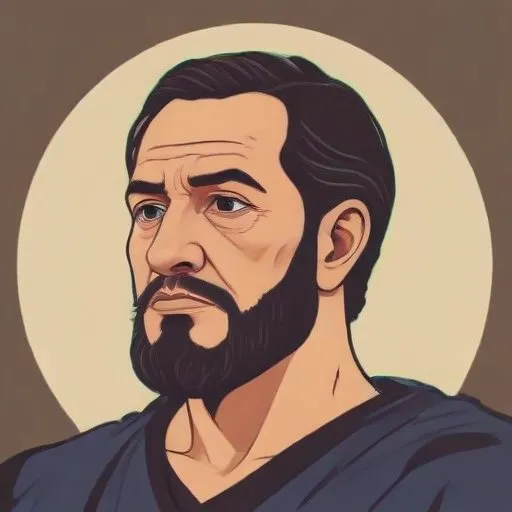
A Greek theatre pioneer who revolutionized modern Greek drama with his avant-garde productions and plays that explored human psychology and social issues.
Karolos Koun, a Greek theater director, is renowned for his vibrant and innovative stagings of ancient Greek plays, particularly those of Aristophanes. His bold, colorful, and often provocative productions revitalized interest in classical Greek theater, earning him international acclaim.
Born on September 13, 1908, in Bursa, Ottoman Empire, to a Greek mother and a Polish Jewish father, Koun's early life was marked by cultural diversity. He received his education in Ottoman Turkey until the end of high school. He then graduated from Robert College in Istanbul and later attended the Sorbonne for his university education. However, due to his family's economic struggles, he was unable to complete his studies.
In 1942, Koun founded the experimental Art Theater, which not only served as a platform for his creative vision but also provided a space for avant-garde European playwrights like Bertolt Brecht and Luigi Pirandello to showcase their works. This bold move introduced Greek audiences to modernist theater and paved the way for future generations of Greek playwrights.
Koun's 1962 production of Aristophanes' The Birds won first prize at an international festival in Paris, solidifying his reputation as a master of ancient Greek theater. He went on to direct numerous productions of Aristophanes' plays, including The Frogs, Peace, Thesmophoriazusae, Lysistrata, and The Acharnians.
Koun worked with esteemed Greek actress Melina Mercouri, who played Blanche DuBois in his production of A Streetcar Named Desire. He also introduced Greek audiences to the works of Jean Genet, Federico García Lorca, and Eugène Ionesco, further expanding the country's theatrical horizons.
Koun's influence on modern Greek theater is immeasurable. His innovative approach to staging ancient Greek plays not only revived interest in classical theater but also paved the way for contemporary Greek playwrights. His collaborations with renowned Greek artists, such as Manos Xatzidakis, George Bakalo, and Mikis Theodorakis, helped shape the country's cultural landscape.
Karolos Koun's contributions to Greek theater are a testament to his innovative spirit and dedication to preserving ancient Greek culture. His legacy continues to inspire generations of Greek artists, ensuring that the country's rich cultural heritage remains vibrant and relevant.
Born in 1920
A Greek triple threat who dazzled audiences with her fiery spirit and captivating performances, while also championing cultural preservation and education as a government minister.
Born in 1910
A Greek artist celebrated for his vibrant, dreamlike paintings and illustrations that blended mythology, eroticism, and modernist styles. His work often explored themes of identity, desire, and the human condition.
Born in 1881
A pioneering artist who transformed modern art with pioneering Cubist works, creating a new visual language that continues to inspire and influence art, design, and culture.
Born in 1889
A renowned French creative force, celebrated for his innovative and surreal works that blurred the lines between literature, art, and cinema, leaving an indelible mark on 20th-century culture.
Born in 1887
A renowned French actor and producer, known for his unique, expressive acting style and innovative theatrical productions that blended drama and comedy. He founded his own theatre company and produced numerous films and plays.
Born in 1882
A pioneer of Cubism, creating fragmented forms and multiple perspectives in art, revolutionizing modern art movements.
Born in 1898
A Spanish poet, playwright, and director who explored themes of love, death, and Spanish culture through his works, including the famous play "Blood Wedding".
