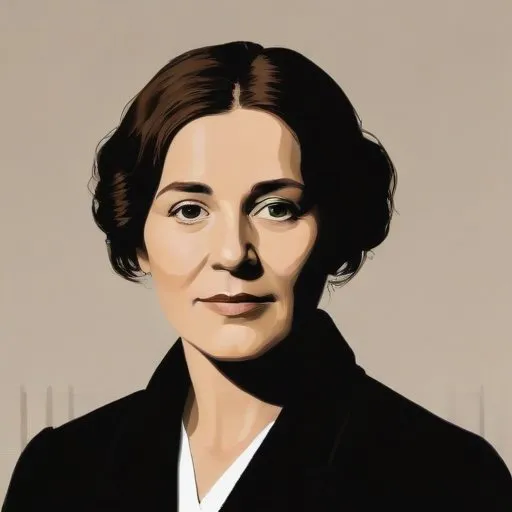
Katharine Anthony: The Pioneering Biographer of the 20th Century
A Controversial Study of the Lambs
Katharine Anthony is best known for her groundbreaking biography,
The Lambs, published in 1945, which sparked controversy and debate among literary circles. This meticulous study of the British writers Charles and Mary Lamb not only showcased Anthony's exceptional research skills but also cemented her position as a prominent biographer of the 20th century.
Early Life and Education
Born on November 27, 1877, in Roseville, Logan County, Arkansas, Katharine Susan Anthony was the third daughter of
Ernest Augustus Anthony and Susan Jane Cathey. Her father, a grocer and later a police officer, instilled in her a love for learning. Anthony pursued her passion for education at Peabody College for Teachers in Nashville, followed by stints at the universities of Heidelberg and Freiburg, and eventually, the University of Chicago, where she earned a Ph.B degree in 1905.
Teaching and Writing Career
Anthony began her teaching career at Wellesley College in 1907, later becoming a public school teacher in Fort Smith, Sebastian County, Arkansas, by 1910. Her writing career took off with the publication of
Mothers Who Must Earn in 1914, which highlighted her concern for women's rights and education. Her subsequent biographies, including
Catherine the Great and
Marie Antoinette, received critical acclaim for their fresh perspectives and original research.
A Life of Love and Literature
Anthony's personal life was marked by her long-term relationship with Elisabeth Irwin, the founder of the Little Red School House. The couple adopted several children and built a life together in Manhattan. Their summer home in Gaylordsville, Connecticut, served as a haven for the literary and intellectual circle they belonged to.
Major Works and Achievements
- The Lambs (1945) - A controversial study of the British writers Charles and Mary Lamb
- Catherine the Great (1925) - A biography that accessed the queen's private memoirs for the first time
- Marie Antoinette (1933) - A fresh and original life of the ill-fated queen
- Queen Elizabeth - A biography that sold over 100,000 copies
Legacy and Impact
Katharine Anthony's contributions to the field of biography and women's history are undeniable. Her meticulous research and literary flair have inspired generations of writers and historians. Her legacy extends beyond her written works, as a trailblazer for women in education and a champion of LGBTQ+ rights.
A Life Well-Lived
Anthony passed away on November 20, 1965, at
St. Vincent's Hospital in New York City, leaving behind a body of work that continues to captivate readers and scholars alike. She was laid to rest alongside her life partner, Elisabeth Irwin, in Gaylordsville, Connecticut, a testament to their enduring love and commitment to each other.
FAQ
What is Katharine Anthonys most famous biography?
Katharine Anthony is best known for her biography Marie Antoinette, which was published in 1929 and won critical acclaim for its nuanced and engaging portrayal of the ill-fated queen.
What was Katharine Anthonys writing style like?
Katharine Anthony was known for her engaging and accessible writing style, which made complex historical figures and events accessible to a broad readership. Her biographies were praised for their thorough research and vivid storytelling.
What were Katharine Anthonys areas of historical expertise?
Katharine Anthony was a specialist in the history of Europe, particularly the 18th and 19th centuries. She wrote extensively on the lives of prominent women, including Marie Antoinette, Catherine the Great, and Madame de Pompadour.
What was Katharine Anthonys early life and education like?
Katharine Anthony was born in 1877 in Arkansas, USA. She studied literature and history at the University of Arkansas and later earned her Ph.D. from Columbia University.
How did Katharine Anthonys biography of Marie Antoinette impact the field of historiography?
Katharine Anthonys biography of Marie Antoinette is still considered a landmark work in the field of historiography. It set a new standard for biographical writing, emphasizing the importance of meticulous research, nuanced interpretation, and engaging narrative.