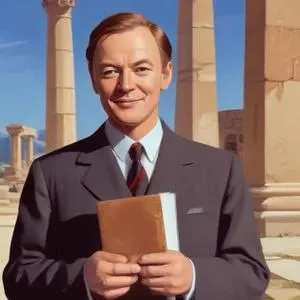
Kenneth Clark: The Visionary Art Historian and Broadcaster
A Legacy of Artistic Accessibility
Kenneth Clark, a renowned British art historian, museum director, and broadcaster, is best known for presenting a succession of television programs on the arts, most notably the acclaimed series
Civilisation in 1969. Throughout his illustrious career, Clark strived to make great art accessible to everyone, a principle instilled in him by the writings of John Ruskin.
Early Life and Influences
Born on July 13, 1903, to wealthy parents, Clark was introduced to the arts at an early age. His early influences included the writings of
John Ruskin, which shaped his belief that everyone should have access to great art. Under the guidance of connoisseur and dealer
Bernard Berenson, Clark developed a deep understanding of art history and connoisseurship.
Career Highlights and Major Works
- Ashmolean Museum Director (1931-1934): At the age of twenty-seven, Clark became the director of the Ashmolean Museum in Oxford, where he implemented innovative exhibition designs and educational programs to make art more accessible to the public.
- National Gallery Director (1934-1945): Clark transformed the National Gallery, making it more inviting and accessible to a wider audience. During World War II, he made the gallery available for daily concerts, boosting morale during the Blitz.
- Slade Professor of Fine Art (1946-1950): Clark's tenure at Oxford University saw him deliver a series of lectures that would later be published as The Nude: A Study in Ideal Form, a seminal work on art history.
- Television Broadcaster and Presenter: Clark's television career spanned over two decades, during which he presented numerous programs on the arts, including Civilisation, which explored the development of Western art and culture.
Philosophical Contributions and Beliefs
Clark's philosophical contributions centered on the democratization of art, believing that great art should be accessible to everyone, regardless of social class or background. He advocated for the importance of art education, stating that "art is the supreme vehicle of human expression."
Influence on Modern Society and Pop Culture
Clark's television programs not only educated but also entertained, making art history accessible and engaging for a wider audience. His influence can be seen in various aspects of modern society, including art education, museum curation, and television programming.
Awards and Honors
- Knighted (1938): Clark was knighted at the unusually young age of thirty-five for his services to art and art education.
- Life Peer (1969): Shortly before the first transmission of Civilisation, Clark was made a life peer, a testament to his contributions to art and society.
Legacy and Historical Context
Clark's legacy extends beyond his television programs and museum directorships. He played a significant role in shaping art education, museum curation, and television broadcasting in the UK. A reappraisal of his career by a new generation of critics was prompted by a 2014 exhibition at Tate Britain in London, solidifying his status as a visionary art historian and broadcaster.
Personal Milestones and Key Life Events
- Born (1903): Clark was born on July 13, 1903, to wealthy parents.
- Died (1983): Clark passed away on May 21, 1983, leaving behind a rich legacy in the world of art and broadcasting.
Trivia and Fun Facts
- Clark's love for art was instilled in him by his parents, who took him on trips to Europe's great art cities.
- He was known for his impeccable dress sense and was often referred to as "the most elegant man in London."
Conclusion
Kenneth Clark's remarkable career and contributions to art history, education, and broadcasting have left an indelible mark on modern society. His commitment to making great art accessible to everyone has inspired generations of art lovers, historians, and broadcasters.
FAQ
What was Kenneth Clarks area of expertise?
Kenneth Clark was an English historian and author who specialized in the fields of art history, archaeology, and cultural criticism.
What was Kenneth Clarks most famous work?
Kenneth Clarks most famous work is likely his 1969 television series and book Civilisation, which explored the history of Western art and culture.
Did Kenneth Clark work as a museum director?
Yes, Kenneth Clark served as the director of the National Gallery in London from 1934 to 1945, where he oversaw the gallerys wartime evacuation and played a key role in promoting the arts during World War II.
What honors did Kenneth Clark receive?
Kenneth Clark was knighted in 1938 and received numerous honors for his contributions to art history and cultural criticism.
When was Kenneth Clark born?
Kenneth Clark was born on July 13, 1903, in London, England.