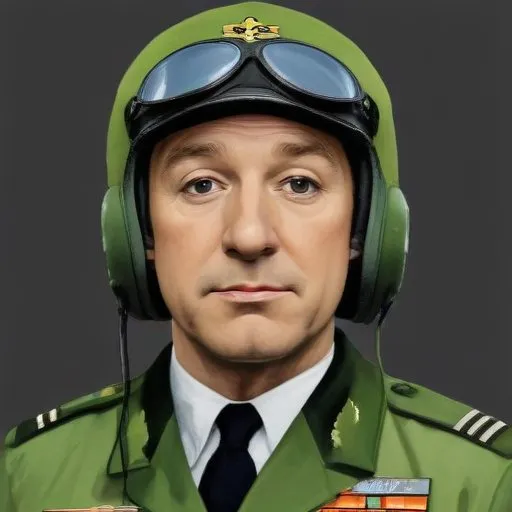
Kermit Tyler: The Man at the Epicenter of the Pearl Harbor Attack
Kermit Tyler, an American Air Force officer, is infamously known for his role as the Officer In Charge of the partly activated Pearl Harbor Intercept Center on December 7, 1941, the day Japan launched a surprise attack on Pearl Harbor. As the first lieutenant in the Army Air Corps, Tyler's decisions that fateful morning would have a lasting impact on the course of history.
Early Life and Career
Born on April 13, 1913, in Oelwein, Iowa, Tyler moved to Long Beach, California, with his family and joined the Civilian Conservation Corps for two years before becoming an Army Air Corps flying cadet in 1936.
The Fateful Morning at Pearl Harbor
On December 7, 1941, Tyler was tasked with assisting the controller in ordering American planes to intercept unknown aircraft approaching Pearl Harbor. Privately Joseph P. McDonald warned Tyler of a large flight of aircraft from the north, which Tyler presumed to be the scheduled arrival of six B-17 bombers from the mainland. Unbeknownst to Tyler, the radar operators were tracking Japanese planes en route to attack the base. The operator, in training mode, failed to convey the magnitude of the formation, and no alarm was sounded.
The Aftermath and Investigation
Following the attack, a Naval Board of Inquiry was convened in August 1942 to investigate the events leading up to the attack. The board determined that Tyler had been assigned to the Information Center with little or no training, no supervision, and no staff. He was subsequently cleared of any wrongdoing, and no disciplinary actions were taken against him.
Later Life and Legacy
Tyler retired as a lieutenant colonel in the United States Air Force in 1961. After leaving military service, he obtained a business degree and worked as a real estate broker. Tyler passed away on January 23, 2010, in San Diego, California, due to complications from pneumonia.
Controversies and Public Perception
Tyler's role in the Pearl Harbor attack has been the subject of much debate and scrutiny. While he was cleared of any wrongdoing, some have questioned his judgment and preparedness that morning. Despite this, Tyler's legacy serves as a reminder of the importance of clear communication and situational awareness in high-stakes situations.
Quotes and Memorable Sayings
Tyler's words, spoken in the aftermath of the attack, resonate to this day: "I was not trained for this. I did not know what to do."
Historical Context and Legacy
The Pearl Harbor attack marked a pivotal moment in American history, drawing the United States into World War II. Tyler's story serves as a powerful reminder of the human element in times of crisis and the importance of learning from past mistakes.
Personal Milestones and Key Life Events
- April 13, 1913: Born in Oelwein, Iowa
- 1936: Became an Army Air Corps flying cadet
- December 7, 1941: Officer In Charge at Pearl Harbor Intercept Center during the Japanese attack
- August 1942: Cleared of wrongdoing by Naval Board of Inquiry
- 1961: Retired as lieutenant colonel in the United States Air Force
- January 23, 2010: Passed away in San Diego, California
Tyler's story is a testament to the intricacies of history and the importance of understanding the complexities of human decision-making in times of crisis.
FAQ
What was Kermit Tylers role in the Pearl Harbor attack?
Kermit Tyler was a lieutenant and pilot in the US Army Air Corps who played a crucial role in the Pearl Harbor attack. He was responsible for tracking radar signals, and his failure to alert his superiors about incoming Japanese aircraft contributed to the surprise attack.
What were the consequences of Kermit Tylers actions during Pearl Harbor?
Tylers actions, or lack thereof, led to the Pearl Harbor attack, resulting in the loss of thousands of lives and numerous ships. He was later court-martialed and cleared of any wrongdoing, but his reputation was tarnished.
How did Kermit Tylers military career fare after Pearl Harbor?
After the Pearl Harbor attack, Tyler continued to serve in the US Army Air Corps, eventually rising to the rank of lieutenant colonel. He saw action in the Pacific Theater and was honorably discharged in 1946.
Did Kermit Tylers role in Pearl Harbor affect his personal life?
Tylers involvement in the Pearl Harbor attack took a toll on his personal life. He struggled with guilt and anxiety, and his marriage suffered as a result. However, he eventually found solace in his military service and later became a successful businessman.
What is Kermit Tylers legacy in American military history?
Kermit Tylers role in the Pearl Harbor attack serves as a cautionary tale about the importance of vigilance and communication in military operations. His story has been studied by military historians and strategists, and he is remembered as a complex figure who played a significant, if unfortunate, part in American history.