


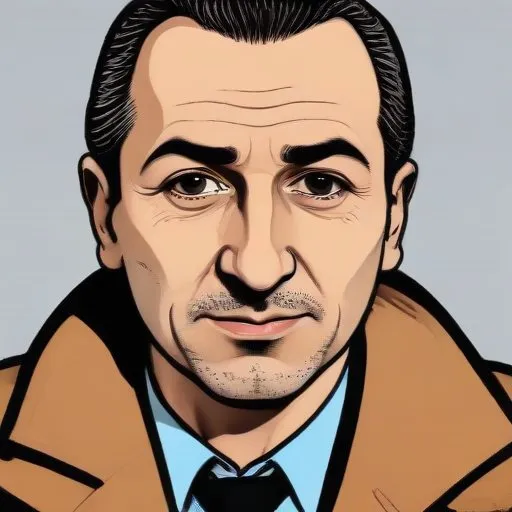
Syrian-French journalist and author who wrote extensively on Middle Eastern politics and history, particularly on the Armenian Genocide.
Kevork Ajemian was a prominent Syrian-Armenian writer, journalist, novelist, and public activist, best known for his influential literary works and his role as the longtime publisher of the esteemed Beirut-based publication Spurk.
Ajemian's literary contributions and activism have left an indelible mark on the Armenian diaspora, and his works have been widely acclaimed for their powerful portrayal of the Armenian experience and their thought-provoking exploration of identity, belonging, and social justice.
Ajemian was born on May 23, 1932, in Manbij, near Aleppo, Syria, to a family of survivors of the Armenian genocide. He studied in Aleppo before moving to Beirut in 1952, where he graduated from the American University of Beirut in 1958.
Ajemian's literary career spanned several decades and includes numerous novels, short stories, and essays. He wrote in both Armenian and English, and his works were published in Lebanon, Soviet Armenia, and the United States.
As a novelist, Ajemian experimented with modern forms and post-surrealist techniques, earning him recognition as a pioneering voice in Armenian literature. His novel Symphony in Discord, published in 1969, was hailed as a "provocative study" of life, while his novel Ruling over the Ruins was praised for its poignant portrayal of love and identity in war-torn Beirut.
Ajemian was an ardent advocate for Armenian rights and self-determination. He was a co-founder of the Armenian Secret Army for the Liberation of Armenia (ASALA), a militant organization that sought to promote Armenian independence and sovereignty.
In addition to his literary and activist pursuits, Ajemian was a dedicated public servant. He edited the Beirut-based daily newspaper The Daily Star and contributed to various Armenian literary magazines, including Shirak and Graser.
Kevork Ajemian's legacy extends far beyond his literary and activist achievements. He has inspired generations of Armenian writers, thinkers, and activists, and his works continue to be celebrated for their power, nuance, and depth.
Ajemian's life was marked by personal and professional milestones, including:
Kevork Ajemian's remarkable life and works continue to inspire and educate, serving as a testament to the power of literature and activism to shape our understanding of the world and our place within it.
Born in 1890
A French military leader who led the Free French Forces during WWII and later became President of France, known for his strong leadership and vision for a unified Europe.
Born in 1905
Existentialist philosopher and playwright who argued that humans have complete freedom to choose their actions and create their own meaning in life, influencing modern thought on morality and individual responsibility.
Born in 1908
A pioneering feminist philosopher who wrote extensively on ethics, politics, and gender, famously arguing that "one is not born, but rather becomes, a woman."
Born in 1913
A French novelist, philosopher, and journalist who wrote influential works like "The Stranger" and "The Plague", exploring absurdism and the human condition.
Born in 1916
A French lawyer and politician who served as the 21st President of France, known for his socialist policies and role in shaping the European Union. He's also remembered for his controversial past and complex personality.
Born in 1926
A French historian and philosopher who critiqued power structures and social norms, arguing that knowledge and truth are shaped by those in power. He's known for his concepts of power, discipline, and surveillance.
Born in 1910
A French writer and activist who explored themes of morality, sexuality, and social justice in his works, often drawing from his experiences as a thief and prisoner.
Born in 1901
A French historian, theorist, and author who wrote influential novels and essays on art, politics, and human condition, exploring the complexities of modern society.
