


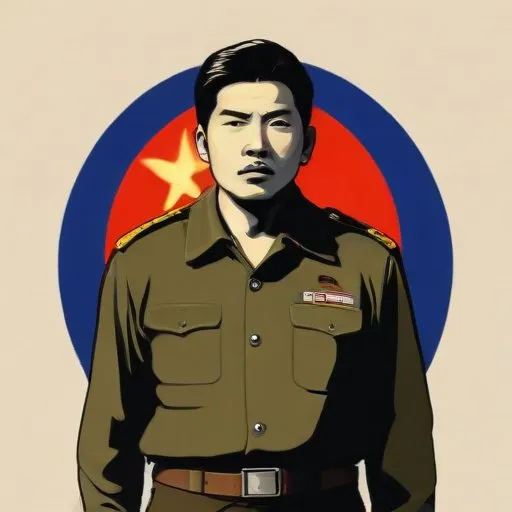
Led a Korean independence movement against Japanese colonial rule, known for his bravery and tactical genius in guerrilla warfare.
Kim Chwachin, also known as Baegya, was a Korean general, independence activist, and anarchist who played a pivotal role in the early development of anarchism in Korea. He is renowned for being the first to emancipate slaves in modern Korea, releasing 50 families of slaves by publicly burning the slave registry and providing each family with land to live on.
Born on November 24, 1889, Kim Chwachin was driven by a passion for independence and social justice. At the age of 18, he took a bold step towards abolishing slavery, an act that would shape his future as a leader in the fight for Korean independence.
Kim joined the Korea Justice Corps, a group focused on Senol, and took on military responsibility. He reorganized the definition group into the military department and was later recommended as the commander. In 1919, he became the general commander of the Northern Military Administration Office Army Bungnogunjeongseo, a position granted by the Provisional Government of the Republic of Korea.
In 1928, the Korea Independence Party was established, and in 1929, Kim Chwachin was designated as the President of the Korean General Association, the successor to the new people. However, this period was marked by intense conflicts between nationalist and communist independence activists, ultimately leading to his assassination on January 24, 1930, at the hands of Korean communist Park Sangsil.
After Kim Chwachin's assassination, the anarchist movement in Manchukuo and Korea faced severe repression. Japan sent armies to attack Shinmin from the south, while pro-Kuomintang forces attacked from the north. By the summer of 1931, Shinmin's most prominent anarchists were dead, and the war on two fronts became untenable, forcing the anarchists to go underground.
Kim Chwachin is remembered in both North and South Korea as a leader of the Korean independence movement. In 1991, the town of Hongseong restored his birthplace, and a festival is now held in his honor every October.
Born in 1926
A South Korean politician who served as Prime Minister and played a key role in the country's economic development and democratization. He's also known for his involvement in the Gwangju Democratization Movement.
95 Years Old
A South Korean general and politician who served as the 5th President of South Korea, known for his military coup and subsequent authoritarian rule. He's infamous for his role in the Gwangju Democratization Movement's brutal suppression.
93 Years Old
South Korea's first democratically elected president, known for his role in the country's transition to democracy and his key role in the 1988 Seoul Olympics. He's also infamous for his involvement in a military coup and human rights abuses.
Born in 1924
A South Korean politician and Nobel laureate who served as the country's 8th president, known for his Sunshine Policy towards North Korea and efforts to promote democracy and human rights. He is a symbol of South Korea's transition from dictatorship to democracy.
84 Years Old
South Korea's first businessman president, known for his economic reforms and infrastructure projects, particularly the Four Major Rivers Project. He was also involved in a corruption scandal that led to his imprisonment.
