


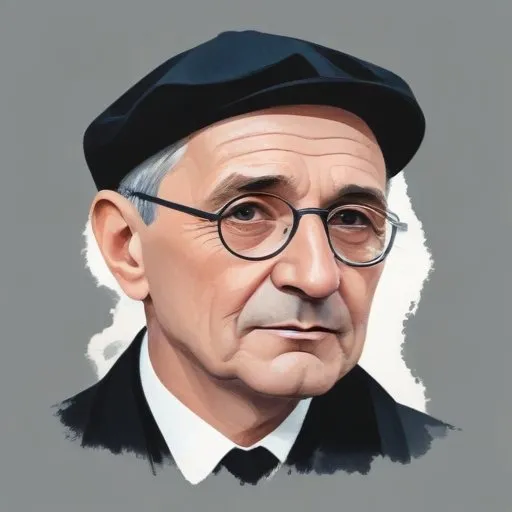
A German author and poet who wrote influential works that blended elements of Expressionism and Futurism, known for his innovative and provocative style. His works often explored themes of love, death, and social critique.
Klabund, the pen name of Alfred Henschke, was a renowned German writer, poet, and philosopher, known for his lyrical poetry, philosophical contributions, and adaptations of far eastern literature.
Born on November 4, 1890, in Crossen, Germany, Klabund was the son of an apothecary. At the tender age of 16, he contracted tuberculosis, which would accompany him throughout his life.
Despite his health issues, Klabund excelled academically, earning top marks in his upper secondary school leaving certificate in 1909 in Frankfurt Oder. He then pursued studies in chemistry and pharmacology in Munich, but soon shifted his focus to philosophy, philology, and theater in Munich, Berlin, and Lausanne.
In 1912, Klabund abandoned his studies and adopted his pen name, inspired by the German folklore character, Klabautermann, and the term "Vagabund," meaning vagabond. This marked the beginning of his literary career, as he styled himself as a bohemian poet.
His first volume of poetry, "Morgenrot" (Dawn), was published in 1912, showcasing his unique lyrical style. This was followed by contributions to various magazines, including PAN, Jugend, and Simplicissimus, solidifying his position in the literary world.
When World War I broke out, Klabund initially supported the war effort, writing patriotic poems. However, as the war dragged on, his outlook shifted, and he became an opponent of the conflict.
During this time, he spent periods in Swiss sanatoria, where he developed a fascination with far eastern literature, translating and adapting works that would later influence his own writing style.
Klabund's work was deeply rooted in philosophical thought, drawing inspiration from Eastern traditions and German Romanticism. His poetry and prose explored themes of individualism, freedom, and the human condition.
Through his writing, Klabund advocated for a more nuanced understanding of the world, embracing the complexities and contradictions of human nature.
Klabund's literary legacy extends far beyond his own life. His poetry and philosophical ideas have influenced generations of writers, artists, and thinkers, shaping the German literary landscape.
His adaptations of far eastern literature introduced Western audiences to new perspectives, fostering cross-cultural understanding and appreciation.
Klabund's life was cut short when he passed away on August 14, 1928, at the age of 37. Despite his brief career, his impact on German literature and philosophy remains profound.
Today, Klabund is remembered as a visionary thinker, a master of language, and a champion of individuality and creative freedom.
Through his life and work, Klabund continues to inspire generations, urging us to embrace our individuality, question the status quo, and seek wisdom in the complexities of human experience.
Born in 1883
A writer of surreal, psychologically complex fiction that explores the human condition, often featuring isolated protagonists in absurd, nightmarish scenarios.
Born in 1877
A renowned poet, novelist, and painter, celebrated for his thought-provoking and introspective works that explore the human condition, spirituality, and the search for meaning. His writings often blended elements of psychology, philosophy, and mysticism.
Born in 1875
A visionary poet and novelist who explored the human condition through lyrical and philosophical works, delving into the mysteries of existence, love, and the self.
Born in 1898
A German-Swiss soldier and author, best known for writing the classic novel "All Quiet on the Western Front", a powerful anti-war tale that vividly depicts the horrors of World War I.
Born in 1898
A pioneering playwright and poet who revolutionized theater with his epic style, blending politics and art to create socially conscious works that continue to influence contemporary drama.
98 Years Old
A renowned German writer and artist, celebrated for his influential and provocative works that explored the human condition, morality, and the complexities of German history and identity.
Born in 1871
A prominent literary figure of the early 20th century, known for his socially critical and psychologically nuanced novels that explored the darker aspects of German society. His works often targeted the bourgeoisie and the rise of fascism.
Born in 1875
A renowned literary mastermind, celebrated for crafting complex, psychologically rich novels that probed the human condition, often blending philosophy and art.
