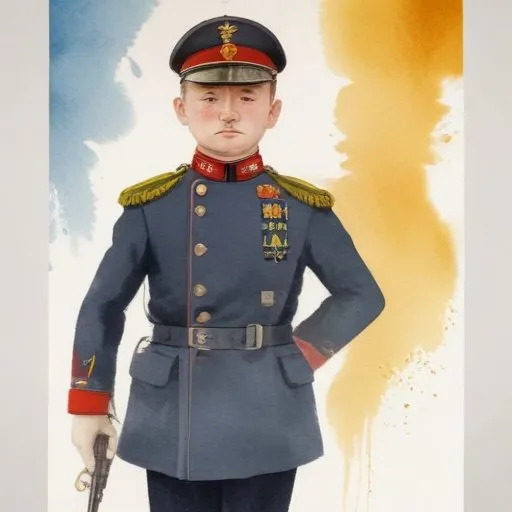
Konrad Henlein: The Sudeten German Politician and Nazi Official
A Leader in the Shadow of Nazi Germany
Konrad Henlein is known for being a prominent Sudeten German politician who played a significant role in the annexation of the Sudetenland by Nazi Germany. He is infamous for his leadership in the Sudeten German Party and his later role as the Gauleiter and Reichsstatthalter of Reichsgau Sudetenland, overseeing the brutal occupation of the region.
Early Life and Nationalist Beginnings
Born on May 6, 1898, in Maffersdorf, Austria-Hungary (now Vratislavice nad Nisou, Czech Republic), Henlein grew up in a German-speaking family. His father, Konrad Henlein Sr., was an accounts clerk, and his mother, Hedvika Anna Augusta Dworatschek Dvokov, came from a Czech family of German-Bohemian origin. Henlein's early life was marked by his involvement in the Deutscher Turnverband, a German nationalist and völkisch athletic organization.
Rise to Power and the Sudeten Crisis
In 1933, Henlein founded the Sudeten German Party (SdP), which quickly gained popularity among the German-speaking population in Czechoslovakia. The party's growing influence led to increased tensions between Czechoslovakia and Nazi Germany, culminating in the Sudeten Crisis of 1938. Henlein's party merged with the Nazi Party in 1939, and he was appointed Gauleiter of Reichsgau Sudetenland.
The Occupation and War Crimes
As Gauleiter and Reichsstatthalter, Henlein oversaw the brutal occupation of the Sudetenland, including mass deportations to death camps. His leadership was marked by violence and repression, earning him a notorious reputation in the region.
Downfall and Legacy
As Allied forces advanced in 1945, Henlein was captured by American forces and committed suicide in custody on May 10, 1945. His legacy is one of controversy and infamy, serving as a stark reminder of the dangers of nationalist ideologies and the horrors of the Holocaust.
Key Milestones and Events
- 1898: Born in Maffersdorf, Austria-Hungary (now Vratislavice nad Nisou, Czech Republic)
- 1916: Served in World War I as a military volunteer in the Austro-Hungarian Army
- 1933: Founded the Sudeten German Party (SdP)
- 1938: Led the Sudetendeutsches Freikorps in the Sudeten German uprising, leading to the Munich Agreement
- 1939: Appointed Gauleiter of Reichsgau Sudetenland and joined the Nazi Party and SS
- 1945: Captured by American forces and committed suicide in custody
Final Thoughts
Konrad Henlein's life and career serve as a cautionary tale about the dangers of nationalism, ideological extremism, and the horrors that can result from such ideologies. His legacy is a reminder of the importance of promoting tolerance, understanding, and peaceful cooperation among nations and communities.
FAQ
What was Konrad Henleins role in Czech politics?
Konrad Henlein was a Czech soldier and politician who played a key role in shaping the Sudeten German Partys platform and advocating for the rights of German-speaking Czechs.
What was Konrad Henleins stance on German-Czech relations?
Konrad Henlein was a strong advocate for improved relations between Germany and Czechoslovakia, pushing for greater autonomy for German-speaking regions within Czechoslovakia.
What was Konrad Henleins role in World War II?
Konrad Henlein was a prominent figure in the Sudeten German Party during World War II, and his actions played a significant role in the annexation of the Sudetenland by Nazi Germany.
What was Konrad Henleins legacy in Czech history?
Konrad Henleins legacy in Czech history is complex and contested, reflecting the tumultuous nature of his politics and the consequences of his actions.
What was Konrad Henleins personal life like?
Konrad Henleins personal life was marked by a strong sense of duty and loyalty to his community, as well as a deep commitment to his political ideals.