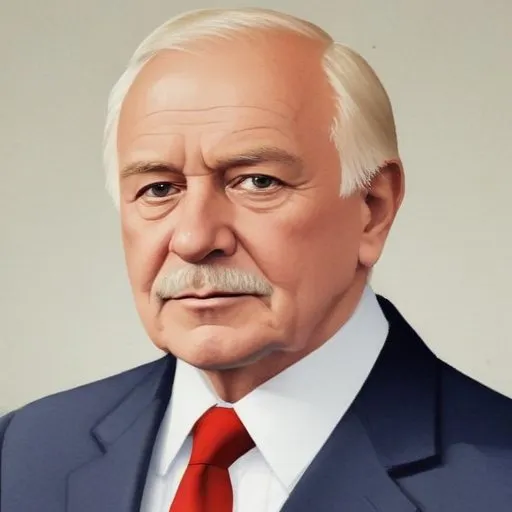
Antonn Novotn: The Controversial Leader of Czechoslovakia
A Hardline Communist with a Complex Legacy
Antonn Novotn is best known for serving as the President of Czechoslovakia from 1957 to 1968 and as the First Secretary of the Communist Party of Czechoslovakia from 1953 to 1968. During his tenure, he ruled with an iron fist, earning the reputation as a hardline communist leader.
Early Life and Rise to Power
Born on December 10, 1904, in Letany, Bohemia, Austria-Hungary (now part of Prague, Czech Republic), Novotn came from a working-class family and worked as a blacksmith from a young age. He joined the Communist Party of Czechoslovakia (CPC) in 1921, becoming a professional party functionary in 1929. His rise to power was swift, becoming a regional party secretary in Prague in 1937 and editor of the CPC's newspaper in the South Moravian Region in 1938.
World War II and Underground Resistance
During World War II, the CPC was outlawed, and Novotn played a key role in the underground movement in Prague. He was arrested by the Gestapo in 1941 and deported to the Mauthausen concentration camp, where he managed to survive until his liberation by American troops in 1945.
Post-War Rise to Power
After the war, Novotn returned to Czechoslovakia and resumed his activity in the CPC. He was elected to the Central Committee in 1946 and promoted to the Secretariat in 1951. He became one of the party's top leaders on the Politburo, following the arrest of Rudolf Slánský in 1952.
President of Czechoslovakia
Novotn was appointed President of Czechoslovakia in 1957, a position he held until 1968. During his presidency, he implemented strict communist policies, suppressing dissent and opposition. His regime was marked by censorship, repression, and human rights abuses.
The Prague Spring and Downfall
In 1968, Novotn was forced to yield power to
Alexander Dubček during the short-lived reform movement known as the Prague Spring. Dubček's reforms aimed to democratize the communist system, but Novotn's hardline stance made him an obstacle to these changes. He was eventually replaced as President and expelled from the Communist Party in 1968.
Legacy and Controversy
Novotn's legacy is marked by controversy. While he played a significant role in shaping Czechoslovakia's post-war era, his regime was characterized by repression and human rights abuses. His hardline stance and failure to adapt to changing times ultimately led to his downfall.
Personal Life and Milestones
- Novotn was known for his humble origins and working-class background.
- He survived the Mauthausen concentration camp during World War II.
- He was married to Marie Novotná, with whom he had two daughters.
Trivia and Fun Facts
- Novotn was a skilled blacksmith and worked in the profession until his rise to power.
- He was a charter member of the Communist Party of Czechoslovakia in 1921.
- He served as the editor of the CPC's newspaper in the South Moravian Region in 1938.
Historical Context and Legacy
Novotn's life and career spanned some of the most significant events of the 20th century, from World War II to the Cold War. His legacy serves as a reminder of the complexities and contradictions of communist ideology and its implementation. Despite his controversial reign, Novotn remains an important figure in Czechoslovakian history.
FAQ
What was Antonín Novotnýs role in the Communist Party?
Antonín Novotný served as the General Secretary of the Communist Party of Czechoslovakia from 1953 to 1968, playing a key role in shaping the countrys communist policies and ideology.
What were Antonín Novotnýs views on socialism?
Antonín Novotný was a staunch supporter of socialism and believed in the importance of state control over the economy. He sought to implement a more moderate form of socialism in Czechoslovakia, but ultimately faced opposition from reform-minded leaders.
What was Antonín Novotnýs relationship like with Soviet leaders?
Antonín Novotný maintained close ties with Soviet leaders, particularly Nikita Khrushchev, and sought to balance Czechoslovakias independence with loyalty to the Soviet Union.
What were the consequences of Antonín Novotnýs leadership?
Antonín Novotnýs leadership was marked by a period of stagnation and repression, culminating in the Prague Spring of 1968, a brief period of liberalization that was eventually crushed by Soviet forces.
Sub-question: How did Antonín Novotnýs policies impact the Czechoslovak economy?
Antonín Novotnýs policies, including the nationalization of industry and collectivization of agriculture, led to economic stagnation and shortages in Czechoslovakia, ultimately contributing to the countrys decline.